




Asian Storage Chest
An asian storage chest brings utilitarian utility and rich regional craft into a room, spanning distinct traditions from Japan, China, and Korea.
Asian Storage Chest
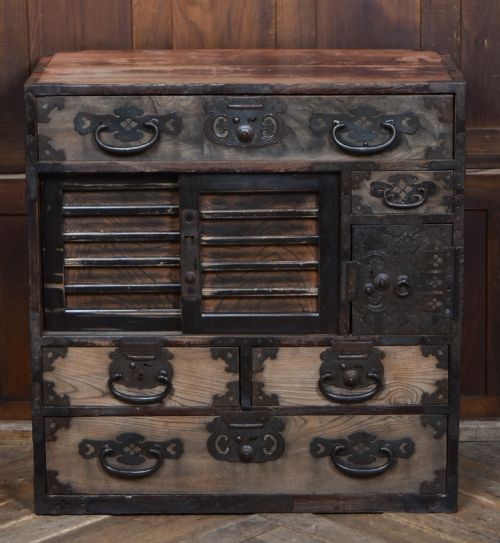
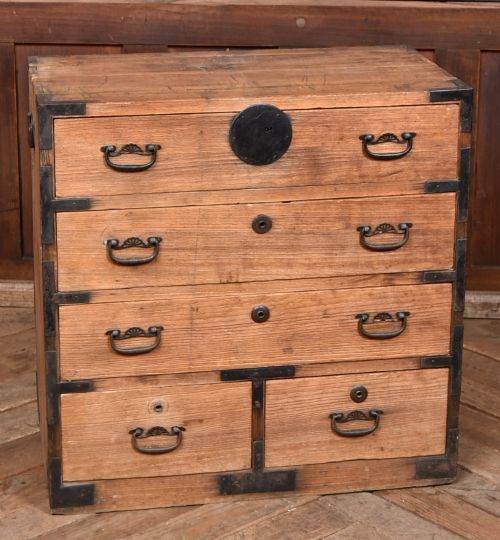
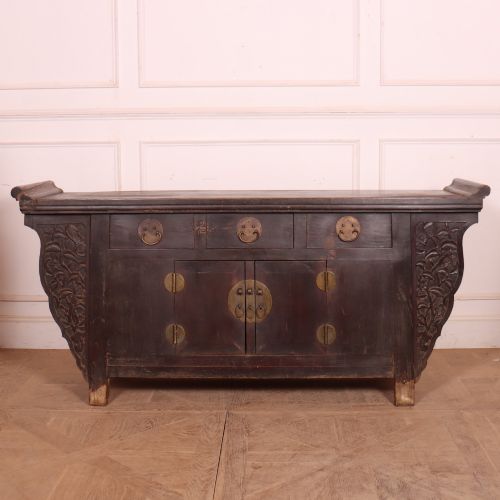
An asian storage chest encompasses a wide variety of utilitarian furniture designed across Asian traditions, ranging from Japanese tansu cabinets to Chinese camphor wood trunks and Korean bandaji chests. These pieces served practical domestic functions such as holding clothing, bedding, or provisions while displaying regional woodworking and decorative arts.
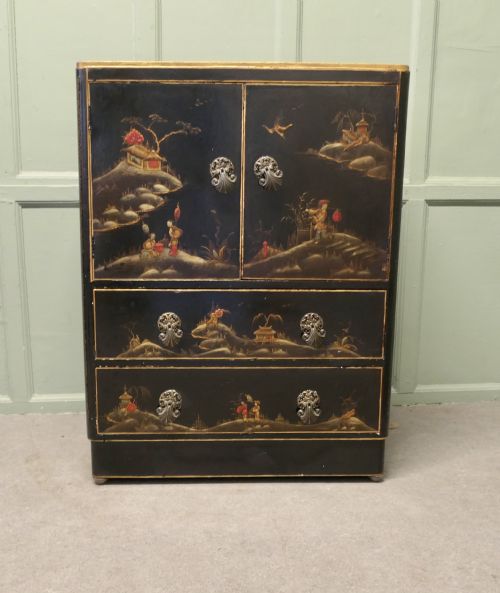
The selections available here lean heavily toward nineteenth century Japanese tansu chests, Chinese lacquer cabinets, and carved camphor wood trunks. Pieces from the Victorian era, the Taisho period, and early twentieth century workshops also appear frequently, reflecting diverse stylistic movements including Qing Dynasty, Chinoiserie, and Joseon styles.
How they were made
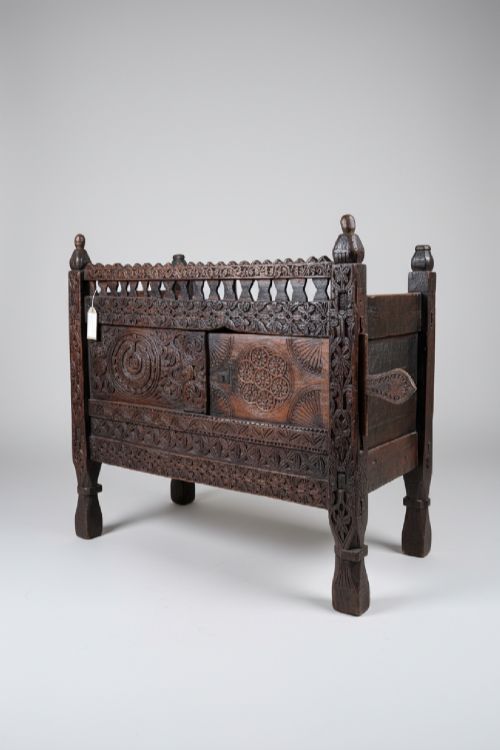
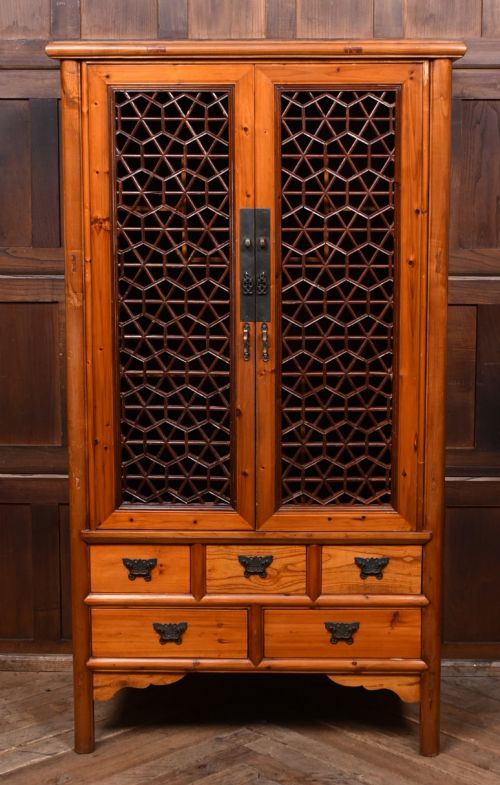
Maker workshops utilised native timbers such as elm, cedar, keyaki, zelkova, and camphor wood, often pairing structural hardwood with specialised veneers. These materials provided the necessary durability for heavy daily use while offering fine surfaces for carving or lacquer application.
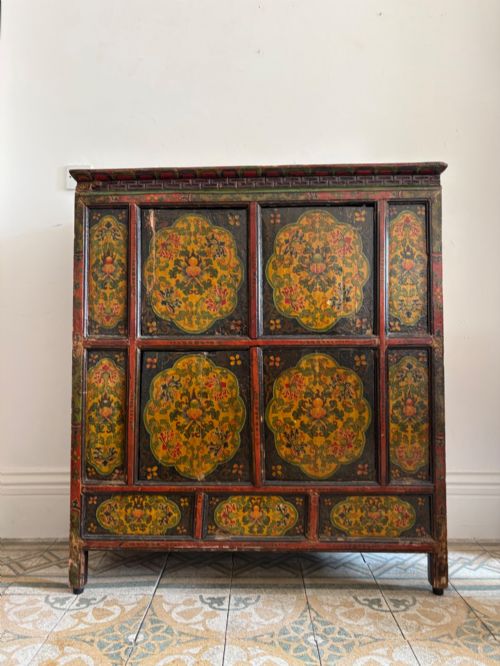
Construction relied on traditional joinery supplemented by functional metal hardware in brass, iron, and bronze. Drawers, doors, and lids were reinforced with strap hinges and corner plates, whilst surfaces received hand painted floral decoration or multi layered black and red lacquer finishes.
Materials recorded in the inventory include camphor wood, elm, cedar, brass, iron, and lacquered wood.
What varies in quality
Quality rests in the integrity of the original timber framing, the precision of the joinery, and the preservation of surface finishes such as hand painted floral motifs or deep lacquer layers. Pieces retaining their original brass or iron hardware without extensive replacement demonstrate higher authenticity.
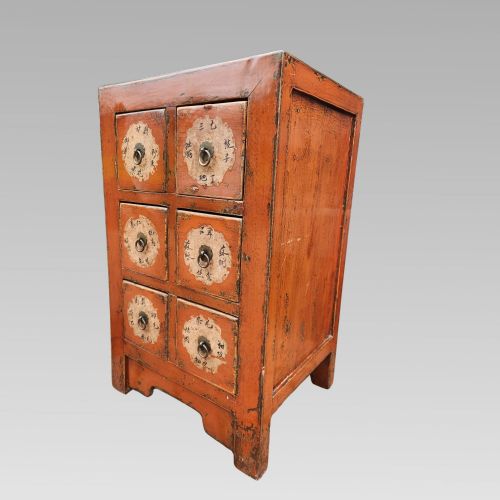
The depth of carving and the complexity of internal configurations, such as multiple small drawers in apothecary cabinets or specialised step chest designs, separate standard utilitarian containers from masterwork regional furniture.
The Asian Storage Chest Glossary
- Tansu
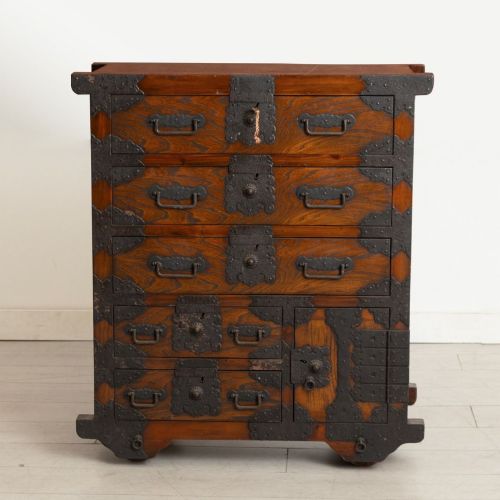
- A traditional Japanese mobile or stationary storage chest, often built in sections with iron or brass mounts for domestic organisation.
- Bandaji
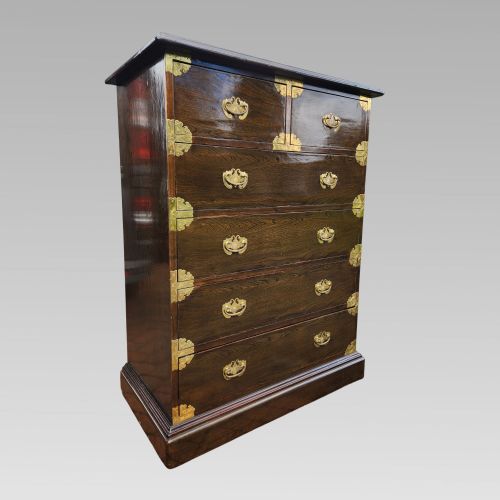
- A traditional Korean storage chest characterised by prominent brass or iron strapwork and hardware across a wooden face.
- Chinoiserie
- A European decorative style reflecting Chinese artistic influences, frequently seen in black and red lacquered cabinets decorated with birds and flowers.
- Lacquer
- A durable natural resin finish applied in multiple coats to wood surfaces, often polished to a deep gloss or carved with intricate scenes.
- Camphor wood
- An aromatic hardwood utilised for trunks and blanket boxes due to its natural insect repellent properties and rich grain.
Asian Storage Chest: Frequently Asked Questions
What is a Japanese tansu chest?
A tansu is a traditional mobile wooden storage chest featuring robust metal hardware and specialised internal drawers designed for domestic utility.
These pieces were built in various configurations, including merchant chests, kitchen cupboards, and step chests, to suit specific household tasks.
How were camphor wood trunks used?
Camphor wood trunks served primarily as blanket boxes and luggage chests for protecting textiles and garments from moisture and insects.
The natural oils within the wood provided a distinct aroma while preserving stored fabrics over long periods.
How do you identify Korean bandaji chests?
Korean bandaji chests are distinguished by their heavy brass or iron strap hinges, lock plates, and corner reinforcements arranged geometrically across the front.
They are typically constructed from dense timbers such as elm or burr elm veneer.
What distinguishes Chinoiserie cabinets?
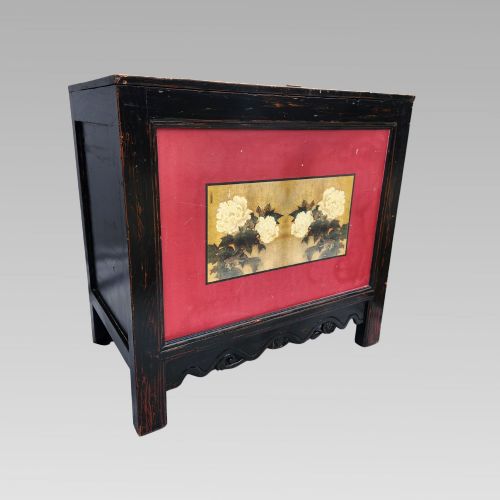
Chinoiserie cabinets feature European interpretations of Chinese design, most commonly executed in black or red lacquer with hand painted floral and bird decoration.
These pieces often stand on carved bases or decorative stands dating from the early twentieth century.