

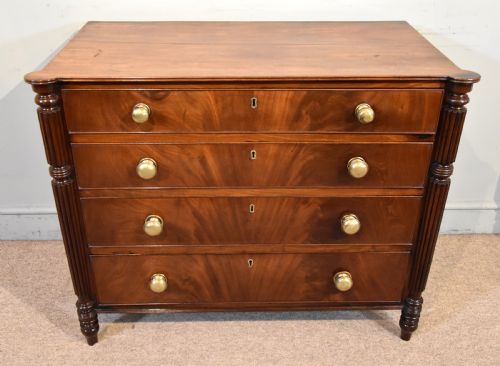


Regency Period Commode
These pieces of furniture bring the precise geometry and rich timbers of the regency period commode into domestic spaces.

Regency Period Commode
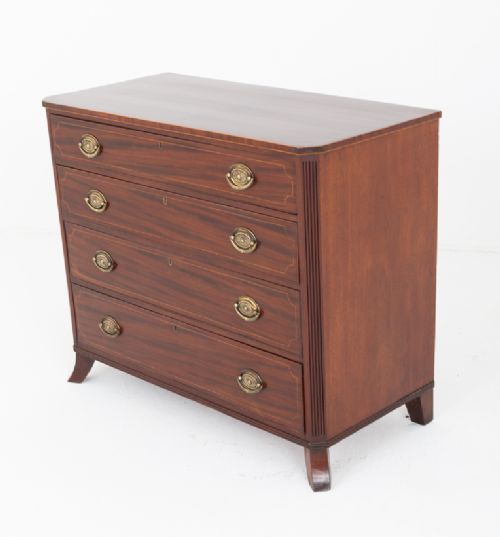
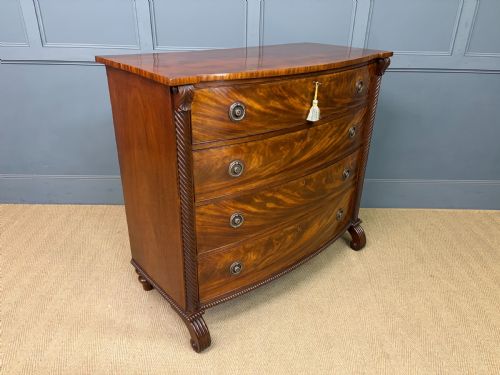
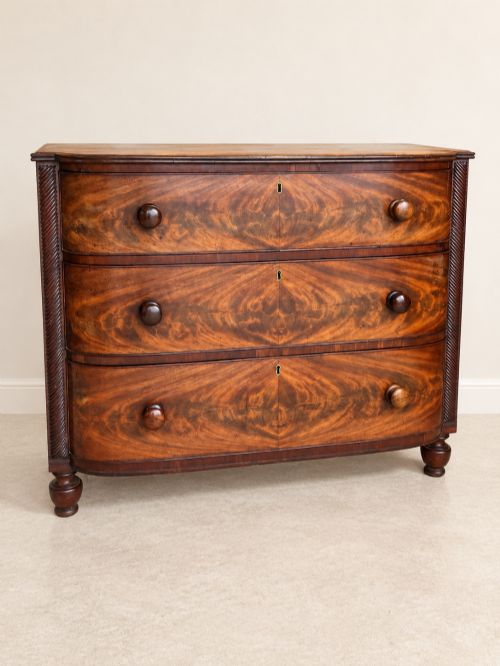
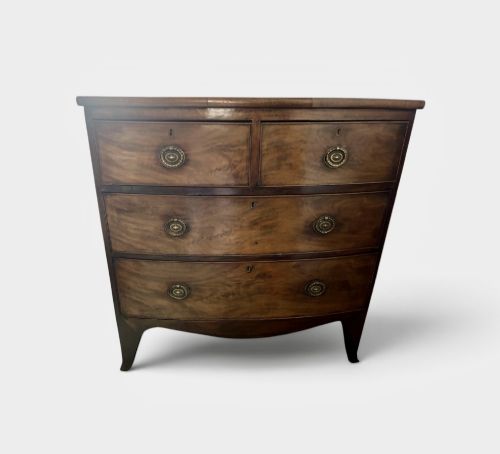
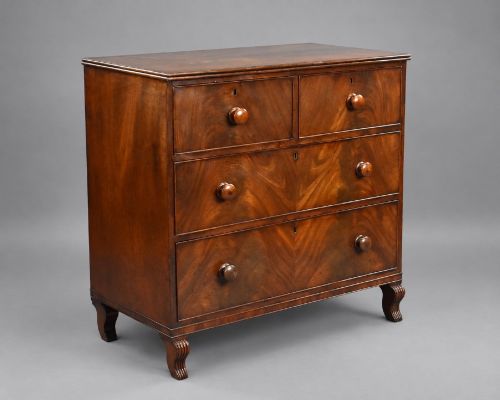
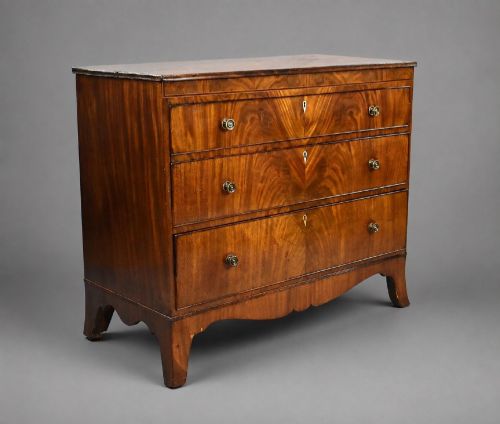
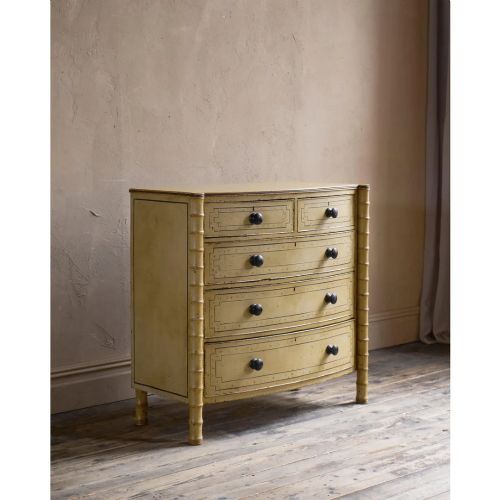
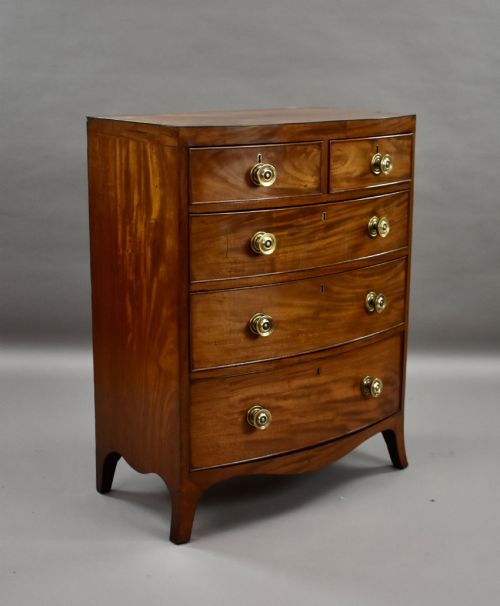
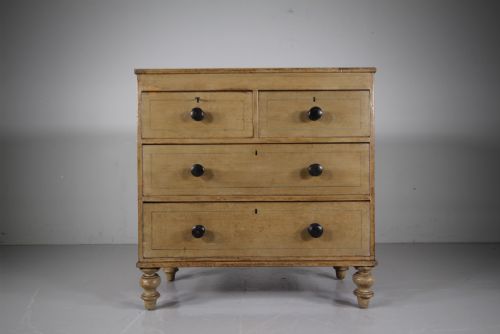
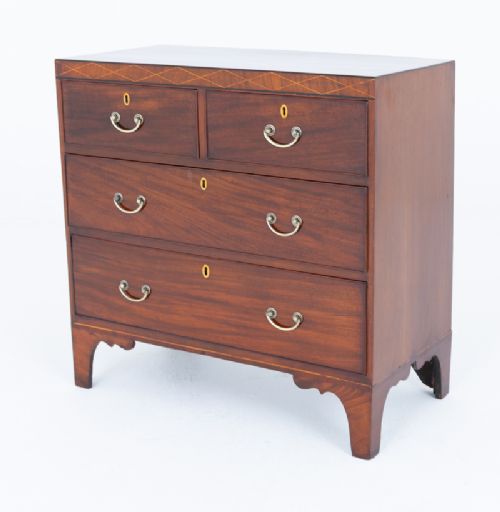
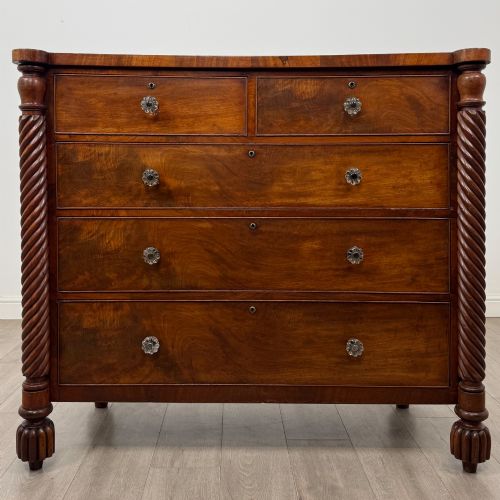
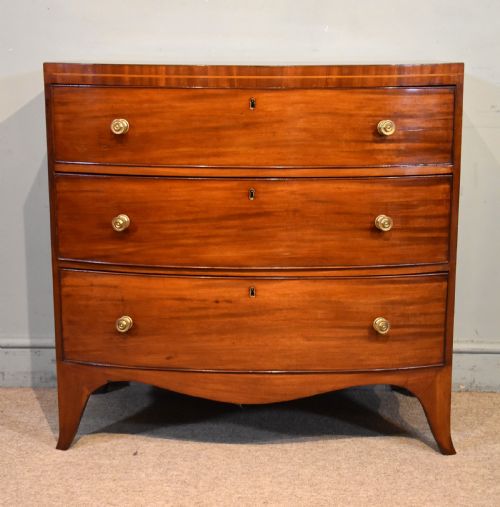
A regency period commode typically takes the form of a mahogany chest of drawers, often constructed with a bow front or concave front profile. These items provide generous storage whilst maintaining the restrained proportions characteristic of the era.
Buyers also encounter variations such as bedside cabinets, side cabinets, and occasional chests on stand. The selection includes both standard bedroom pieces and more decorative side furniture finished in flame mahogany veneer or paint.
Originating largely from the nineteenth century, these pieces encompass related Georgian and George IV designs. The surviving examples demonstrate how cabinet makers adapted classical forms for English interiors.
Materials and construction methods
Makers utilised solid mahogany and flame mahogany veneer applied to secondary woods such as pine and oak. Boxwood inlay and ebony line inlay frequently articulate the drawer fronts and edges, adding linear contrast to the timber.
Structural elements rely on traditional joinery, housed within carcases supported by bracket feet. Drawer construction often incorporates graduated depths to maintain visual balance across the facade of the cabinet.
A few clever bedside cabinets include a pull-out wooden step, ready to assist a Georgian gentleman into his high tester bed.
Distinctions in quality and execution
The choice of timber grain defines the visual impact, with figured mahogany and matched flame veneers marking the higher tiers of production. Plain timber surfaces appear on simpler utility items produced for smaller chambers.
Refinement in secondary details, such as bone escutcheons, brass hardware, and precise stringing inlay, separates standard workshop output from exceptional commissions. The handling of curved fronts, including bow and concave shapes, demonstrates the joiner's capability.
Gillows
The Regency Period Commode Glossary
- Bow front
- A convex curved cabinet front that projects outward at the centre. This shape became popular during the late eighteenth and early nineteenth centuries.
- Flame mahogany
- Timber cut from the branch junction of the mahogany tree, producing a distinctive flickering flame pattern. Cabinet makers used veneers of this wood on primary display surfaces.
- Line inlay
- Thin strips of contrasting wood inserted into grooves on the furniture surface. Boxwood and ebony frequently provided the pale or dark contrast.
- Bracket foot
- A simple structural foot supporting the corners of a case piece. These supports usually feature a shaped inner profile.
- Graduated drawers
- A series of drawers decreasing in depth from bottom to top. This arrangement maintains visual harmony on the facade of a chest.
Regency Period Commode: Frequently Asked Questions
What is a regency period commode?
A regency period commode is a storage cabinet or chest of drawers made during the early nineteenth century. These items typically feature mahogany construction and formal classical proportions.
They serve as practical storage furniture that also brings architectural presence to a room. Most examples rely on clean lines and timber figuring rather than heavy carving.
How do I identify a regency commode?
Look for characteristic timber choices like mahogany and flame veneer combined with linear inlay in boxwood or ebony. Proportions tend to be restrained and elegant.
Form variations include bow fronts, concave shapes, and bracket feet. Secondary woods inside the drawers often consist of oak or pine.
Where should I place a commode?
These chests suit bedrooms, hallways, or living rooms where surface space and storage are required. Their compact footprint allows them to fit against walls without dominating the floor area.
Avoid placing them in direct sunlight or near heat sources to protect the wood and veneer. Maintaining stable room humidity preserves the antique finish.
What is the difference between a chest and a commode?
In British usage within this period, the terms often overlap to describe case furniture with multiple drawers. Commode can also refer to specialised cabinets like bedside cupboards.
Standard chests provide straightforward drawer storage, whilst commodes occasionally include fitted interiors or specific adaptations like pull-out steps.