
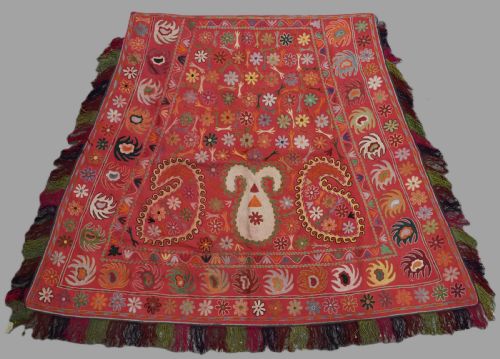


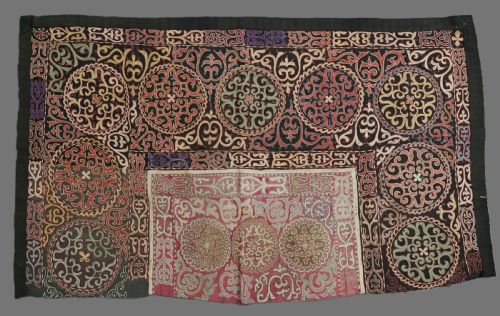


Red Wool Suzani
These red wool suzani panels are striking Central Asian tribal textiles, bringing rich colour and historic nomadic artistry directly into your interior scheme.
Red Wool Suzani
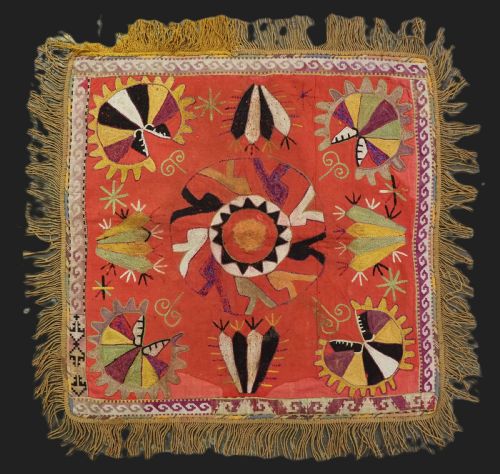
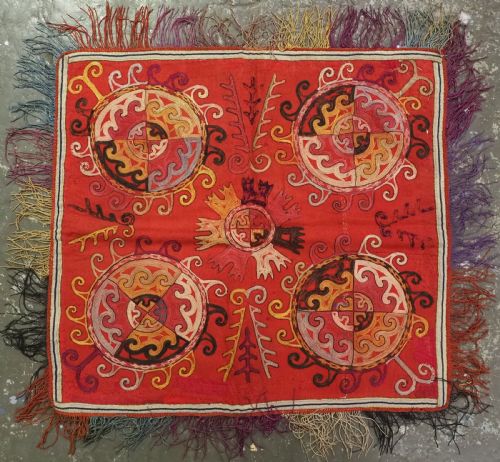
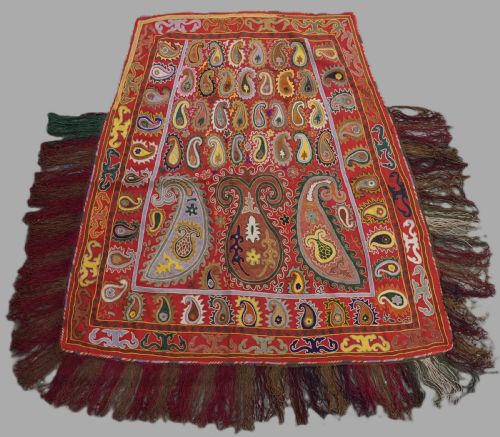
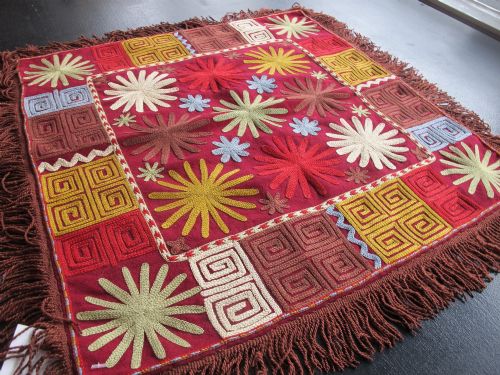
The selections on this page predominantly feature wall hangings, dowry embroideries, ilghich panels, and horse covers worked in rich red grounds. You will also encounter kilim woven variations and yurt wall hangings that showcase traditional Central Asian folk art.
Makers from tribes such as the Lakai utilised these textiles for domestic ornamentation, ceremonial purposes, and dowries. Each piece carries the distinct geometric and figurative motifs characteristic of Central Asian nomad culture.
Materials and construction
The foundation of these textiles relies on a sturdy red wool ground, frequently paired with supplementary cotton and silk yarns for the elaborate embroidery. Artisans executed dense needlework to build up the intricate patterns across the surface.
Certain examples incorporate flatweave kilim techniques constructed in multiple joined strips to form the main body of the textile. Natural dye traditions ensure the red backgrounds achieve a deep, soft tone over time.
Several pieces started life adorning a horse before settling down as sophisticated wall art for the home.
Assessing quality and character
The distinction in quality rests upon the density of the embroidery and the precision of the tribal motifs executed by the artisan. Finer pieces demonstrate a tighter integration of silk needlework upon the wool ground.
Age and original function also influence the character of each piece, distinguishing utilitarian horse covers and dowry panels from larger wall hangings. The depth of the red wool ground and the preservation of the textile structure complete the evaluation.
The Red Wool Suzani Glossary
- Suzani
- An embroidered tribal textile originating from Central Asia, typically worked on a wool, cotton, or silk foundation.
- Ilghich
- A specific form of Central Asian embroidery, frequently associated with Lakai dowry pieces intended for wall hanging.
- Torba
- A small storage bag or hanging panel produced by nomadic groups in Central Asia.
- Kilim
- A flatwoven textile created without a pile, sometimes utilised in regional Uzbek pieces.
- Yurt
- A portable circular dwelling used by nomads in Central Asia, decorated with specialised wall hangings.
Red Wool Suzani: Frequently Asked Questions
How were red wool suzani pieces used?
Nomadic communities utilised these textiles primarily as decorative wall hangings, dowry items, and ceremonial horse covers within the yurt. They served both practical functions and symbolic roles in tribal life.
Over generations, families displayed these panels to mark important domestic milestones and celebrate cultural identity.
Where do these textiles originate?
The pieces hail from Central Asia, with specific attribution to Uzbek tribal groups and the Lakai tribe in regions like Uzbekistan. Communities such as the Kyrgyz also contributed distinct yurt wall hangings.
Each region developed unique embroidery styles and geometric vocabularies rooted in nomadic traditions.
How do I care for a textile wall hanging?
Protect the wool and silk fibres by keeping the piece away from direct sunlight to prevent fading of the red ground. Mount the textile carefully to distribute its weight evenly across the structure.
Gentle surface cleaning by a specialist familiar with antique tribal textiles preserves the integrity of the needlework.
How do I date a tribal embroidery?
Dating relies on examining the types of wool and silk materials, the natural dye palette, and the specific tribal motifs employed. Pieces from this selection generally date from the late nineteenth century to the early twentieth century.
Stylistic conventions and construction methods provide further clues to the period of origin.