




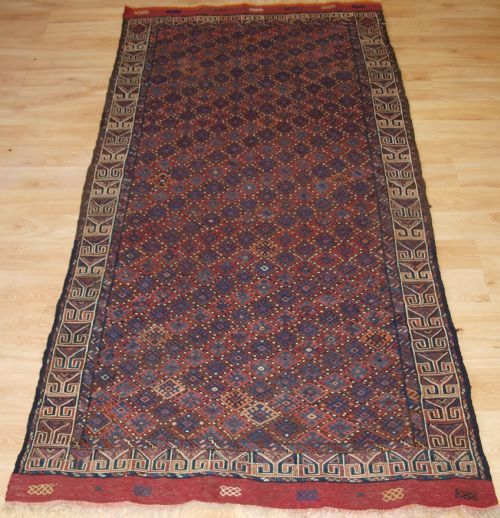
Red Wool Soumak Carpet
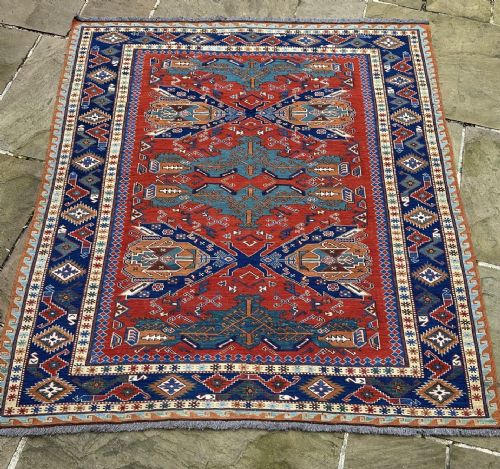
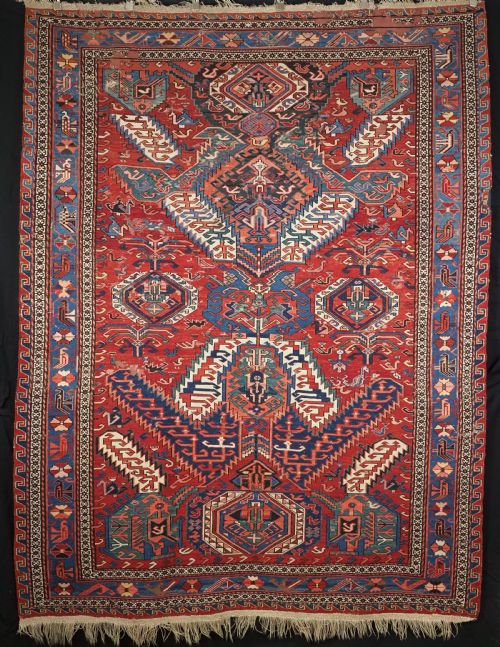
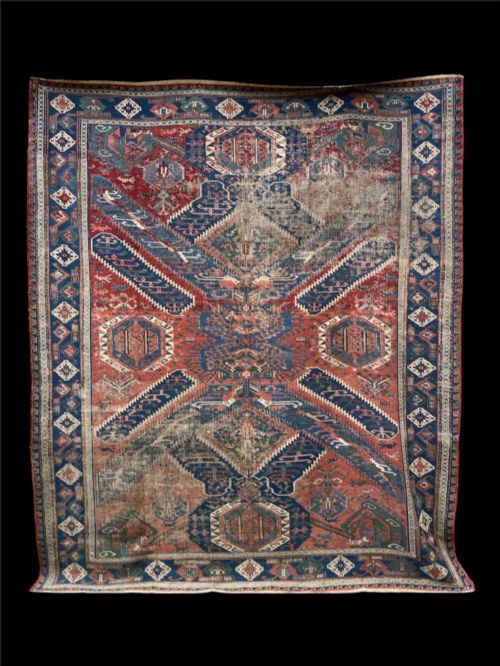
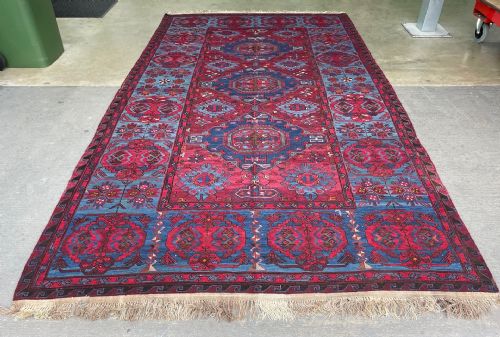
A red wool soumak carpet brings flat-weave precision and rich traditional motifs into a room, offering both structure and deep colour.
Red Wool Soumak Carpet
When you search for a red wool soumak carpet, you are looking at flat-woven textiles originating primarily from nineteenth and early twentieth century tribal workshops and nomadic groups. These pieces span the Caucasus, Persia, and Turkmenistan, taking the form of large carpets, room-sized rugs, smaller bag faces, and functional cushions.
The prevailing examples on this page showcase distinct regional designs, ranging from the dramatic medallion layouts of Caucasian weaving to the geometric precision of Yomut Turkmen palas kilims. Shahsevan and Kurdish makers also contribute specialised panels and bag faces displaying bird and dragon motifs.
Buyers will encounter various formats, from expansive triple medallion carpets down to half-saddlebags and smaller tribal textiles. Each item carries the characteristic flat-weave structure that distinguishes soumak work from standard knotted pile carpets.
Materials and construction
These textiles rely principally on wool and hand-spun wool, often supported by cotton foundations in specific regional styles. The weavers utilised natural dyes and vegetable dyes to achieve the deep red grounds and contrasting borders that define the aesthetic.
The defining technique involves a wrapping method across the warp threads, creating a sturdy flat-weave surface without a cut pile. This construction often leaves structural floating threads on the reverse, while yielding crisp geometric outlines on the face.
Listings feature pieces spanning from the mid-nineteenth century through the early twentieth century, utilising pure wool, hand-spun wool, and cotton.
Judging quality in tribal flat-weaves
Quality rests heavily on the crispness of the drawing and the complexity of the motifs, such as scarce dragon or bird designs. Tighter wrapping and finer gauge weaving separate masterwork carpets from simpler utilitarian pieces.
The vibrancy and depth of the natural or vegetable dyes dictate visual success over time. Intact long kilim ends and sound structural integrity elevate the standing of any regional textile.
The Red Wool Soumak Carpet Glossary
- Soumak
- A flat-weave technique where coloured weft threads wrap around the warp threads in a continuous wrapping motion. This method produces a durable textile with a smooth patterned face and floating threads on the reverse.
- Kilim
- A flat-woven carpet or rug produced without a pile, common across tribal regions. Long kilim ends refer to the extended plain-woven or patterned extensions at the termination of the piece.
- Medallion
- A central ornamental motif set into the field of a carpet. Pieces frequently feature single, double, or triple medallion arrangements.
- Bag Face
- The decorative front panel of a nomadic storage bag, often preserved and mounted independently. These smaller textiles concentrate intricate tribal designs into a compact format.
- Warp
- The vertical foundation threads stretched tightly on the loom before weaving begins. Both wool and cotton serve this structural purpose in these pieces.
Red Wool Soumak Carpet: Frequently Asked Questions
How do I care for a soumak carpet?
Protect the flat-weave structure by using a quality underlay to prevent sliding and excessive friction. Vacuum gently without a rotating brush roll to keep dust from settling into the wrapping.
Rotate the textile periodically to ensure even exposure to foot traffic and light. Consult a specialist familiar with antique flat-weaves for professional cleaning when necessary.
Where were these textiles made?
These pieces originate from nomadic and tribal groups across the Caucasus, Persia, and Turkmenistan. Specific regions include Daghestan, Kuba, Moghan, and the territories inhabited by Shahsevan, Yomut, and Kurdish weavers.
Each region developed distinct palettes, structural habits, and iconographic repertoires. These local traditions allow specialists to attribute pieces to particular tribal workshops or geographic valleys.
What is the difference between a soumak and a pile rug?
A soumak is a flat-weave textile constructed by wrapping weft threads around the warps rather than knotting pile tufts. This gives the surface a firmer, flatter texture with precise geometric definition.
Pile rugs feature knotted vertical strands that are sheared to create a soft, plush nap. Soumaks rely entirely on the interaction of coloured wefts for their design and thickness.
Can I use a bag face as a wall hanging?
Smaller tribal bag faces and panels suit wall display due to their compact scale and concentrated pictorial detail. Proper mounting distributes the weight evenly across the textile without stressing the wool fibres.
Ensure the display wall avoids direct, intense sunlight to protect the natural and vegetable dyes. Periodically inspect the hanging attachments to maintain safe support for the antique fabric.
How do I identify a Shahsevan piece?
Shahsevan flat-weaves often appear as specialised panels, bag faces, or smaller utilitarian items displaying characteristic bird and dragon motifs. The handling of the geometric field and specific regional borders helps separate them from neighbouring Caucasian or Kurdish work.
Their construction frequently employs tight soumak wrapping paired with distinctive colour combinations. Examining the specific structure and design vocabulary points directly to Shahsevan hands.