




Soumak Flatweave Carpet
A soumak flatweave carpet is a sturdy, intricately textured tribal textile woven without a pile, bringing authentic nomadic history into a room.
Soumak Flatweave Carpet
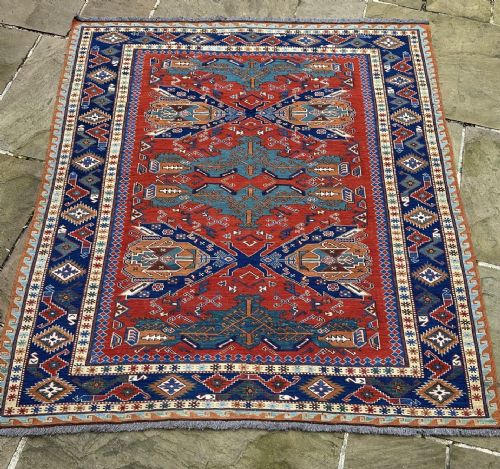
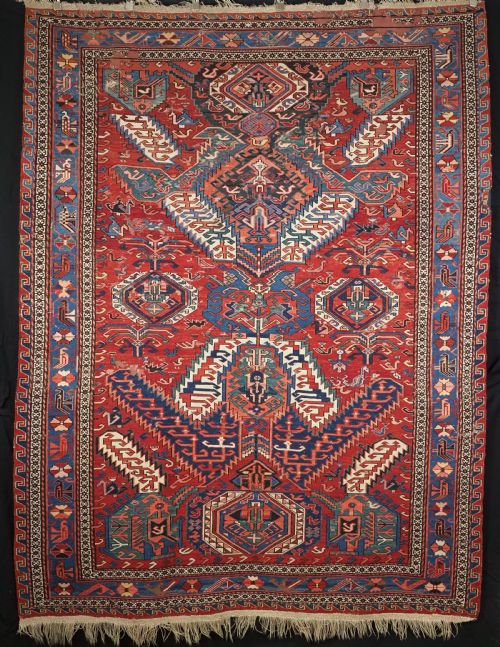
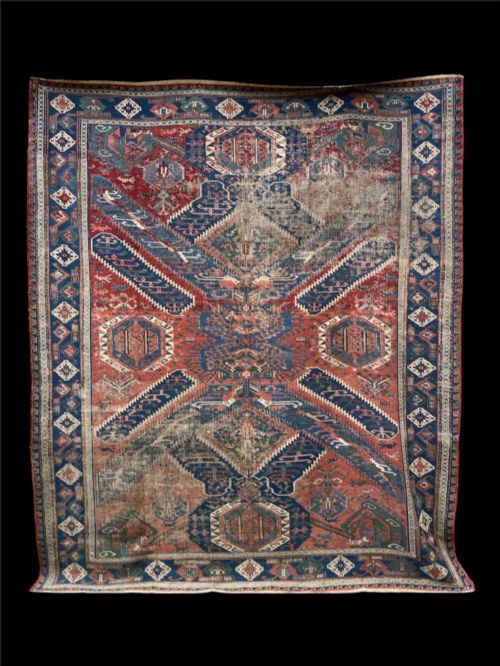
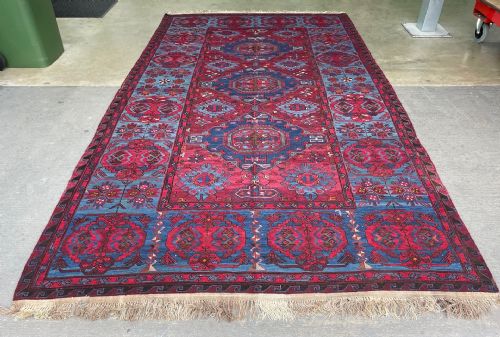
When you search for a soumak flatweave carpet, you encounter heavy tribal textiles originating from the Caucasus, Persia, and Turkmenistan. These pieces span from the mid-nineteenth century through to the early twentieth century, reflecting distinct nomadic weaving traditions.
The selections on this page predominantly include large carpets featuring traditional medallion designs and dragon motifs, alongside smaller bag faces, cushions, and kilim ends. Many examples hail from specific regional groups such as the Shahsavan, Yomut Turkmen, and various Caucasian weaving centres.
Buyers frequently find that these flatweaves serve equally well as durable floor coverings or as wall-hanging textiles that bring rich colour and geometric structure to an interior space.
How they were made
The construction relies on a supplementary weft-wrapping technique executed on a sturdy foundation, producing a distinct ribbed face on the front and loose floats of yarn on the reverse. This technique allows weavers to build complex geometric patterns with remarkable structural integrity.
Weavers utilised hand-spun wool dyed with natural vegetable substances, yielding deep hues that mellow gracefully over decades of light and use. Cotton frequently appears in the foundational warps and sometimes in the patterned details to provide crisp contrast.
Some nineteenth-century weavers hid tiny protective bird motifs among fierce dragons, ensuring the household kept a sense of humour.
What varies in quality
The distinction between average and exceptional pieces rests primarily on the crispness of the drawing and the complexity of the motifs, such as scarce dragon or bird designs. Tightly packed wrapping and well-preserved kilim ends indicate superior initial craftsmanship.
The depth and harmony of the vegetable dyes greatly influence the visual success of the textile, as does the intact condition of the original borders and outer edges. Pieces that retain their full length and original geometric proportions hold greater visual balance.
The Soumak Flatweave Carpet Glossary
- Soumak
- A flatweave technique where coloured weft threads wrap around the warp threads in a continuous sequence, creating a durable textile with a textured surface.
- Medallion
- A central geometric or floral ornament placed symmetrically in the field of the carpet, frequently appearing in sequences of three.
- Bag face
- The front panel of a utilitarian nomadic storage bag, often preserved and mounted as a small decorative textile due to its fine detail.
- Palas
- A term used to describe flatwoven rugs and kilims produced across Central Asia and the Caucasus, known for lightweight utility.
- Warp
- The stationary vertical threads stretched across a loom that form the foundational skeleton upon which the wool wefts are wrapped.
Soumak Flatweave Carpet: Frequently Asked Questions
How do I clean a soumak carpet?
Regular gentle vacuuming without a rotating beater bar removes surface dust safely from the textured weave.
Professional specialist cleaning remains necessary for deeper maintenance to protect the historic vegetable dyes and wool fibres.
Where were these flatweaves made?
Nomadic and village weavers produced these textiles across the Caucasus mountains, regions of Persia, and Turkmen tribal lands.
Specific groups such as the Shahsavan and Yomut populations developed distinct regional aesthetics within their weaving traditions.
Are flatweave carpets durable for floors?
The dense wrapping technique of this weave produces a robust structure that withstands moderate foot traffic in domestic settings.
Using a quality underlay beneath the textile prevents slipping and cushions the foundation against premature wear.
How do I date an antique soumak?
Examining the specific shade range of the vegetable dyes and the complexity of the geometric motifs helps indicate the period of production.
Stylistic markers such as dragon designs and structural traits align pieces with nineteenth or early twentieth-century origins.