
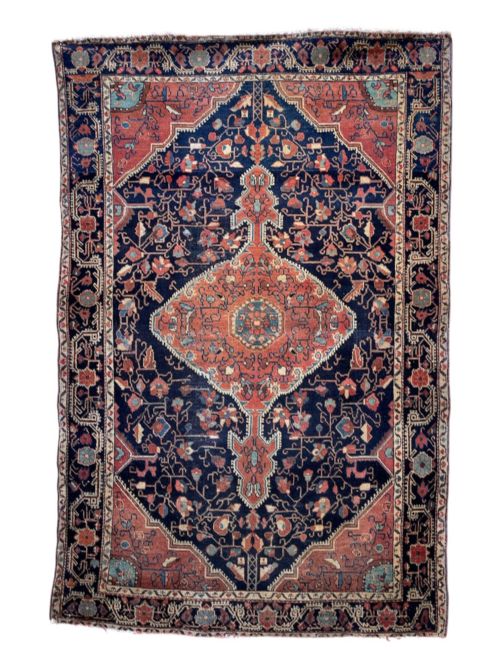
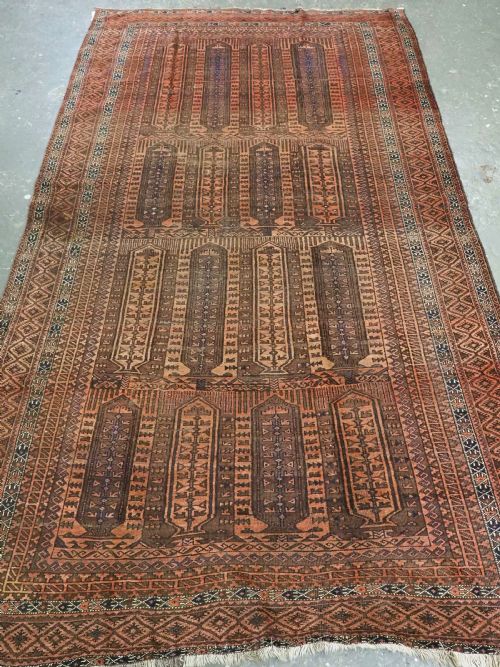
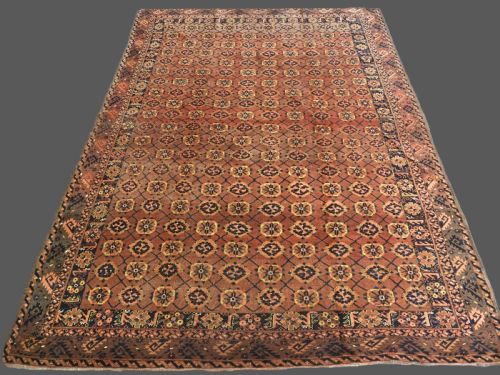
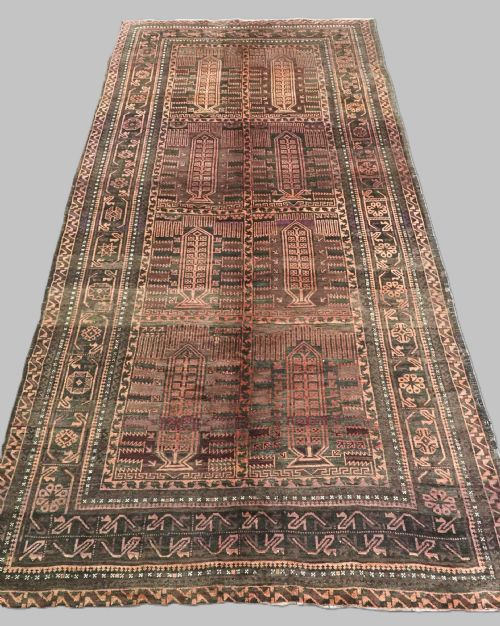



Circa 1900 Oriental Rug
When you search for a circa 1900 oriental rug, you are looking at hand-knotted village and tribal carpets carrying regional patterns.
Circa 1900 Oriental Rug
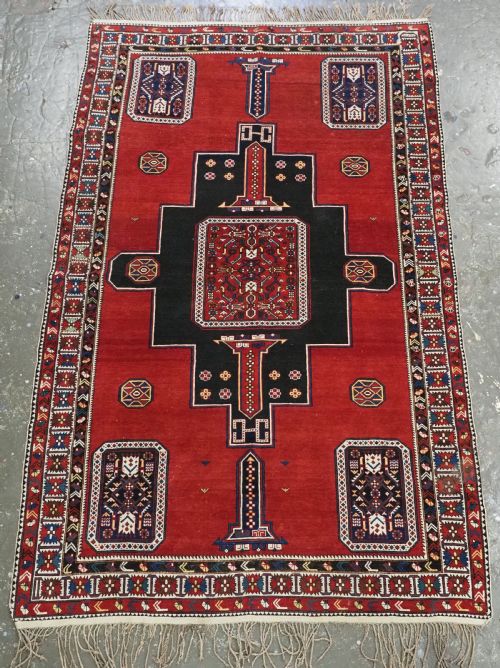
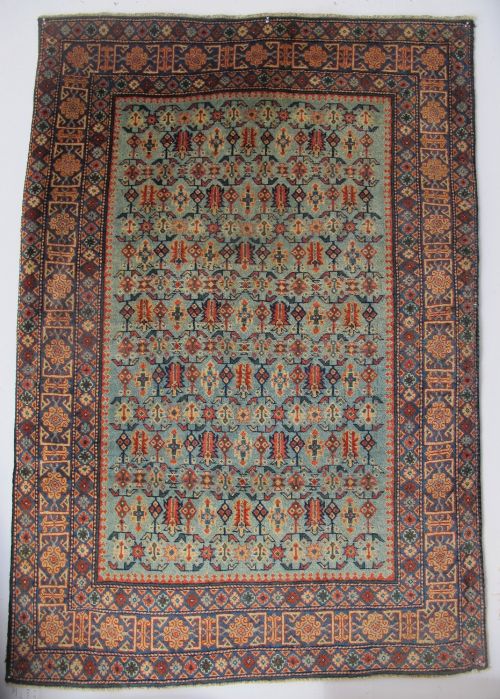
A circa 1900 oriental rug brings together tribal weaving traditions and village workshops from Persia, the Caucasus, Central Asia, and Turkey. These floor coverings and textiles include large carpets, runner rugs, prayer rugs, and smaller bag faces created around the turn of the twentieth century.
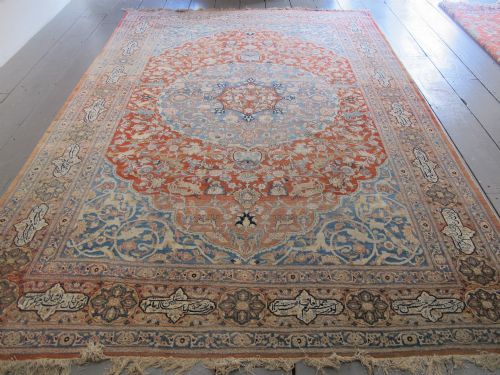
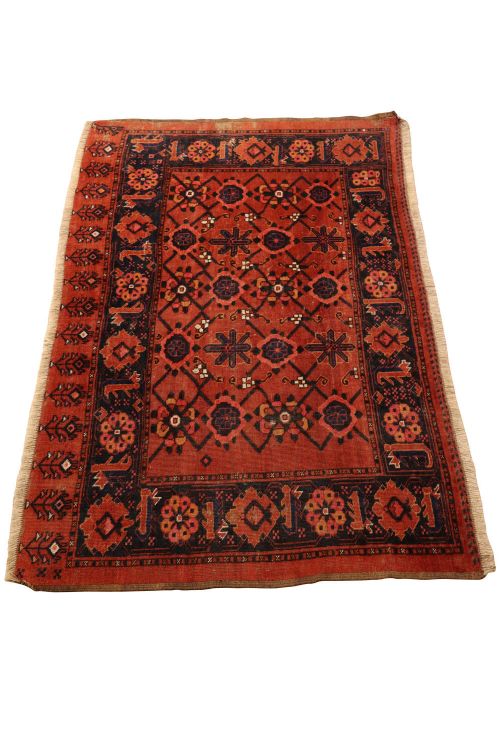
The selection on this page centres on named regional groups such as Heriz, Tabriz, Kashan, and Mahal from Persia, alongside Caucasian Kuba and Shirvan pieces. Turkmen tribal weaving from Yomut, Tekke, and Ersari groups also appears frequently in formats like chuvals and main carpets.
Formats range from long corridors and narrow runners to square room-size carpets and small scatter rugs. Buyers encounter both dense city workshop weaves and heavy village wool work made for domestic use.
How they were made
Weavers constructed these pieces using hand-spun wool, cotton warps, and occasionally silk or goat hair foundations. Natural dyes provide the underlying palette, yielding soft colours and deep tones across tribal and village formats.
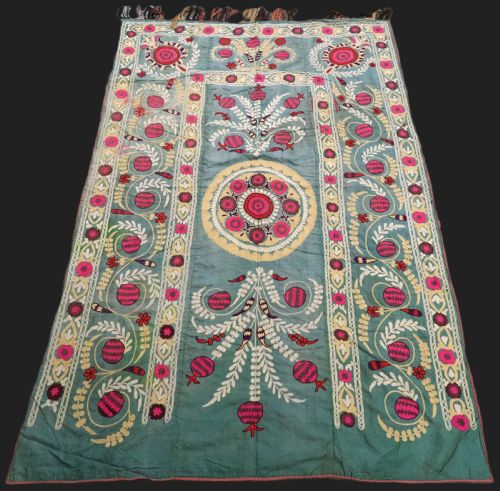
Techniques combine hand-knotting with flatweave construction and embroidery, including silk on cotton grounds and silk and felt appliqué work. Textile items like Suzani bed covers utilise fine needlework on woven fabric bases.
Some Yomut bag faces retain their original wool backs, surviving a century of domestic sorting.
What varies in quality
Quality in a circa 1900 oriental rug rests upon the fineness of the weave and the crispness of the tribal design execution. Dense knotting on sturdy foundations separates workshop carpets from simpler domestic weaving.
The integrity and depth of the dyes determine visual success, with natural dye palettes retaining harmonious tones as the material ages. Balance in the repeat medallions, guls, and border systems indicates the weaver's skill.
Haji Jalili
The Circa 1900 Oriental Rug Glossary
- Gul
- A primary octagonal or repeating medallion motif characteristic of Turkmen and Central Asian tribal weaving. These symbols often identify specific tribal subgroups.
- Ensi
- A specialised Turkmen carpet type traditionally hung over the entrance tent door. They feature distinct cross-panel designs dividing the field.
- Suzani
- An embroidered textile panel originating from Central Asia, typically worked in silk on a cotton or linen ground. These pieces served as decorative bed covers or wall hangings.
- Boteh
- A pear-shaped or almond-like motif with a curved upper end, widely seen in Persian and Caucasian runners. It represents a floral or cypress shoot symbol.
- Torba
- A small utilitarian tribal bag face used for storage within a tent. They display characteristic guls and banded borders.
Circa 1900 Oriental Rug: Frequently Asked Questions
What is a tribal rug?
A tribal rug is a floor covering woven by nomadic or village populations rather than urban workshops. These pieces rely on memory patterns and traditional motifs passed down through generations.
Materials typically consist of heavy hand-spun wool and sturdy foundations suited to practical daily use.
How do I identify a Heriz carpet?
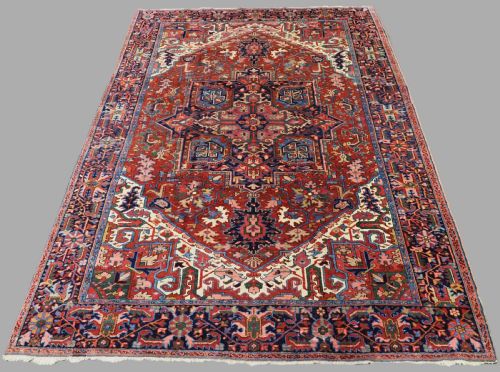
Heriz carpets originate from north-west Persia and are distinguished by bold geometric medallions and strong corner spandrels. They utilise durable wool and robust structures designed for heavy household placement.
Subdued or saturated natural dyes define their visual character.
Where were prayer rugs used?
Prayer rugs served a devotional function, featuring a characteristic mihrab or niche design pointing toward Mecca. Owners laid them on the floor during daily prayers.
Format sizes tend to be compact and easily portable for domestic settings.
What is a runner rug?
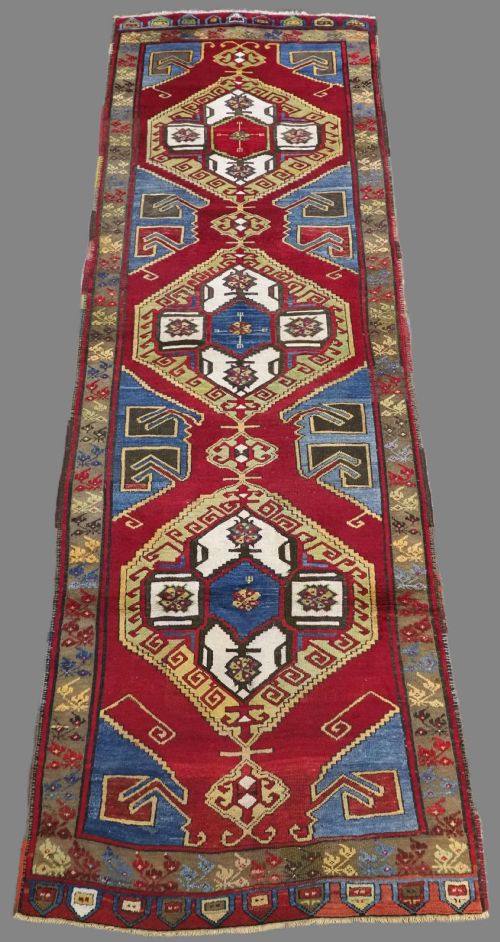
A runner rug is a long, narrow format intended for hallways, corridors, and staircases. Their proportions accommodate restricted architectural spaces.
Designs often employ repeating medallions or continuous border patterns to guide the eye along the length.