

Red Upholstered Chair
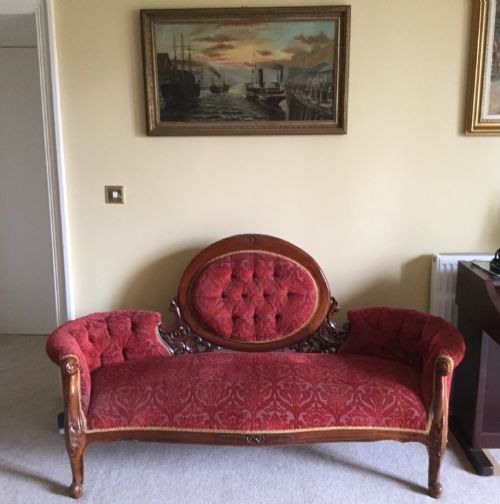
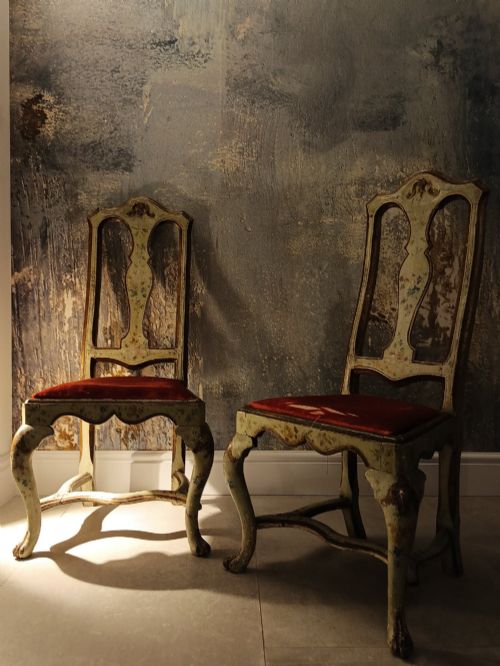
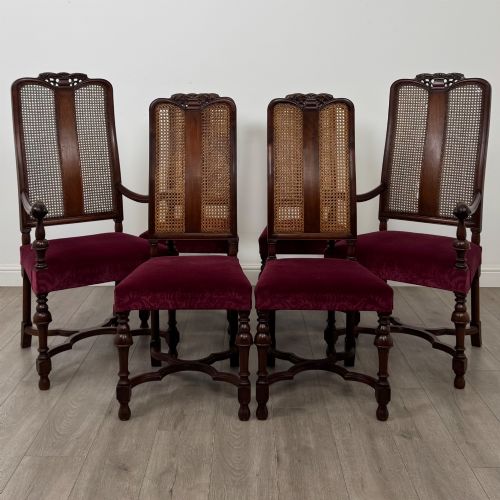
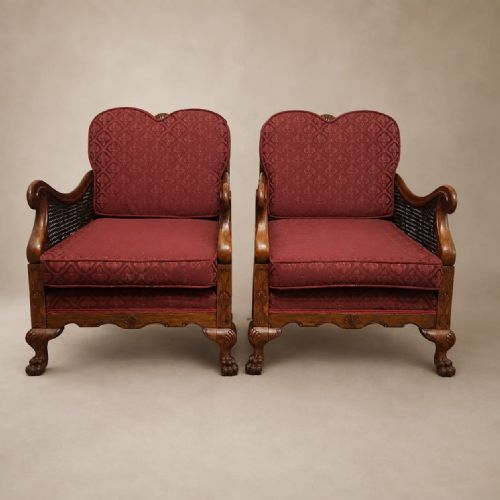
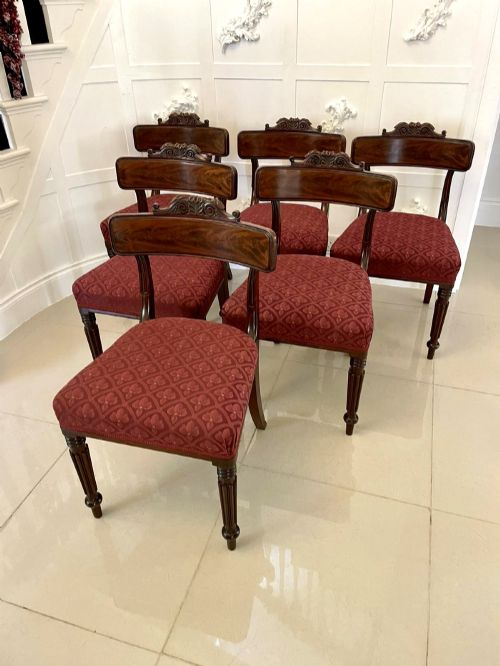
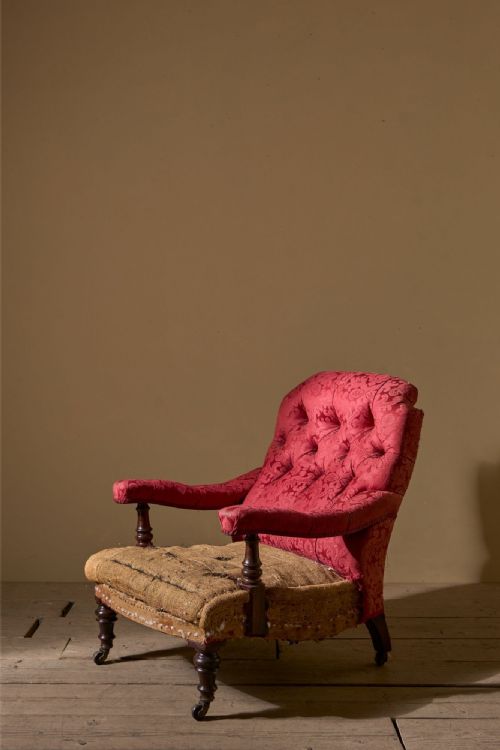
A red upholstered chair brings warmth and tactile comfort to a room, ranging from Georgian mahogany dining seats to Victorian button-backed armchairs.
Forms and periods
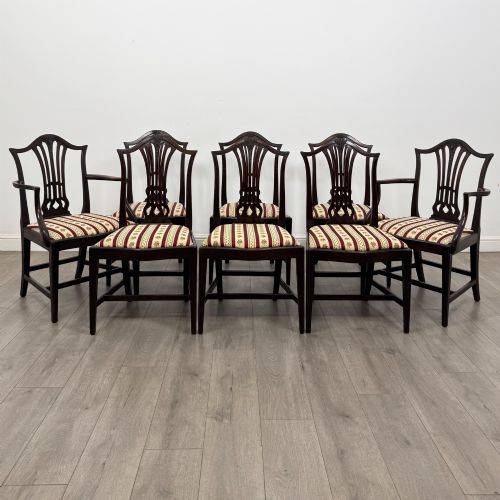
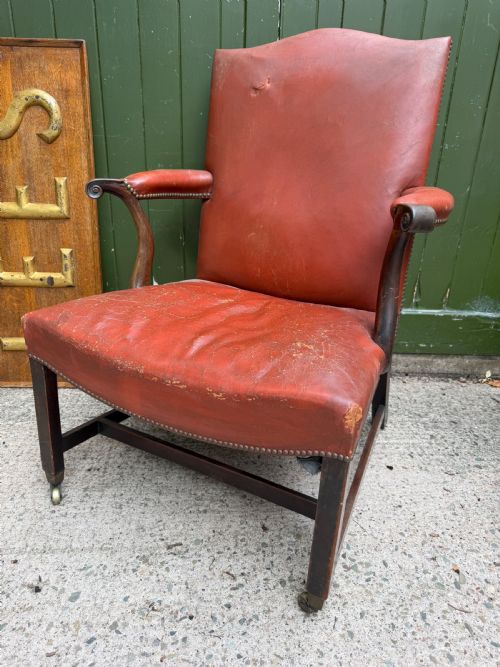
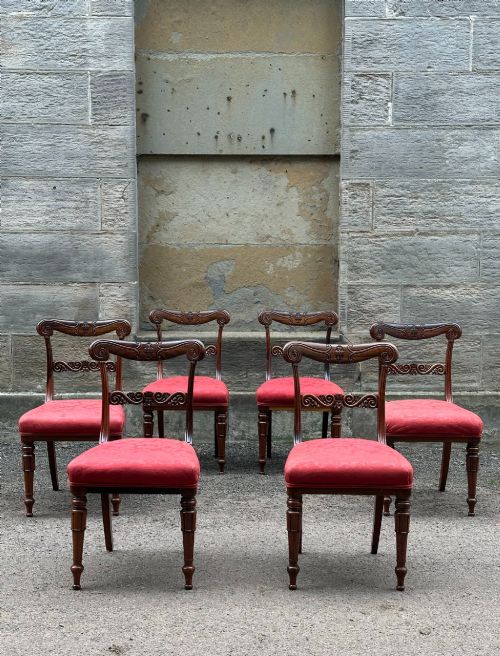
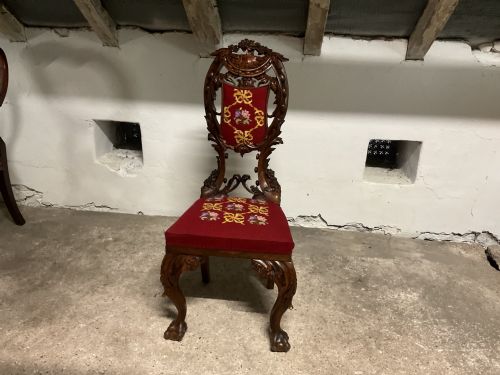
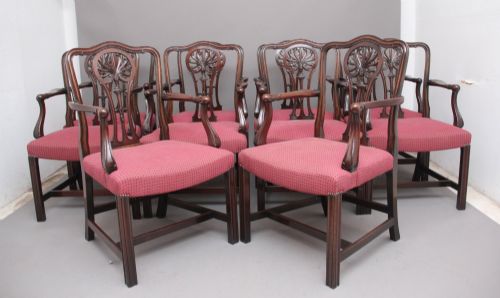
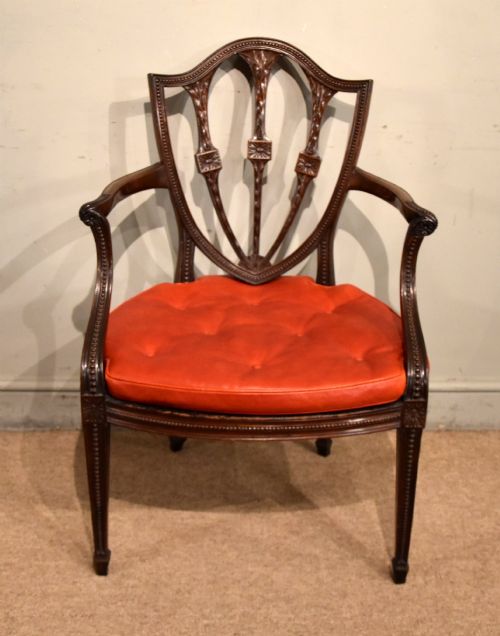
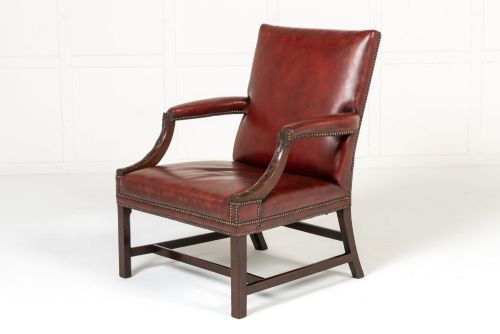
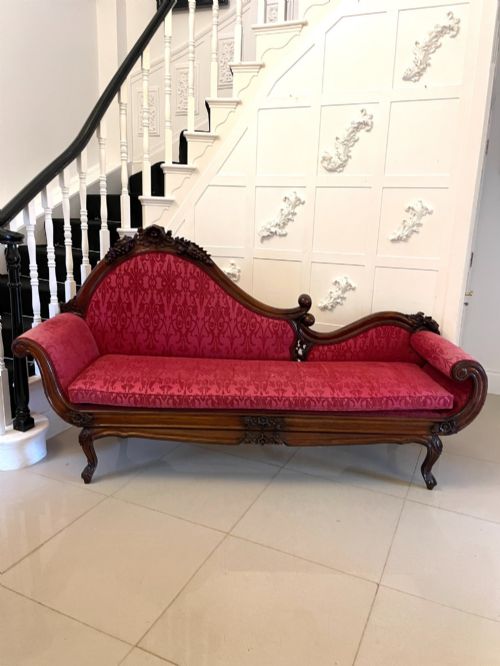
A red upholstered chair encompasses everything from formal dining seats and side chairs to deep armchairs, nursing chairs, and wing backs. The selection spans the eighteenth century, the Regency period, and the late nineteenth century, alongside revival styles.
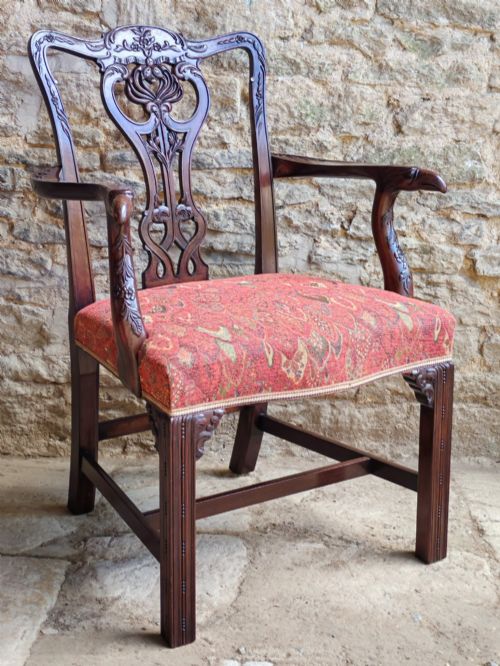
The materials visible in the frames include mahogany, beech, walnut, oak, and rosewood, paired with diverse textiles and leathers. Forms range from country house armchairs and revolving desk chairs to delicate salon seating and hall chairs.
Materials and construction
Frames are constructed from hardwoods such as mahogany, walnut, oak, beech, and rosewood, reflecting the cabinet-making standards of their respective periods. Joinery techniques vary from simple country construction to sophisticated carved detailing on eighteenth and nineteenth-century examples.
Upholstery relies on traditional textiles, leather, and modern replacement fabrics applied to frames that include button-backed panels, deep padding, and sprung bases. Component parts such as castors and carved feet complete the structural assembly.
Retail Price Guide 2026
Typical UK retail prices for red upholstered chair, calculated from the Sellingantiques database of over a million retail prices indexed since 2003. This retail price guide relies exclusively on Sellingantiques data; no external sources or auction records are used, so the figures do not describe the wider market.
Listings feature woods including mahogany, walnut, oak, beech, and rosewood across periods from 1700 to the late Victorian era.
Distinctions in craftsmanship
Quality rests in the timber selection and the rigour of the frame joinery, distinguishing robust dining seats and deep armchairs from lighter occasional pieces. Cabinet work on walnut and mahogany frames demonstrates greater architectural intent than simpler beech or oak country alternatives.
The integration of upholstery with the wooden skeleton marks another boundary, where traditional stuffing and secure textile attachment elevate an ordinary seat into a finely finished piece of furniture.
Gillows·Howard & Son·GP & J Baker
The Red Upholstered Chair Glossary
- Wing chair
- An armchair featuring protective side panels designed to deflect draughts from open fires. These pieces often stand on substantial legs with varied foot styles.
- Nursing chair
- A low-seated armchair designed for comfort during infant care or domestic tasks in nineteenth-century bedrooms. They frequently feature upholstered backs without arms to accommodate voluminous skirts.
- Button back
- An upholstery technique where the fabric is pulled tight and secured with recessed buttons to create a diamond pattern. This method provides structural tension and decorative depth to the padding.
- Hepplewhite
- A late eighteenth-century style characterised by elegant proportions, slender tapered legs, and shield or oval chair backs. Pieces attributed to this design language emphasise lightness and refined carving.
Frequently Asked Questions
How do I identify a Georgian chair?
Georgian chairs typically display dense hardwoods like mahogany or walnut, featuring classical carved motifs and robust joinery proportions.
They reflect the domestic standards of the eighteenth century prior to the rise of heavy industrial production.
What defines a Victorian nursing chair?
Victorian nursing chairs have notably low seats designed for domestic comfort in nineteenth-century bedrooms and drawing rooms.
Their compact proportions often pair with button-backed upholstery or ebonised frames.
Where were wing chairs used?
Wing chairs served as draught-excluding seating placed close to fireplaces in period country houses and parlours.
The extended sides trapped heat around the occupant while supporting the head and shoulders.
Are these chairs suitable for daily use?
Many antique chairs retain the structural integrity required for regular seating in modern residential spaces.
Timber frames and renewed upholstery allow these pieces to function practically while retaining historical character.