
Georgian Shield Back
When you search for a georgian shield back, you are looking at the most elegant dining and hall seating of the eighteenth century and its later revivals.
Georgian Shield Back
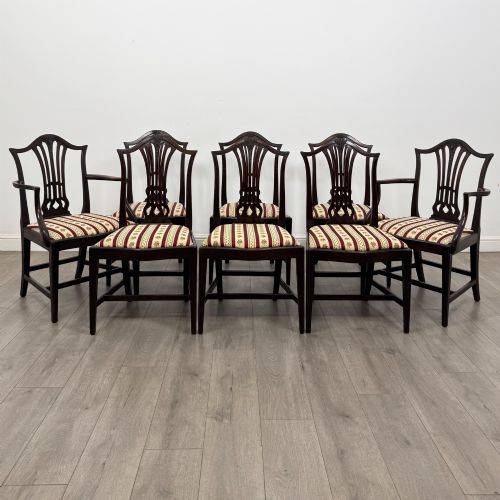
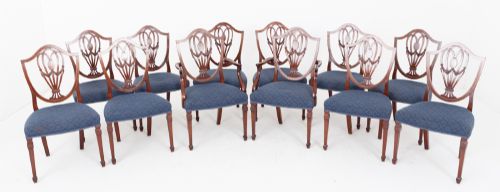
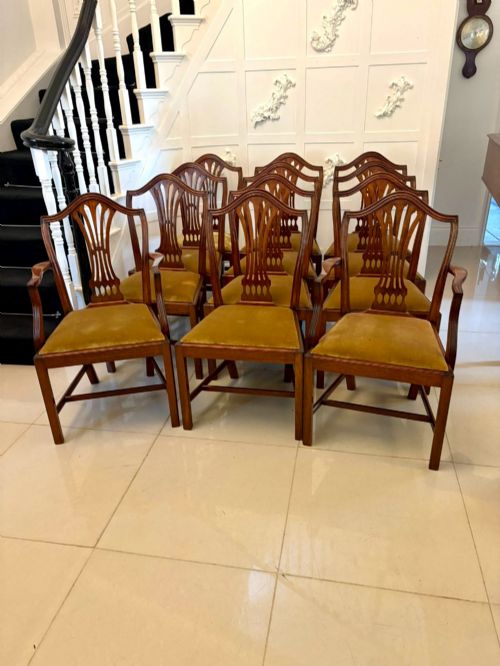
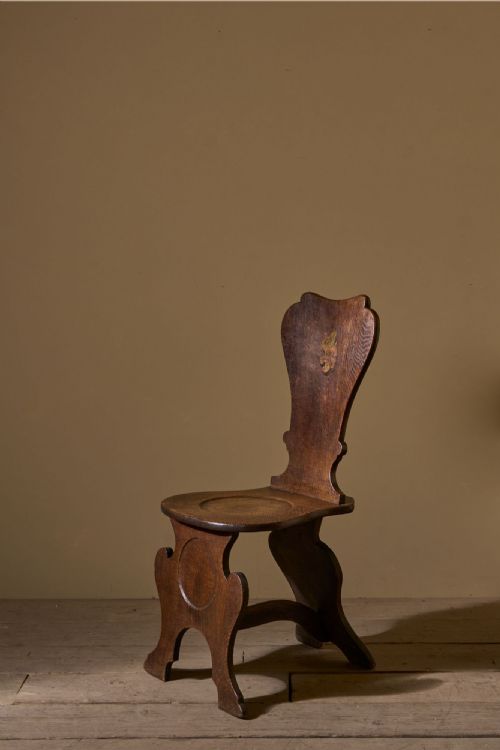
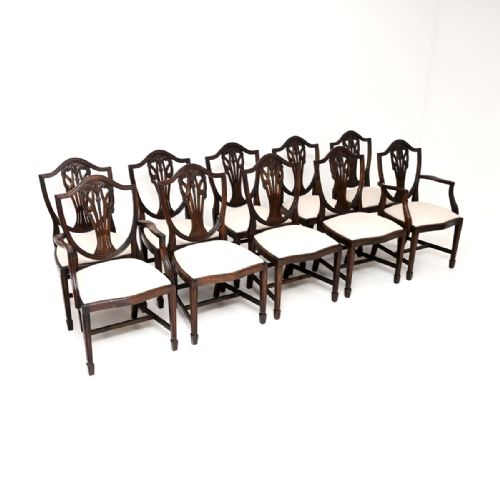
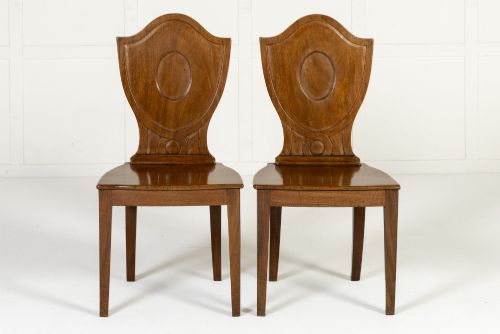
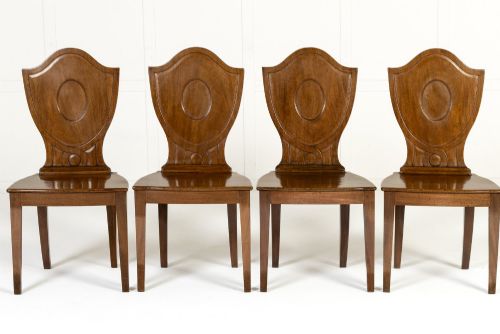
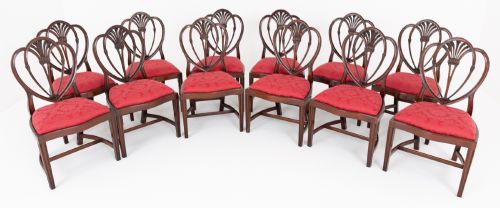
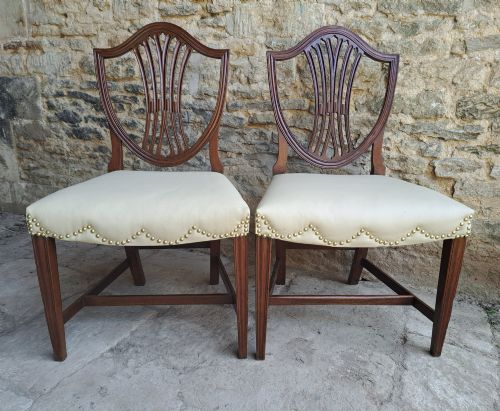
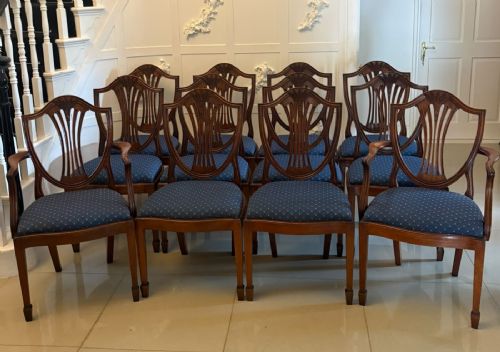
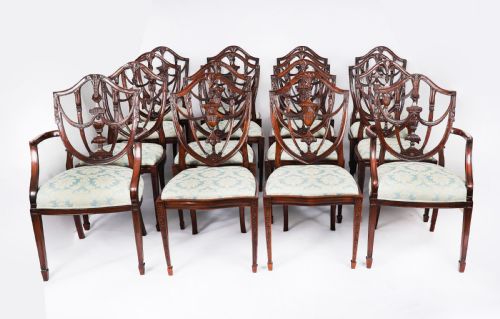
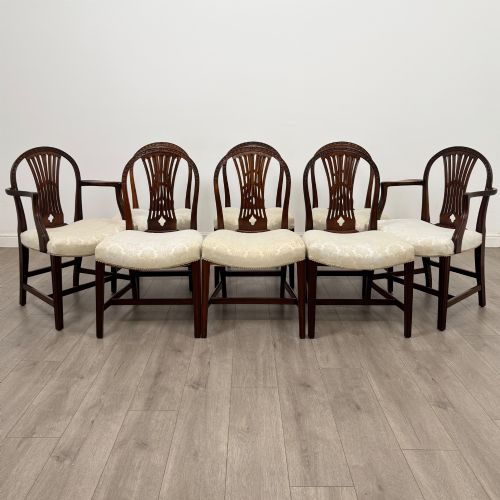
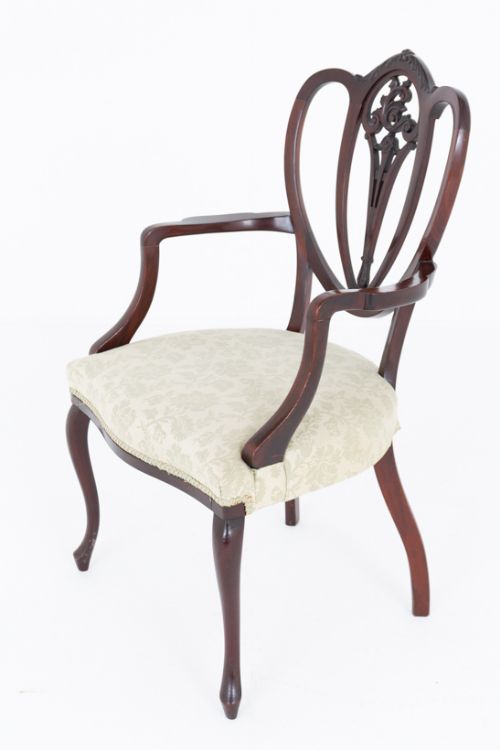
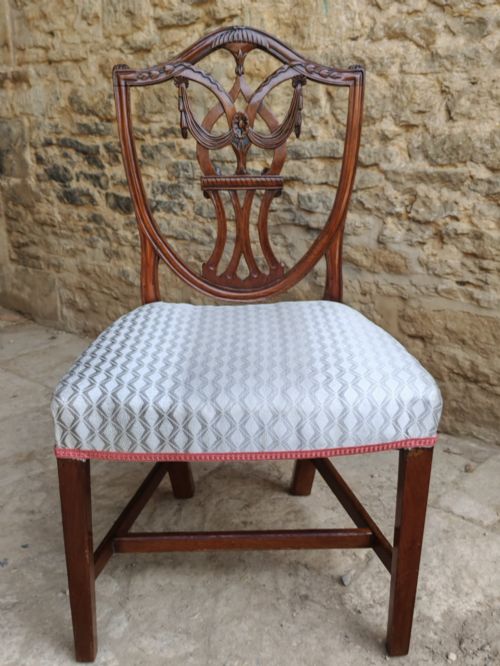
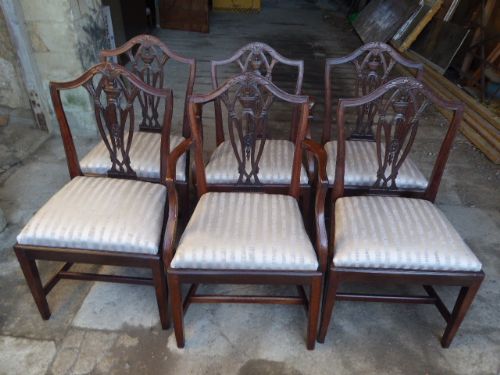
A georgian shield back typically takes the form of a dining chair, carver, or hall chair defined by an open backrest shaped like an inverted shield or heart. These pieces are most frequently encountered as dining sets, ranging from single pairs to large groups of twelve or sixteen.
The form emerged during the late eighteenth century through the designs of cabinetmakers such as George Hepplewhite and Thomas Sheraton. Alongside genuine eighteenth-century examples, buyers regularly find revival sets produced during the Victorian era and the early twentieth century.
Materials and construction methods
Mahogany serves as the primary timber for these chairs, selected for its strength and rich grain, though examples in oak, yew, walnut, and painted woods also appear in the record. Joinery relies on traditional mortise and tenon joints to secure the slender members of the open backrest without compromising structural integrity.
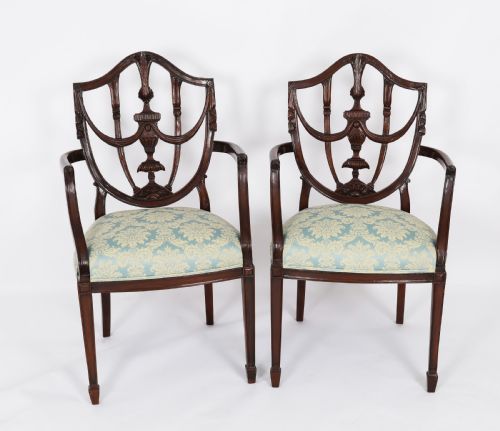
Carved details such as Prince of Wales feathers, wheatsheaves, and delicate drapery are hand-chiselled directly into the solid wood of the splat. Seat frames frequently accommodate drop-in pads upholstered in leather, fabric, or velvet, fixed within the wooden rails.
Listings feature dining chairs, hall chairs, and dressing table mirrors spanning the eighteenth, nineteenth, and twentieth centuries, constructed in mahogany, oak, walnut, and painted wood.
Distinctions in construction and design
The standard of carving on the pierced splat dictates much of the distinction between everyday pieces and superior examples. Crisp, deeply undercut foliage and crisply defined urns indicate a higher tier of workmanship than flat, shallow incisions.
Timber selection and frame cohesion also separate the ranges, where well-figured mahogany and tightly pegged joints ensure longevity. Larger matching sets maintain a higher degree of desirability compared to assembled groups where individual chairs vary slightly in proportion.
The Georgian Shield Back Glossary
- Shield back
- A chair backrest shaped like an inverted shield, characteristic of late eighteenth-century design. This silhouette often incorporates pierced splats decorated with carved drapery or plumes.
- Carver
- An armchair designed to match a set of dining chairs, typically featuring open arms and a wider seat. These were traditionally placed at the heads of the dining table.
- Splatted back
- A chair back featuring a central vertical wooden panel connecting the crest rail to the seat. In shield back designs, this splat is frequently pierced and intricately carved.
- Drop-in seat
- A removable wooden frame upholstered separately and dropped into a ledge within the chair seat rails. This construction method allows for straightforward reupholstering.
- Prince of Wales style
- A specific decorative motif featuring three ostrich feathers bound by a ribbon, commonly carved into the central splat of late eighteenth-century chairs.
Georgian Shield Back: Frequently Asked Questions
How do I spot a reproduction?
Distinguishing period examples from later revivals requires examining the timber ageing, tool marks, and construction wear around the joints. Eighteenth-century pieces exhibit hand-cut joinery and oxidation patterns consistent with long use.
Later Victorian and twentieth-century revivals often utilise standardised machine cutting and different secondary woods on the interior frame components. Comparing the patination of the wood surfaces helps confirm the chronological age of the piece.
Are these chairs comfortable for daily dining?
These seats were originally designed for upright posture during formal eighteenth-century meals, meaning the carved backrest offers firm lumbar support rather than deep cushioning. The upright geometry encourages an elegant sitting position.
Modern comfort depends largely on the upholstery pad within the drop-in frame, which can be adjusted with appropriate padding and supportive webbing. Many buyers use them daily by pairing sturdy construction with durable fabric or leather covers.
Can I mix different shield back chairs?
Assembling a dining set from mismatched chairs was common historically, and many listings offer groupings that were collected over time rather than made as a single batch. Subtle variations in wood tone and carving detail can complement each other if the overall proportions align.
Matching armchairs with side chairs works well when the crest rail height and shield proportions share similar stylistic traits. Checking the seat height ensures a uniform level around the dining table.
What is the difference between Hepplewhite and Sheraton styles?
Hepplewhite shield backs typically feature sweeping, curved outlines with heart-shaped or rounded shield frames enclosing pierced, flowing splats. The overall aesthetic emphasises graceful, undulating lines.
Sheraton designs within this category tend to introduce more rectilinear elements, straight tapered legs, and geometric lattice patterns inside the shield frame. Both styles emerged during the same late eighteenth-century period but display distinct geometric preferences.