







Carved Vase Splat Chairs
Carved vase splat chairs are quintessential seating forms defined by their distinctive central back panels, offering architectural presence to traditional interiors.
Carved Vase Splat Chairs
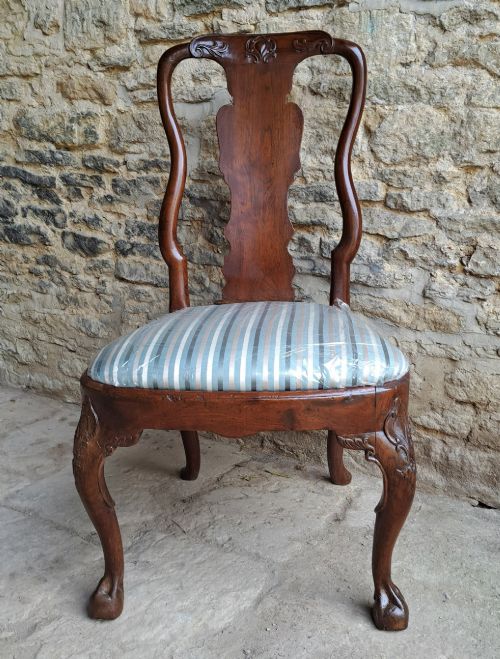
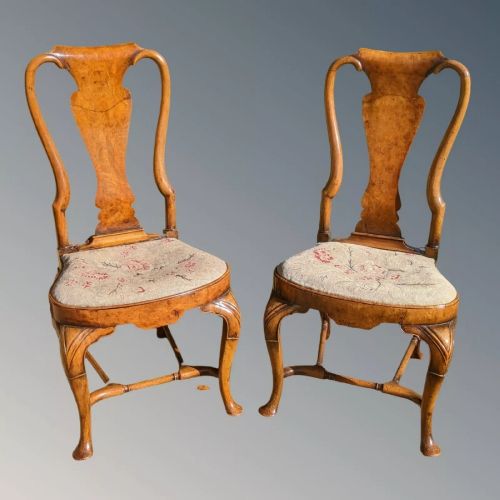
Carved vase splat chairs are wooden seating forms characterised by a central vertical splat shaped like a vase, which supports the upper crest rail. These pieces span several centuries of design, with particular representation from the Georgian period through to later revival movements.
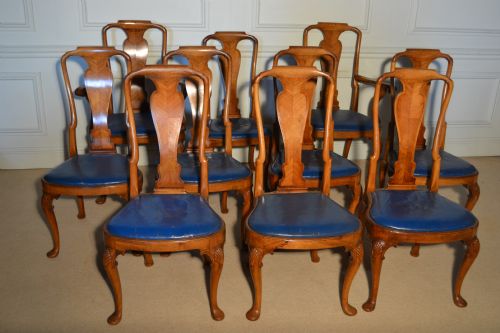
The selections available on this page encompass various forms including side chairs, dining chairs, open armchairs, carver chairs, and multi-piece sets. Walnut and mahogany predominate as the primary woods utilised across these examples, alongside oak in specific revival pieces.
Buyers will encounter both authentic 18th-century pieces and later interpretations from the 19th and 20th centuries, including Queen Anne, George I, and George II styles. Upholstery varies across the pieces, featuring textiles, fabrics, and leather on drop-in or fixed seats.
Determinants of quality
Quality rests in the precision of the timber selection and the depth of the carving on the splat and crest rail. Superior examples display harmonious proportions where the vase contour integrates smoothly with the surrounding frame and legs.
The integrity of the original framing timbers and the crispness of edge moulding separate standard production from high-grade cabinet work. Secondary woods used in the interior framing and seat blocks also indicate the standard of construction.
Carved Vase Splat Chairs Retail Price Guide 2026
Typical asking prices for carved vase splat chairs among the pieces listed under this phrase on Sellingantiques today, from the lower quarter to the upper quarter. They describe what is for sale here now, not the wider market.
Several chairs feature drop-in seats, hiding generations of forgotten upholstery tack holes beneath the fabric.
Charles Tozer·Cooper & Holt
The Carved Vase Splat Chairs Glossary
- Splat
- The vertical strip of wood running from the seat to the top rail in the centre of a chair back. This component is shaped to resemble a vase on the pieces catalogued here.
- Crest rail
- The uppermost horizontal member of a chair back. It often receives carved ornamentation such as shells or husks.
- Carver chair
- An armchair designed in the style of the matching dining chairs to sit at the head of a table. These pieces often feature open arms terminating in scrolls or grips.
- Drop-in seat
- A removable wooden frame upholstered separately and dropped into the seat rails of the chair. This construction method allows for straightforward reupholstering without dismantling the frame.
- Marquetry
- The art of applying decorative veneer pieces to a structure to form geometric or floral designs. Dutch examples in these listings utilise this technique extensively on walnut surfaces.
Carved Vase Splat Chairs: Frequently Asked Questions
What is a vase splat?
A vase splat is the shaped wooden upright in the middle of a chair back that resembles the silhouette of a classical vase. This form evolved during the late 17th century and remained central to furniture design through the Georgian era.
The contour provides lumbar support while offering a canvas for cabinetmakers to apply carved motifs like scrolling leaves or central shell ornaments.
How do I date a walnut chair?
Dating requires examining the timber grain, the method of joinery, and the wear patterns on the feet and stretchers. Early 18th-century pieces often utilise solid walnut with hand-cut joints and specific patination built up over generations.
Revival pieces from the late 19th and early 20th centuries generally show machine assistance in the internal joinery and uniform finishing on secondary timbers.
Are these chairs suitable for daily dining?
These seating forms were originally built for domestic dining and social gatherings, making them durable for regular use. The sturdy mortise and tenon construction supports everyday weight when maintained correctly.
Care should be taken with antique upholstery fabrics and older wooden joints, ensuring chairs are lifted by the seat rail rather than the arms or crest rail.
What is the difference between walnut and mahogany?
Walnut was the dominant cabinet timber in Britain during the late 17th and early 18th centuries, prized for its rich brown tones and decorative grain figures. Mahogany rose to prominence later in the 18th century due to its strength and ability to hold extremely sharp carved details.
Mahogany typically presents a darker reddish-brown colour compared to the warmer, golden-brown hues found in walnut furniture.
What does George II style mean?
George II style refers to furniture produced during the mid-18th century reign or later revival periods that emulate the architectural heaviness and carved ornamentation of that era. Pieces from this design vocabulary often feature bolder proportions and robust cabriole legs.
Revival examples built in the 19th or 20th centuries adopted these same aesthetic markers using contemporary workshop tools.