


Red Tekke Weaving
Red tekke weaving comprises tribal rugs, bags and dowry pieces from Central Asia, valued for rich natural dyes and geometric guls.

Red Tekke Weaving
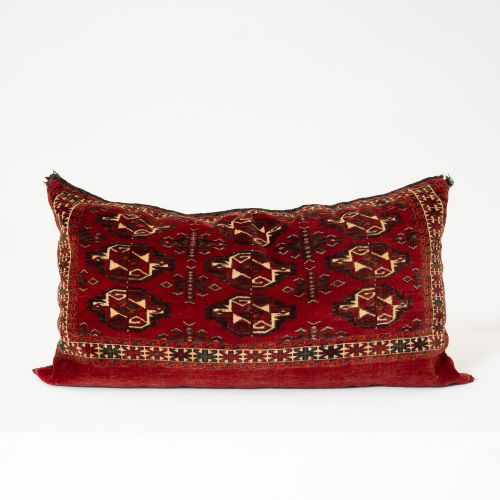
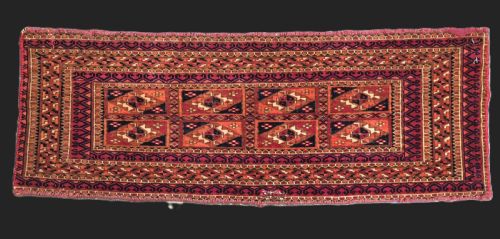
When searching for red tekke weaving, buyers encounter tribal textiles originating from Central Asian nomadic groups, primarily spanning the nineteenth century. These items manifest as functional household objects, including torba bag faces, chuval storage sacks, engsi door hangings, and dowry carpets.
The material record on this page leans heavily toward nineteenth-century examples, particularly pieces produced around eighteen-eighty, alongside fragments and complete bags featuring original plain weave backs. Forms range from small tent bags to larger carpets associated with the Merv Oasis and the Emirate of Bukhara.
Tribal weaving traditions dictate the recurring patterns observed here, notably the principal gul motifs and curled leaf designs. Collectors find both fragments and intact items complete with hanging loops or original backs.
Materials and construction
The structure of these textiles relies on a foundation of wool and cotton, with occasional inclusions of linen and silk highlights. Artisans employed natural dyes to achieve the characteristic deep red colour palettes that define the group.
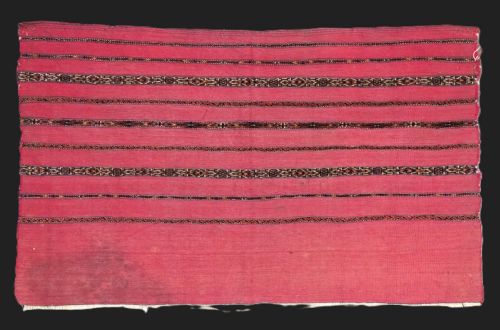
Weaving techniques vary from standard tribal densities to extremely fine knots executed across storage sacks and carpets. Finished pieces frequently incorporate plain weave backs attached to the pile faces.
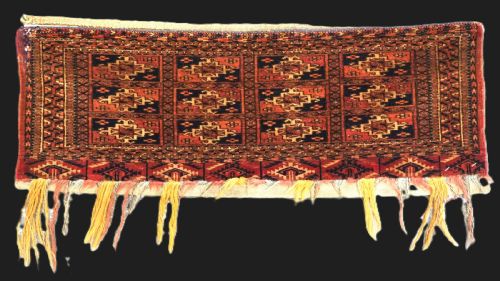
Some bags retain their original hanging loops, ready to be mounted back on a nomadic tent wall after a mere century or two off.
Assessing quality
Quality in these textiles rests upon the density of the weave and the precision of the drawing within the guls. Pieces executed with very fine knots and clear, crisp rendering of motifs stand apart from standard production.
The vibrancy and depth of the natural dyes significantly influence the visual impact of each piece. Condition also plays a role, with complete examples retaining original backs and hanging loops commanding distinct attention.
The Red Tekke Weaving Glossary
- Gul
- A primary medallion motif repeated across Turkmen carpets and tribal bags. These octagonal or polygonal designs identify the weaving tribe.
- Chuval
- A large storage sack utilised within the nomadic tent for bedding and household goods. These items frequently survive as complete pieces with plain weave backs or as decorative pile faces.
- Torba
- A smaller storage bag hung on the interior walls of a yurt. They display careful tribal designs akin to larger chuvals.
- Ensi
- A tribal door hanging placed at the entrance of the nomadic tent. These textiles feature characteristic partitioning in their field design.
- Mafrash
- A rectangular storage bale or panel associated with nomadic transport and household organisation. Fragments and complete faces appear in tribal collections.
Red Tekke Weaving: Frequently Asked Questions
How are torbas different from chuvals?
Torbas are smaller horizontal storage bags compared to the larger proportions of the chuval sack. They were typically suspended around the interior lattice of the nomadic dwelling.
Both forms utilise similar tribal iconography, but their dimensions reflect distinct household functions.
What materials are used in these textiles?
Traditional construction employs wool foundations and pile, supplemented by cotton and linen elements in specific structural areas. Silk highlights occasionally appear in select dowry rugs.
Natural dyes provide the varied red tones that dominate the palette of these Central Asian nomadic creations.
How do you date nineteenth century pieces?
Dating relies upon structural analysis, wool quality, and the chemical composition of the natural dyes utilised by the weavers. Stylistic evolution of the guls also provides guidance for placement within the nineteenth century.
Comparative examples from documented collections help narrow the period of origin closer to specific decades like eighteen-eighty.