






Red Silk Suzani Embroidery
When you search for red silk suzani embroidery, you uncover Central Asian tribal textiles worked in vivid silk thread on rich crimson grounds.
Red Silk Suzani Embroidery
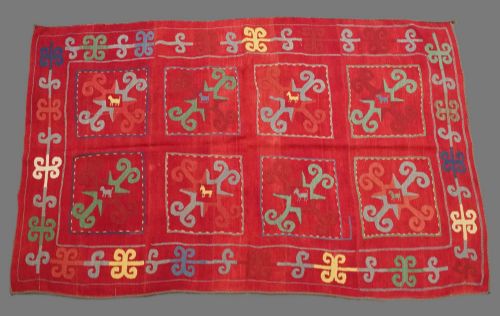
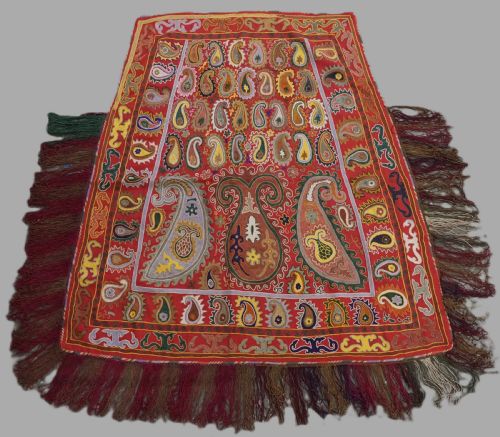
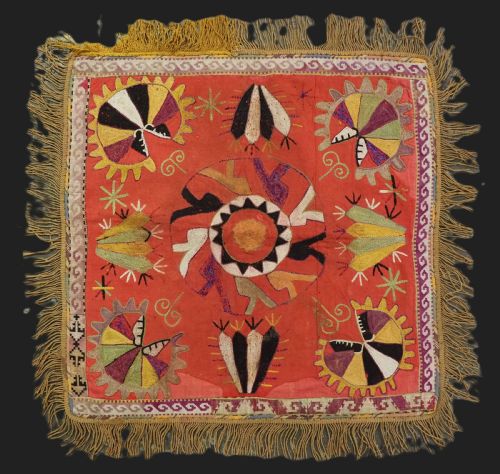
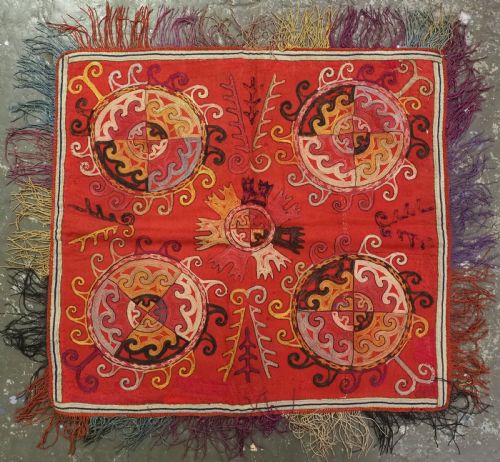
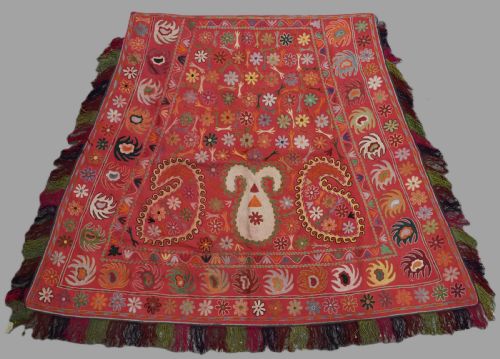
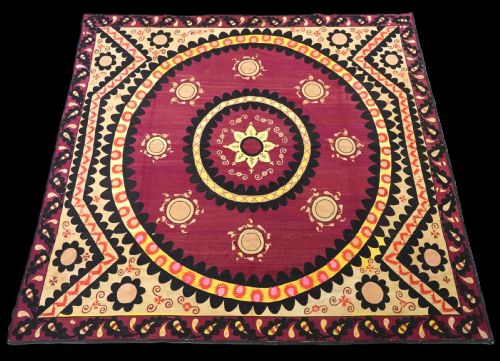
A red silk suzani embroidery search phrase brings up Central Asian tribal and folk art textiles, primarily originating from Uzbekistan and created as wall hangings, dowry cloths, or horse covers. These pieces span from the mid-nineteenth century through the early twentieth century, showing regional styles from Tashkent, Bukhara, and Shakrisabz.
The most common forms on this page include large wall hangings, smaller dowry wraps known as boghkchah, and nomadic tribalilgich or saddle covers. Many examples display bold floral motifs, architectural designs, or central star patterns worked by groups such as the Lakai tribe.
Makers utilised various regional formats, from full work suzanis that cover the entire ground to nim suzanis which measure half the standard size. Each textile reflects the domestic and ceremonial traditions of Central Asian households, functioning historically as decorative items or protective household amulets.
How they were made
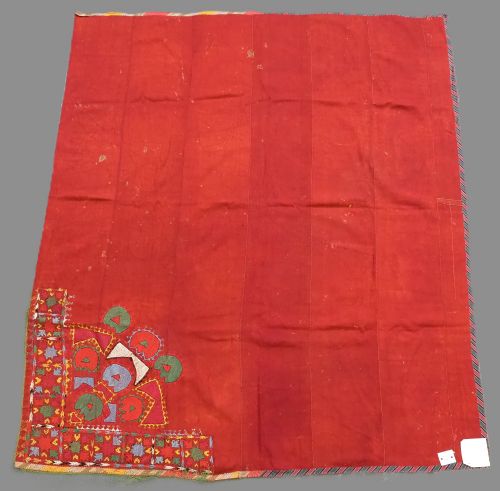
Artisans constructed these textiles by embroidering fine silk thread onto various foundation materials, predominantly cotton, wool, or adras, which is a traditional silk and cotton blend. The ground fabrics frequently present a deep red hue derived from natural dye sources typical of Central Asian workshops.
Needlework techniques varied by region and tribal group, with some pieces showing dense, full embroidery that completely obscures the backing cloth. Other items incorporated kilim woven strips or relied on chain stitch and surface embroidery to form intricate floral and geometric patterns.
Red Silk Suzani Embroidery Retail Price Guide 2026
Typical asking prices for red silk suzani embroidery among the pieces listed under this phrase on Sellingantiques today, from the lower quarter to the upper quarter. They describe what is for sale here now, not the wider market.
Object forms documented on this site include wall hangings, dowry wraps, saddle covers, and yurt decorations from Central Asian traditions.
What varies in quality
The density of the needlework largely separates standard examples from exceptional pieces, with full work suzanis requiring significantly more time and material investment from the embroiderer. The precision of the design layout, particularly in complex palak or architectural patterns, also marks the skill of the original maker.
The choice and vibrancy of the ground fabric and silk threads play a major role in the visual impact of the textile. Pieces retain differing levels of original colour saturation depending on the quality of the dyes used and the subsequent exposure to light over the decades.
The Red Silk Suzani Embroidery Glossary
- Suzani
- An embroidered tribal textile originating from Central Asia, traditionally worked in silk on a cotton or wool ground as part of a bride's dowry. These pieces were utilised as wall hangings, bed covers, or ceremonial wraps.
- Adras
- A traditional Central Asian woven fabric combining silk warp threads and cotton weft threads. It provides a textured, durable foundation for surface embroidery.
- Ilgich
- A specific type of dowry embroidery created by the Lakai tribe for use as a wall hanging inside a yurt or nomadic dwelling. They often feature distinct geometric motifs distinct from urban workshop styles.
- Boghkchah
- A traditional square or rectangular dowry cloth wrap used for storing household valuables and clothing. They share the same needlework techniques found on larger wall hangings.
- Nim Suzani
- A half-sized version of the standard suzani wall hanging, designed for smaller domestic spaces or specific alcoves within traditional homes.
- Palak
- A fully embroidered Tashkent suzani type dominated by large central star motifs and dense floral symbolism. The term translates to celestial or sky.
Red Silk Suzani Embroidery: Frequently Asked Questions
How were these textiles used originally?
These embroidered textiles served primarily as decorative wall hangings in Central Asian homes, or functioned as functional dowry items such as bedding covers and storage wraps. Nomadic groups also created specialised versions for horse covers and saddle rugs.
Families valued them as status symbols and protective household items, incorporating them into marriage ceremonies where the bride displayed her needlework skills.
Where did these embroideries come from?
The pieces originate primarily from historical centres and tribal regions across Uzbekistan, including Bukhara, Tashkent, Shakrisabz, and Samarkand. Nomadic groups like the Lakai tribe and regional makers such as the Kyrgyz also produced distinct styles.
Urban workshops focused on dense floral compositions, whereas tribal makers often incorporated geometric motifs and nomadic symbols into their horse covers and yurt decorations.
How do I care for an antique textile?
Protect the silk embroidery and red ground fabrics by hanging the textile out of direct sunlight to prevent fading of the natural dyes. Support the full weight evenly across the top edge if mounting on a wall rather than pinning it by corners.
Avoid chemical cleaning methods and consult a specialist textile conservator if the piece requires dust removal or structural stabilization over time.
How do I tell regional styles apart?
Urban workshop pieces from centres like Tashkent or Bukhara typically display symmetrical floral sprays, vines, and architectural elements executed in meticulous detail. Tribal examples from groups like the Lakai often feature bolder, abstracted geometric forms and narrower formats.
Foundation materials also offer clues, as nomadic items frequently utilise wool or adras grounds, while urban pieces more commonly employ plain cotton backings.