


Central Asian Suzani Throw
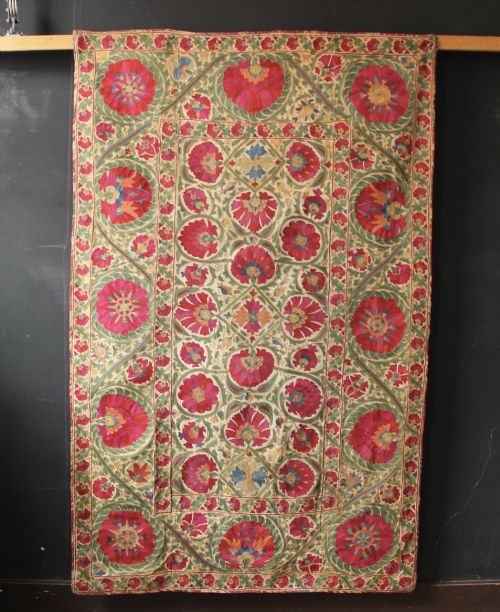
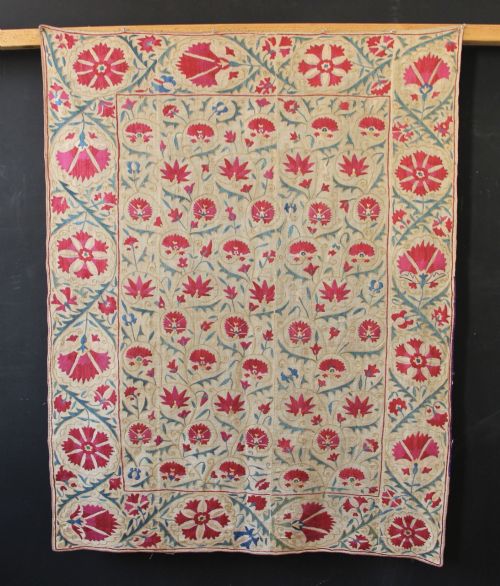
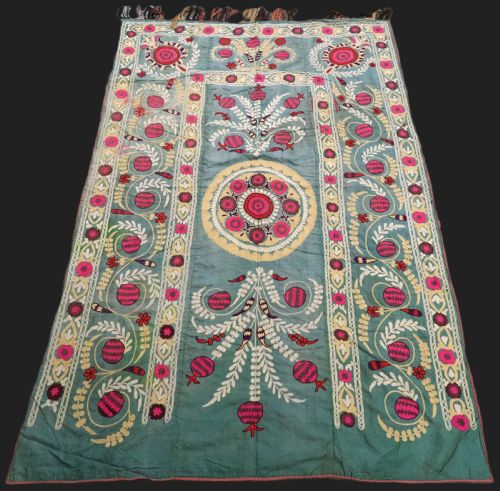
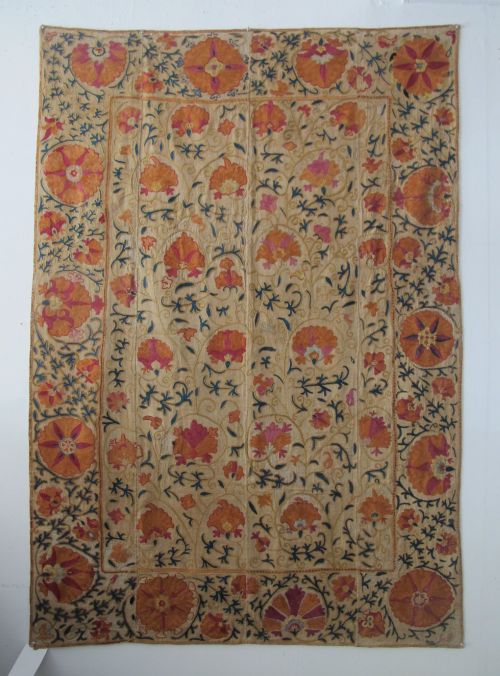
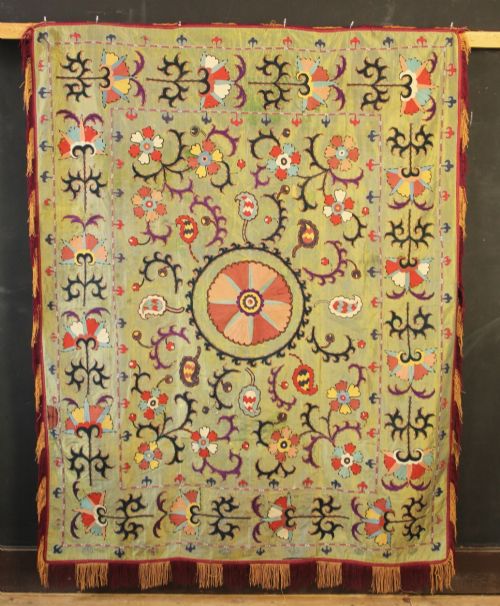
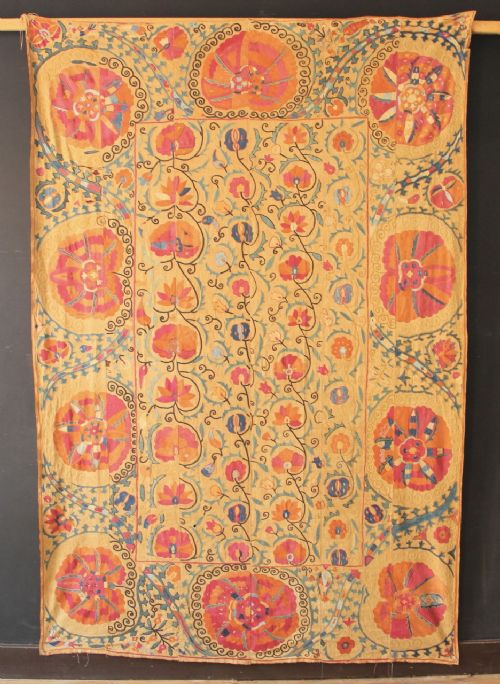
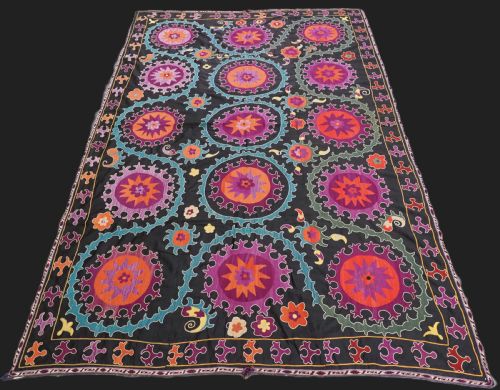
A central asian suzani throw brings monumental needlework into a room, offering richly patterned silk embroidery worked across traditional cotton or wool foundations.
Central Asian Suzani Throw
A central asian suzani throw is a traditional embroidered textile originating from workshops and tribal groups across Uzbekistan and the wider region, designed primarily as ceremonial bed covers or wall hangings. These pieces range from compact nim suzani variants to large medallion compositions created in historic centres such as Bokhara, Tashkent, Samarkand and Shahrisabz.
The version most commonly encountered on this page is an antique or vintage uzbek suzani dating from the nineteenth or early twentieth century. Examples frequently display distinctive regional traits, including the dynamic compositions associated with Lakai makers or the dense floral layouts characteristic of Tashkent work.
Materials and Techniques
Makers utilised vibrant silk thread to execute dense embroidery across woven foundations. These ground fabrics vary from plain cotton and red wool to mixed adras textiles woven from silk and cotton fibres.
Needlework techniques include full embroidery covering the entire ground cloth as well as open medallion formats that allow the contrasting colour of the backing material to show through.
Nomadic embroiderers occasionally incorporated intentional geometric irregularities into their work to ward off the evil eye and protect the household.
Distinctions in Quality
The standard of a central asian suzani throw is determined by the density of the needlework and the precision of the silk embroidery. Fully worked examples, often described as full work, demonstrate exceptional time investment through dense coverage that leaves little of the ground fabric exposed.
Colour saturation and the harmonious balance of natural dye palettes further distinguish superior pieces. The vitality of the silk threads against contrasting cotton or wool grounds dictates the visual impact of the textile.
The Central Asian Suzani Throw Glossary
- Suzani
- An embroidered tribal textile originating from Central Asia. The word derives from the Persian term for needle.
- Nim
- A smaller variant format of suzani, typically half the size of a standard bed cover. These compact pieces were often utilised as decorative hangings.
- Palak
- A large-scale suzani design characterised by a central star or medallion motif surrounded by dense astrological or floral embroidery. Full work palak examples cover the entire ground fabric.
- Adras
- A traditional hand-woven fabric composed of silk warp threads and cotton weft threads. It provides a stable yet lustrous foundation for embroidery.
- Lakai
- Associated with nomadic tribal groups known for bold, geometric interpretations and dynamic colour combinations. Lakai work often utilises red wool or cotton grounds.
Central Asian Suzani Throw: Frequently Asked Questions
How do you distinguish between regional suzani styles?
Regional attribution relies on examining specific motifs, colour palettes, and ground fabrics. Tashkent pieces often feature dense palak star designs on white or dark cotton.
Bokhara examples tend towards refined floral layouts with fine silk stitching. Samarkand and Shahrisabz workshops display distinct variations in medallion placement and border geometry.
Tribal Lakai pieces stand apart through smaller formats and eccentric, spontaneous geometric arrangements. These nomadic works frequently employ red wool grounds rather than standard cotton.
Comparing stitch density and background materials helps clarify the likely origin. Each centre maintained unique workshop traditions passed down through generations.
Can suzani throws be used as floor rugs?
These textiles are built from delicate silk embroidery on cotton, wool, or adras foundations rather than heavy wool pile. Placing them on the floor exposes the fragile silk threads to excessive friction and crushing.
They function best as wall art, draped over furniture, or utilised as light bed covers. Preserving the integrity of the needlework requires keeping them away from high-traffic zones.
Proper mounting distributes the weight evenly across the backing fabric when displayed on walls. This prevents structural strain on the historic textile fibres over time.
Respecting the original materials ensures the embroidery retains its vibrant colour and texture. Treating them as fine art textiles guarantees longevity.
What is the difference between full work and standard suzanis?
Full work suzanis feature total embroidery coverage across the entire foundation fabric. This intensive technique requires immense labour and large quantities of dyed silk thread.
Standard or medallion variants leave portions of the ground fabric exposed around central motifs. This open approach allows the underlying cotton or wool colour to contribute to the overall design.
Both styles represent authentic nineteenth and twentieth-century Central Asian craftsmanship. The choice between them depends entirely on visual preference for dense pattern versus open space.
Evaluating the stitch coverage helps collectors understand the workshop investment behind each individual piece. Full work examples naturally showcase greater density of needle skill.