


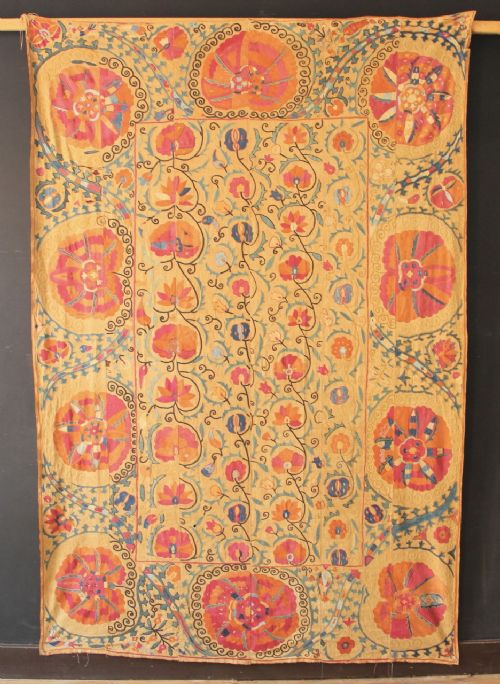

Floral Embroidered Textile
A floral embroidered textile brings pattern and colour to a room through needlework traditions spanning Central Asia, Europe and the Ottoman Empire.
Floral Embroidered Textile
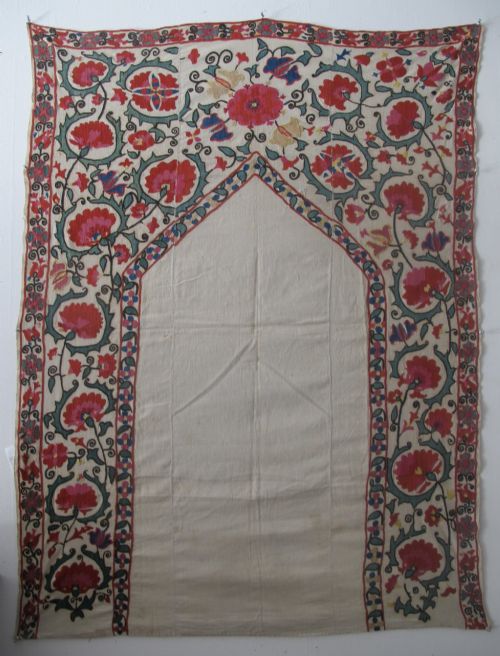
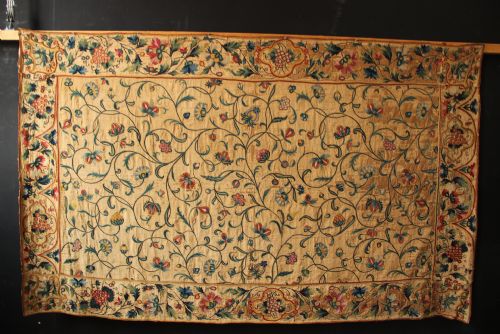
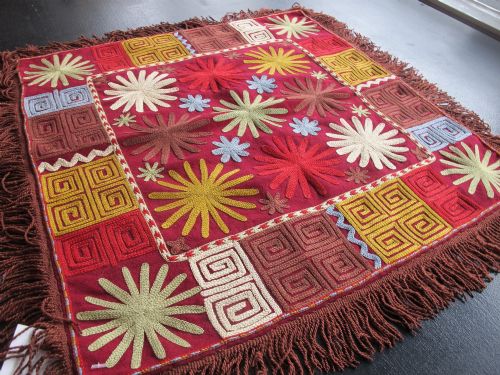
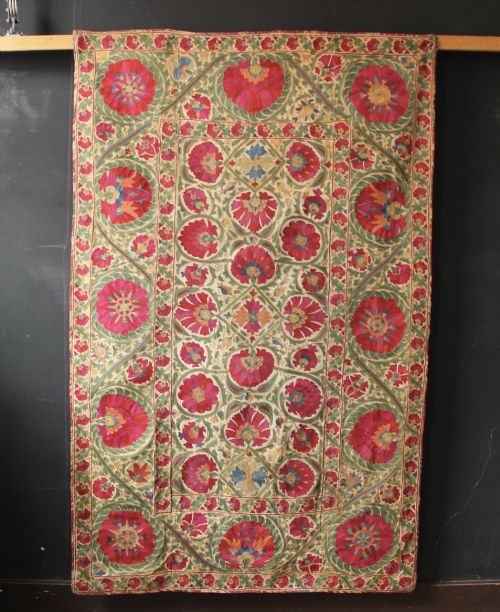
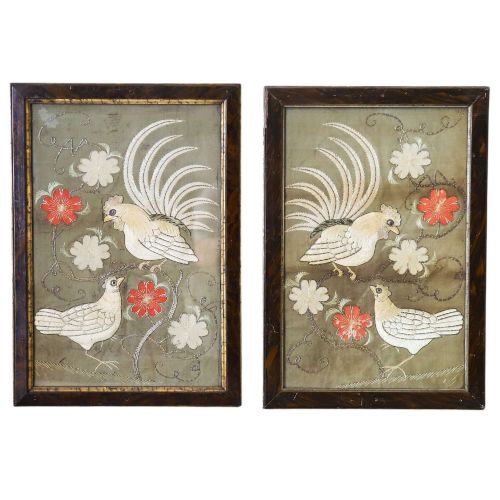
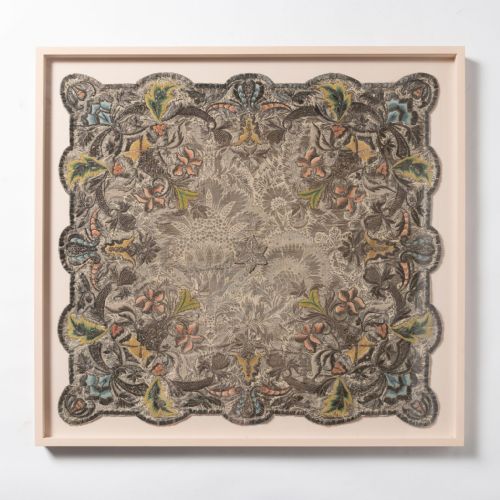
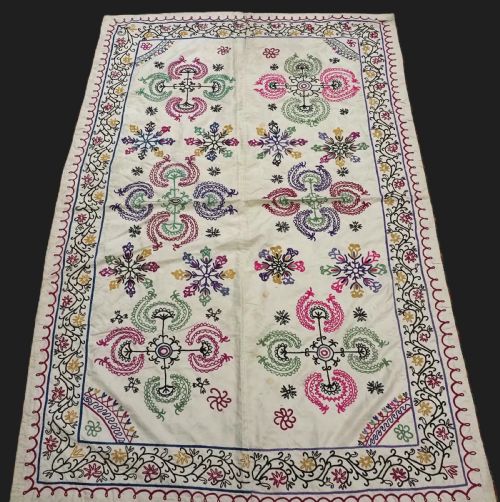
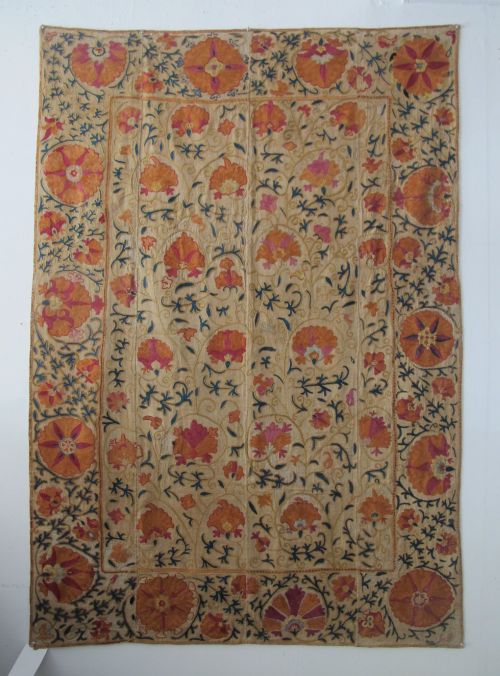
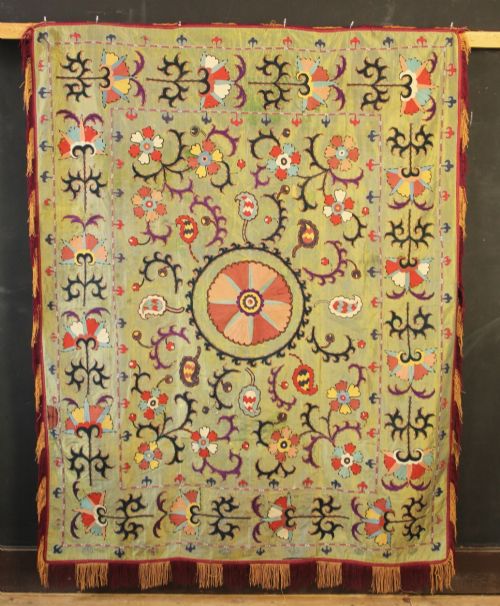
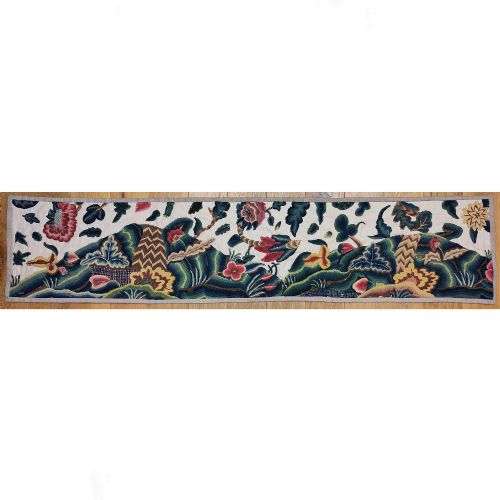
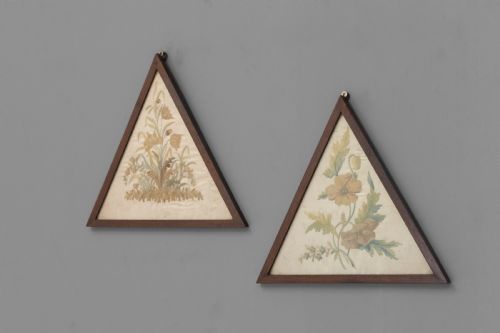
A floral embroidered textile encompasses historical wall hangings, framed panels, samplers and decorative covers created across multiple centuries. Buyers encountering this selection will frequently discover Central Asian suzanis alongside English crewelwork, Ottoman fragments and Persian needlework.
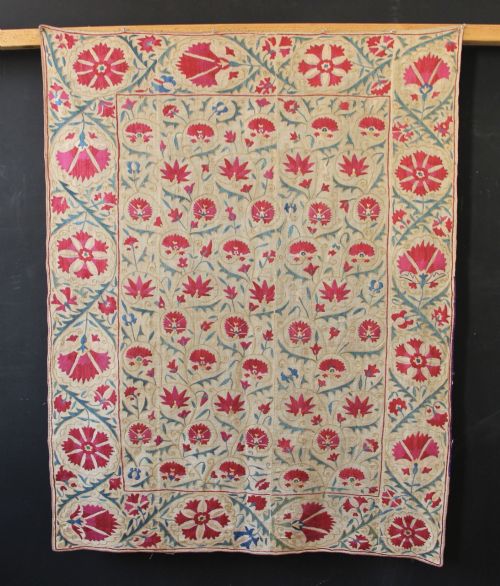
The assortment ranges from large medallion suzanis originating in Uzbekistan to smaller framed pieces and nineteenth-century samplers. Each textile records regional motifs and domestic handwork traditions preserved across generations.
How they were made
Needlework is executed by hand using silk, cotton or wool threads stitched onto supporting grounds of linen, cotton, canvas or wool felt. Regional workshops employed specific techniques, such as the tambour work found on Persian Rasht embroideries or the dense surface stitching of Central Asian suzanis.
Support materials vary from woven cotton and linen foundations to heavy felted wool grounds, frequently mounted or framed for interior display.
Listings feature textiles spanning the eighteenth, nineteenth and early twentieth centuries, originating from Uzbekistan, Persia, England, France, Portugal, China and Italy.
What varies in quality
Quality rests upon the fineness of the needlework, the complexity of the design layout and the integrity of the ground fabric. Tighter stitch density and balanced proportions separate accomplished workshop pieces from simpler domestic examples.
The preservation of original ground materials and the vibrancy of surviving silk or wool threads largely determine the overall standing of an antique textile panel.
The Floral Embroidered Textile Glossary
- Suzani
- A large embroidered textile from Central Asia traditionally worked in silk on a cotton or linen ground. These panels often feature bold floral medallions and botanical motifs.
- Crewelwork
- A style of embroidery utilising wool yarn to execute flowing floral and foliate designs. This technique appears frequently in English decorative textiles from the seventeenth century onwards.
- Nim Suzani
- A smaller scale variant of the traditional Central Asian suzani. These half-sized panels display compressed botanical arrangements.
- Sampler
- A piece of needlework produced to demonstrate proficiency in various stitches. Historical examples often incorporate alphabets alongside floral and architectural borders.
- Rasht embroidery
- A traditional Persian textile technique involving inlaid wool felt and fine silk chain stitching. These works display intricate botanical patterns against contrasting ground colours.
Floral Embroidered Textile: Frequently Asked Questions
How should I hang a textile panel?
Heavy embroidered panels require professional mounting using conservation-grade Velcro systems or padded battens to distribute weight evenly across the upper edge.
Direct attachment through the fabric damages the historic fibres and compromises the structural integrity of the piece over time.
How do I protect antique embroidery from light?
Historic silk and wool threads fade permanently when exposed to direct sunlight or harsh indoor illumination. Position wall hangings on interior walls away from windows to preserve the original dye colours.
Utilising UV-filtered glass on framed needlework provides an additional layer of protection against environmental degradation.
How do I distinguish regional suzani styles?
Uzbek regional centres developed distinct palettes and botanical compositions, allowing collectors to identify particular origins. Bokhara and Nurata panels display characteristic floral medallions, while Lakai pieces feature smaller geometric and figurative elements.
Examining the ground fabric and secondary border designs helps clarify the specific geographical source.