



Vintage Suzani Tapestry
A vintage suzani tapestry brings Central Asian textile art into modern spaces as a vibrant wall hanging or cover.
Vintage Suzani Tapestry
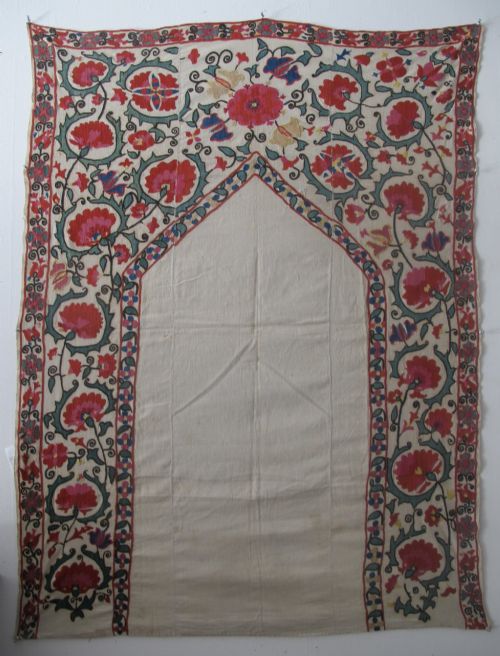
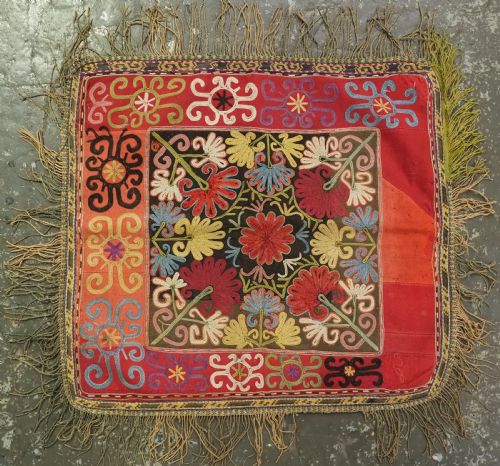
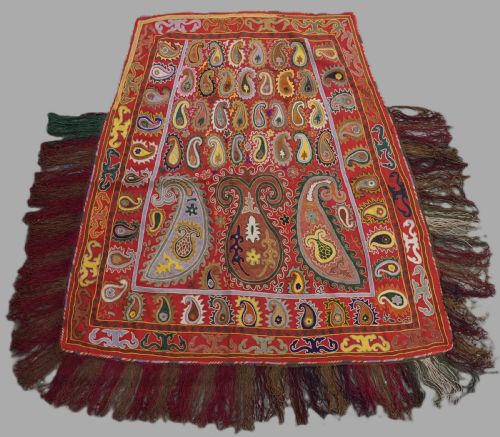
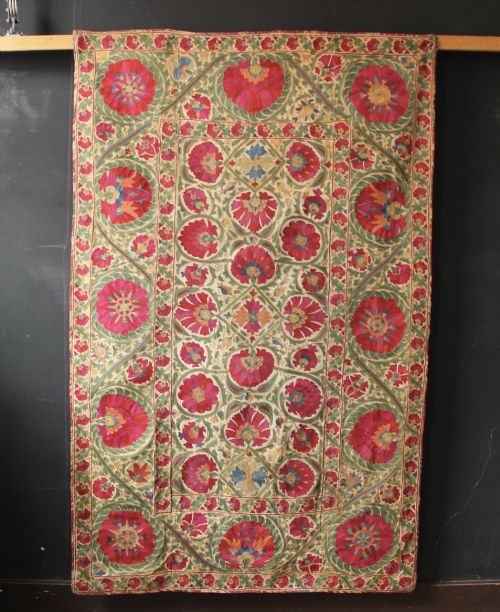
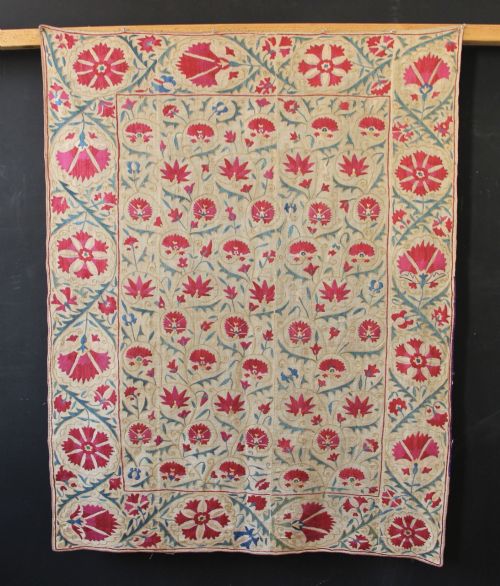
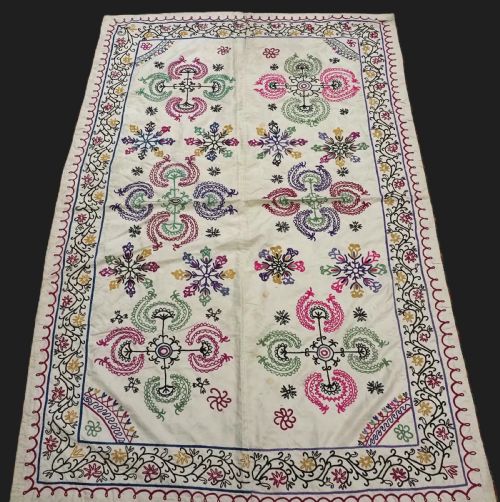
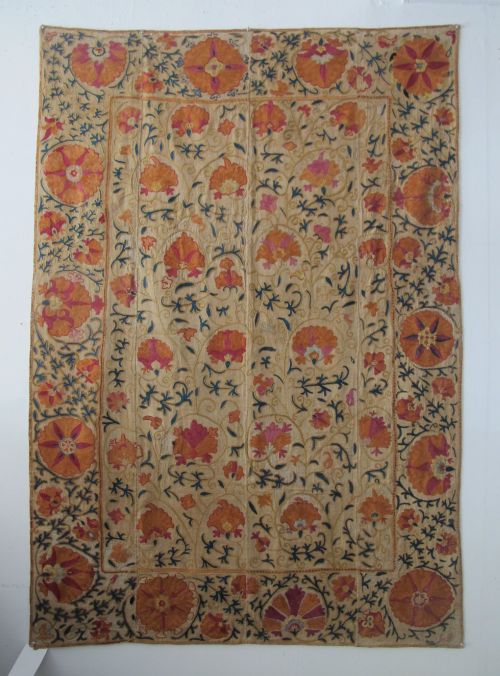
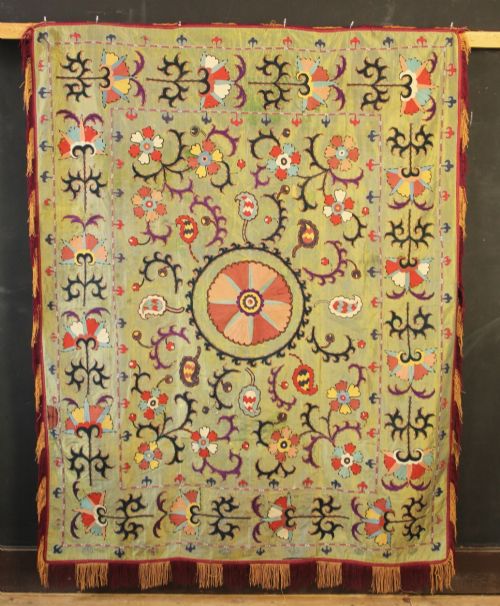
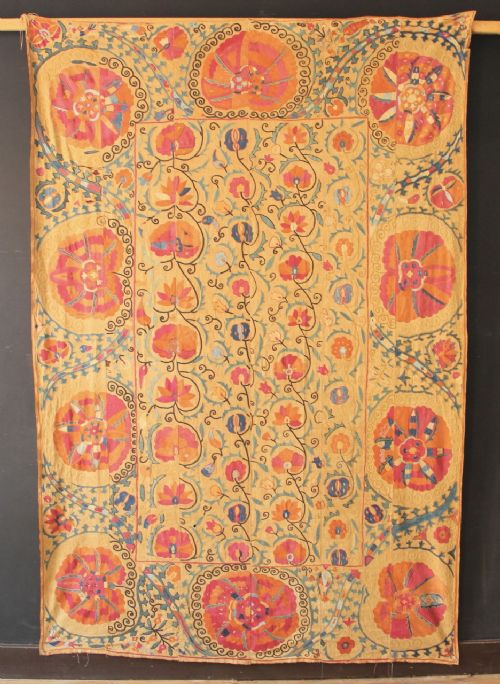
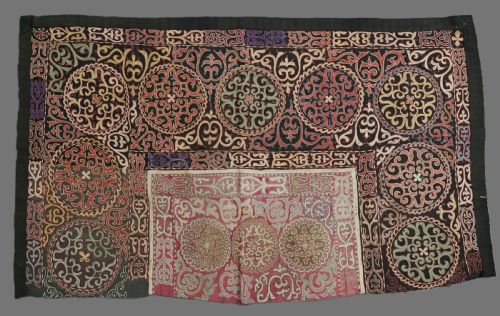
When searching for a vintage suzani tapestry, buyers encounter traditional embroidered textiles originating from Central Asia, particularly Uzbekistan. These pieces take various forms including wall hangings, bed covers, and ceremonial horse or saddle covers created by regional makers.
The selection includes specific regional types such as Bokhara, Tashkent, Samarkand, and Shahrisabz designs. Smaller nim suzani examples appear alongside large medallion variants and prayer format pieces worked on cotton or silk grounds.
Tribal groups like the Lakai contribute distinct smaller embroideries and dowry pieces to the category. Works date from the nineteenth and early twentieth centuries, reflecting traditional motifs and folk art styles.
How They Were Made
Artisans constructed these textiles using silk thread embroidery applied to woven foundations of cotton, wool, or silk. Certain examples incorporate velvet or feature kilim weaving techniques joined in multiple strips.
Needlework methods include full work embroidery where the surface is densely covered with stitched patterns. Ground fabrics often display dyed colours in red, yellow, green, or black beneath intricate floral and geometric motifs.
Vintage Suzani Tapestry Retail Price Guide 2026
Typical asking prices for vintage suzani tapestry among the pieces listed under this phrase on Sellingantiques today, from the lower quarter to the upper quarter. They describe what is for sale here now, not the wider market.
Listings feature pieces spanning the nineteenth century through the 1930s, originating primarily from Uzbekistan and surrounding Central Asian regions.
What Varies in Quality
The density of the needlework fundamentally distinguishes full work embroidery from simpler layouts. Execution ranges from fine, precise stitching to broader folk art interpretations.
Condition and colour retention differ across surviving examples from the nineteenth and twentieth centuries. The harmony of natural dye palettes and the complexity of regional designs set finer pieces apart.
The Vintage Suzani Tapestry Glossary
- Suzani
- An embroidered Central Asian textile traditionally created as part of a bride's dowry. The word derives from the Persian term for needlework.
- Nim Suzani
- A smaller half-size version of a standard suzani embroidery. These compact formats were utilised for specific domestic furnishings.
- Palak
- A large fully embroidered suzani type dominated by a central star or medallion motif. The design covers the entire ground fabric.
- Ilgich
- A small embroidered hanging produced by the Lakai tribe. These pieces served decorative and ceremonial purposes within nomadic households.
- Tush Kyiz
- An elaborate embroidered wall hanging originating from Kyrgyzstan. Families display these large textiles inside traditional yurts.
Vintage Suzani Tapestry: Frequently Asked Questions
What is a suzani used for?
Traditional makers created these textiles as dowry items, wall hangings, bed covers, and ceremonial horse covers. Households utilised them to decorate living spaces and mark important occasions.
Modern interiors frequently employ these embroidered pieces as wall art or decorative throws. Their vibrant patterns add colour and texture to contemporary rooms.
How do I hang a suzani?
Hanging a delicate antique textile requires distributing the weight evenly across the piece. A conservation method involves stitching a fabric sleeve to the back and sliding a thin rod through it.
Direct pinning damages the historic fabric and should be avoided. Professional framers can also mount textiles behind UV-filtering glass for protection.
How can I tell different regions apart?
Regional styles appear through distinct colour palettes, motif arrangements, and embroidery density. Bokhara and Tashkent pieces often feature bold floral sprays on light grounds.
Lakai tribal works typically present smaller formats with geometric or figurative elements. Samarkand and Shahrisabz examples showcase their own characteristic medallion and border compositions.
Are suzanis embroidered by hand?
Historic examples from the nineteenth and early twentieth centuries were stitched entirely by hand using silk thread on cotton or wool foundations. Artisans worked these intricate patterns over many months.
Needlework techniques vary from outline stitching to dense full work coverage. Close inspection reveals the subtle irregularities typical of genuine hand embroidery.