




Traditional Red Suzani Tapestry
A traditional red suzani tapestry brings rich Central Asian texture and botanical colour to a room.
Traditional Red Suzani Tapestry
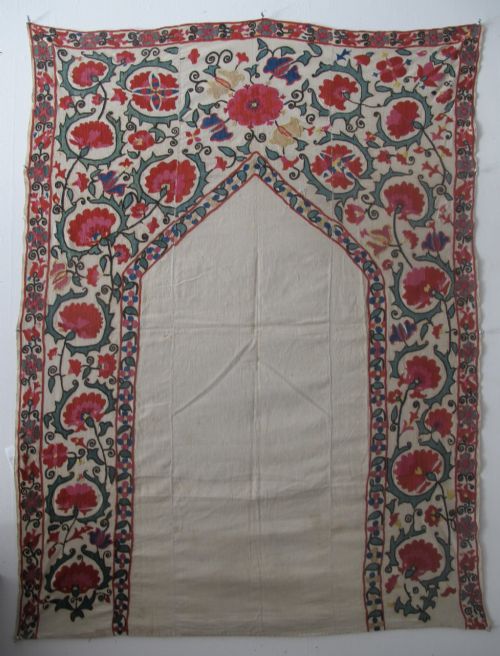
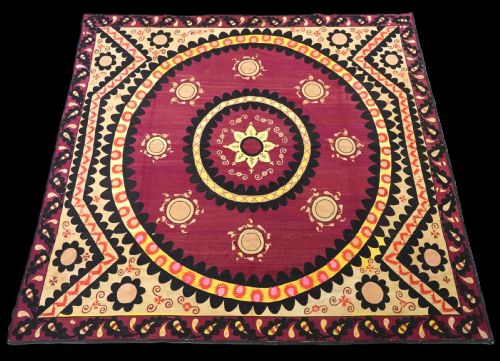
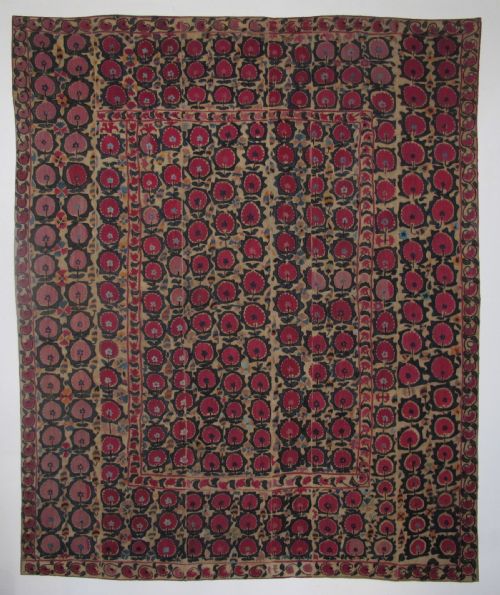
A traditional red suzani tapestry is a textile originating from Central Asia, specifically associated with Uzbek craftsmanship and regional centres such as Bukhara, Shahrisabz, Tashkent and Uratube. These pieces take the form of wall hangings, covers and kilim rugs, often displaying floral designs or architectural motifs on a red ground.
The versions most commonly met on this page date from the nineteenth and early twentieth centuries, spanning periods from roughly eighteen fifty to nineteen thirty. Buyers encounter both full work embroideries and nim suzanis, alongside specific tribal pieces linked to groups such as the Lakai.
How they were made
These textiles rely on natural fibres, predominantly silk embroidery worked onto a cotton or occasionally wool foundation, creating a tactile surface of stitched detail. Certain pieces incorporate kilim weaving techniques, constructed from multiple narrow strips joined together to form the complete textile.
The creation of these works involved skilled needlework executed by hand in Central Asian households and workshops. Artisans utilised dyed threads on red grounds to build up complex floral, palak and architectural compositions.
Traditional Red Suzani Tapestry Retail Price Guide 2026
Typical asking prices for traditional red suzani tapestry among the pieces listed under this phrase on Sellingantiques today, from the lower quarter to the upper quarter. They describe what is for sale here now, not the wider market.
Some nineteenth-century makers clearly lost track of geometry, resulting in floral vases that tilt cheerfully sideways.
What varies in quality
Quality in these textiles depends heavily on the density and execution of the embroidery, distinguishing full work pieces where the ground is largely covered from sparser designs. The precision of the needlework and the complexity of regional patterns, such as those from Tashkent or Bukhara, elevate certain examples above simpler decorative items.
The integrity of the materials and the survival of the soft faded red dyes also dictate the standing of a piece. Textiles that retain their structural form across stitched strips or woven sections represent the more accomplished end of the range.
The Traditional Red Suzani Tapestry Glossary
- Suzani
- An embroidered Central Asian hanging or cover, traditionally worked in silk on a cotton foundation. The name derives from the Persian word for needle.
- Nim Suzani
- A smaller or half-size suzani, often measuring roughly half the dimensions of a full-scale wall hanging. These compact pieces were frequently used as domestic furnishings.
- Palak
- A specific type of Tashkent suzani characterised by a fully embroidered design that completely covers the red ground. This style represents a dense and intensive form of needlework.
- Kilim
- A flat-woven textile technique utilised in certain suzani pieces where strips are woven and joined together. It provides a structured alternative to embroidered cotton grounds.
- Lakai
- A Central Asian tribal group known for distinctive embroidered textiles with bold motifs and spirited execution. Pieces attributed to this tradition often display unique regional characteristics.
Traditional Red Suzani Tapestry: Frequently Asked Questions
How were traditional suzanis used?
These textiles served multiple domestic purposes in Central Asian homes, functioning primarily as wall hangings, decorative covers and bridal furnishings. They were displayed during important family ceremonies and celebrations.
Over time, these pieces became valued elements of interior decoration, bringing texture and vibrant red grounds to living spaces as wall displays or soft furnishings.
How do I care for an antique textile?
Protecting these historical pieces involves keeping them away from direct sunlight to prevent the fading of red cotton grounds and silk threads. Gentle vacuuming through a mesh screen can help remove surface dust.
Professional textile conservation cleaning is recommended rather than domestic washing, due to the delicate nature of nineteenth-century silk embroidery.
How can I tell regional styles apart?
Regional differences appear in the specific motifs, density of stitching and layout of the floral or architectural designs. For instance, Tashkent pieces often feature the dense palak style, while Bukhara and Shahrisabz examples showcase distinct compositional arrangements.
Examining the base material, whether a single cotton ground or joined woven strips, also offers clues to the specific origin within Uzbekistan.