
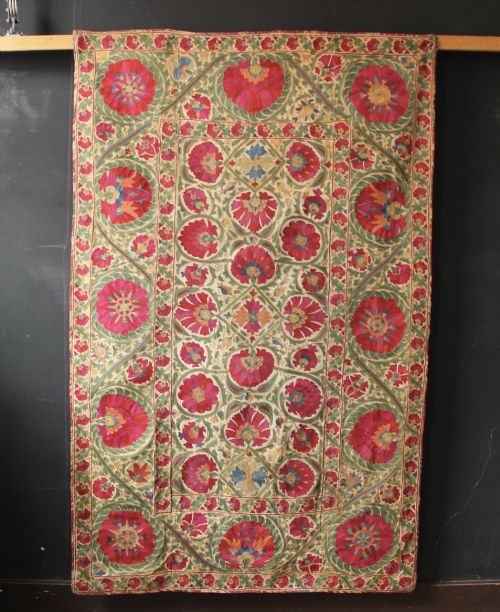
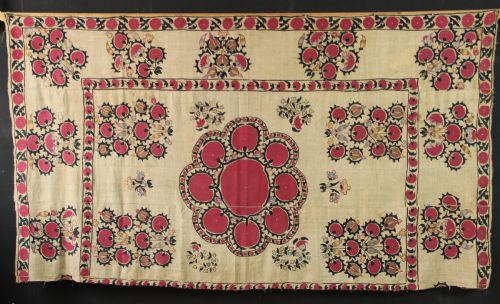


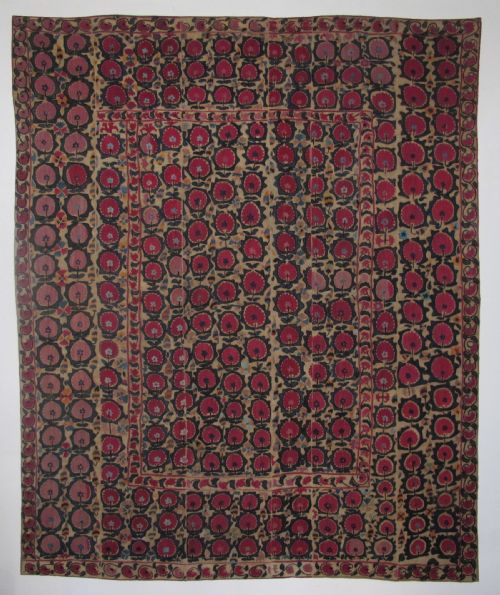
Red Cotton Suzani Wall Hanging
These red cotton suzani wall hanging pieces are embroidered Central Asian textiles worked in vibrant silk thread that bring rich regional patterns into modern interiors.
Red Cotton Suzani Wall Hanging
A red cotton suzani wall hanging is a traditional embroidered textile originating from Central Asian regions including Uzbekistan, featuring elaborate needlework created by makers from local traditions and tribes such as the Lakai.
The pieces appearing here span from the mid nineteenth century through to the early twentieth century, encompassing regional types such as Bokhara, Ura Tube, Nurata, Shakhrisabz, and Tashkent.
Buyers will encounter various formats including full work suzanis, palak designs with central stars, and smaller nim suzanis, all displaying distinct floral and traditional motifs worked upon a reddish ground.
Materials and construction
These textiles are constructed using a ground fabric of cotton, linen, or adras, which is a traditional mixed fabric combining silk and cotton fibres.
Artisans applied dense silk thread embroidery by hand, utilising specialist stitches to build up the complex floral and geometric designs seen across the red grounds.
Nomadic Lakai makers sometimes incorporated delightfully eccentric asymmetry into their needlework, ignoring rigid symmetry for spirited visual charm.
Assessing quality
Quality in these embroideries is determined by the density and precision of the silk thread work, distinguishing full work pieces with complete coverage from lighter compositions.
The visual impact relies upon the vibrancy of the dyes and the complexity of regional designs, where master embroideries from centres like Tashkent or Bukhara display superior artistic execution.
The Red Cotton Suzani Wall Hanging Glossary
- Suzani
- An embroidered textile from Central Asia, traditionally worked by women as part of a bride's dowry. These pieces were often used as wall hangings or decorative covers in homes.
- Adras
- A traditional woven fabric made from a combination of silk and cotton yarns. It provides a textured foundation for many Central Asian embroideries.
- Nim suzani
- A half size or smaller version of a standard suzani embroidery. These compact formats were practical for specific domestic spaces.
- Palak
- A large suzani variety characterised by full embroidery coverage and a prominent central star motif. They represent some of the most ambitious needlework from the region.
- Bokhara
- A historic city and regional style associated with fine Central Asian textile production. Pieces attributed to this tradition often exhibit distinct floral compositions.
Red Cotton Suzani Wall Hanging: Frequently Asked Questions
How were suzanis originally used?
These embroidered textiles served primarily as decorative wall hangings, bed covers, or ceremonial hangings within traditional Central Asian homes. They formed an essential part of a bride's dowry, showcasing the needlework skill of the maker.
Over time, families displayed them during important celebrations and daily domestic life. Today, collectors mount them on walls to preserve the textile while enjoying the historic patterns.
How do I hang a textile safely?
Mounting a textile requires distributing the weight evenly across the entire upper edge to prevent distortion of the cotton and adras ground fabric. A conservation specialist can stitch a cotton sleeve to the back for a concealed hanging rod.
Direct sunlight should be avoided to protect the natural silk thread dyes from fading over time. Rotating the display position occasionally also helps maintain even exposure to ambient light.
How do I date an antique suzani?
Dating relies on examining the materials, such as identifying early adras grounds versus later cotton foundations, alongside the natural dye palettes typical of nineteenth century production. Stylistic elements and regional attribution provide further clues to the period of creation.
Examinations of the reverse side reveal the hand spun nature of the threads and the specific embroidery techniques prevalent in eras like the eighteen eighties or nineteen twenties.