





Red Embroidered Textile
A red embroidered textile brings rich texture and history into a room through vibrant regional needlework from Central Asia, Persia, and Ottoman lands.
Red Embroidered Textile
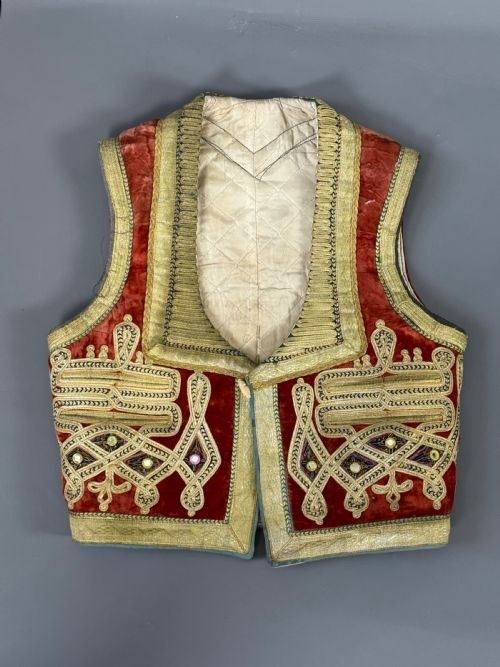
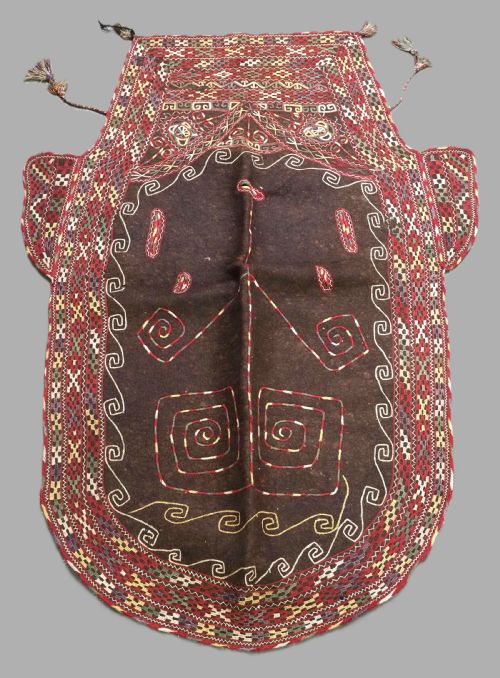
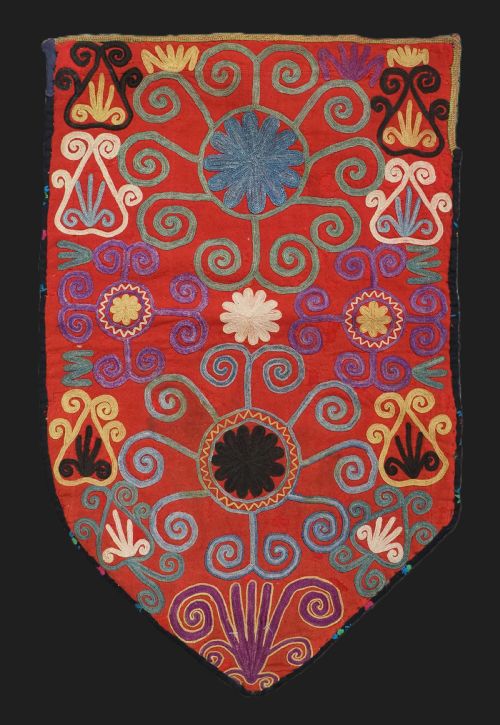
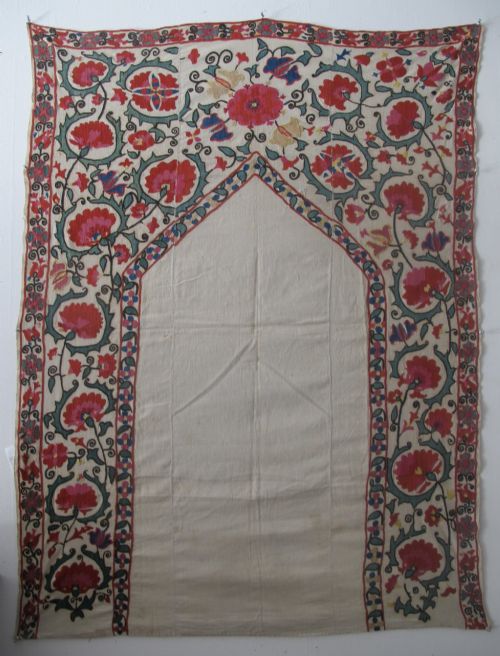
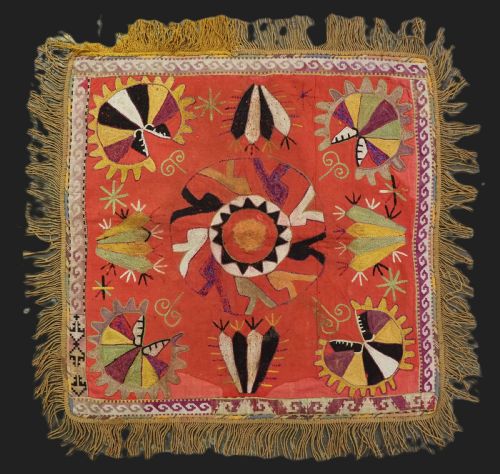
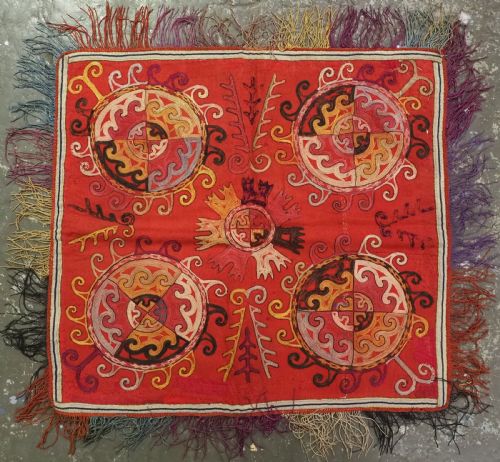
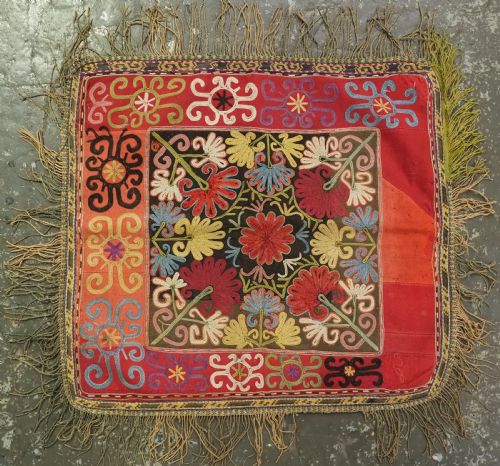
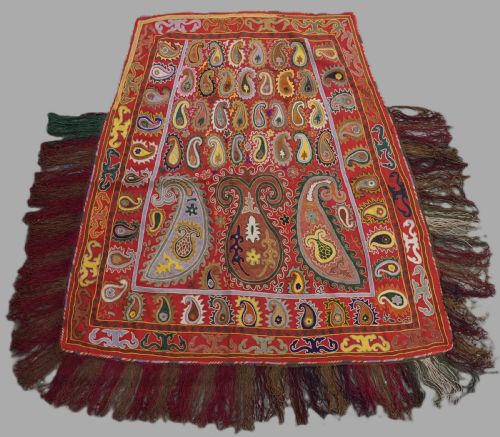
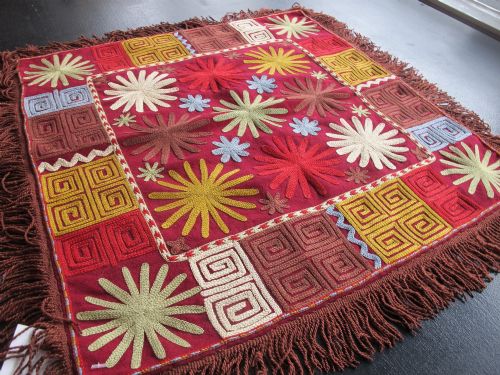
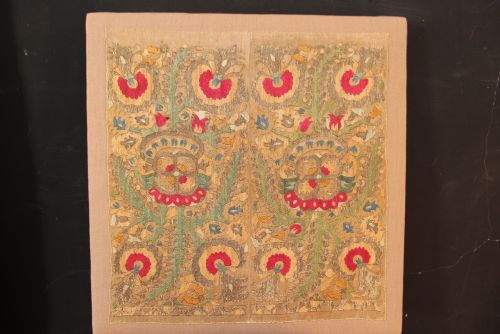
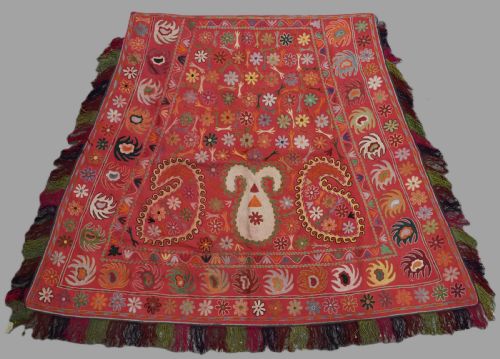
A red embroidered textile encompasses a diverse group of historical objects, most frequently encountered here as Central Asian Suzanis, tribal dowry hangings, Persian Rasht panels, and Ottoman garments. These pieces span from the mid-nineteenth century into the early twentieth century, reflecting traditional domestic crafts and nomadic artistry. Buyers find items intended originally for utilitarian purposes, ceremonial use, or decorative display within nomadic and courtly traditions alike.
The selection ranges from small wall-hanging fragments and saddle covers to large domestic hangings, waistcoats, and household textiles. Central Asian pieces, particularly those from the Lakai tribe and Uzbek centres, dominate the offerings alongside Persian felt panels and Victorian European needlework. Each object demonstrates specific cultural motifs, from geometric tribal patterns to elaborate floral medallions executed on rich red grounds.
How they were made
The construction of these pieces relies on a foundation of wool felt, linen, cotton, or velvet, frequently chosen to provide a dense, durable base for needlework. Artisans applied vibrant silk threads, wool, and metallic thread using specialised local stitching techniques, including chain stitch, applique, and couching. These materials ensured both structural integrity and a striking chromatic contrast against the characteristic red background.
Makers utilised natural dyes to achieve the deep reds and contrasting hues seen in the textiles, embedding organic pigments within silk and wool fibres. Embroidery was executed by hand, often forming intricate symmetrical layouts, architectural designs, or expressive tribal symbols. The combination of sturdy backing fabrics with fine needlework allowed these panels to withstand ceremonial use and domestic display.
Red Embroidered Textile Retail Price Guide 2026
Typical asking prices for red embroidered textile among the pieces listed under this phrase on Sellingantiques today, from the lower quarter to the upper quarter. They describe what is for sale here now, not the wider market.
Listings feature textiles spanning the nineteenth and early twentieth centuries, with materials including silk, felt, cotton, and metallic thread across Central Asian, Persian, and Ottoman origins.
What varies in quality
Quality in these textiles depends heavily on the density of the stitching, the precision of the needlework, and the complexity of the design layout. Superior examples display tightly packed threads, secure applique work, and harmonious colour palettes that retain their original intensity. Lesser examples may exhibit loose threads, simplified motifs, or uneven construction resulting from hurried domestic production.
The integrity of the base fabric also determines the standing of a piece, with sound wool felt or intact silk grounds preserving the overall form. Patination and age-related wear affect individual panels differently, but the artistic ambition of the composition remains the primary indicator of craftsmanship. Pieces showing sophisticated regional motifs and skilled thread work stand distinctly apart from more utilitarian specimens.
The Red Embroidered Textile Glossary
- Suzani
- A traditional embroidered tribal hanging from Central Asia, usually worked in silk on a cotton or linen foundation. These large panels were typically created as part of a bride's dowry.
- Ilgich
- A specific type of Central Asian hanging or bag face, often associated with the Lakai tribe, used for domestic decoration. They feature dynamic geometric and figurative embroidery.
- Rasht embroidery
- A distinctive style of needlework originating from Iran, characterised by intricate inlaid felt applique and fine silk chain stitching. These panels frequently display central floral or star medallions.
- Torba
- A small ceremonial wall bag or trapping produced by Turkmen and related tribal groups. They are heavily decorated on the face to serve both functional storage and decorative roles within the yurt.
Red Embroidered Textile: Frequently Asked Questions
How were Suzanis used originally?
Suzanis served primarily as ceremonial wall hangings, decorative covers, and essential components of a bride's dowry in Central Asian households. Families displayed them during weddings and significant celebrations to demonstrate social standing and domestic skill.
Over time, these textiles transitioned from nomadic and domestic settings into international collections, prized for their vibrant design and historical textile techniques.
What is a Lakai ilgich?
A Lakai ilgich is a nomadic embroidery piece created by the Lakai Uzbeks, typically featuring energetic geometric motifs and heavy silk stitching on a dark or red ground. These items functioned as dowry pieces or decorative wall hangings within traditional dwellings.
Collectors value them for their distinct tribal abstraction and expressive needlework, which sets them apart from urban workshop textiles.
How do I care for an antique textile?
Protect antique textiles by mounting them away from direct sunlight to prevent the fading of silk threads and natural dye grounds. Avoid hanging heavy pieces by a single point, supporting the weight evenly across a suitable backing or display frame.
Keep the environment dry and stable, avoiding harsh chemical cleaning methods that can damage fragile historical fibres and metallic threads.
How do I date a red embroidered textile?
Dating relies on examining the specific types of threads, the chemical composition of the dyes, and the stylistic motifs characteristic of known production periods. Traditional patterns, such as those from nineteenth-century Ottoman or Central Asian workshops, provide clear chronological markers.
Comparing the weave of the backing fabric and the complexity of the stitching against established regional examples helps determine the likely era of manufacture.