

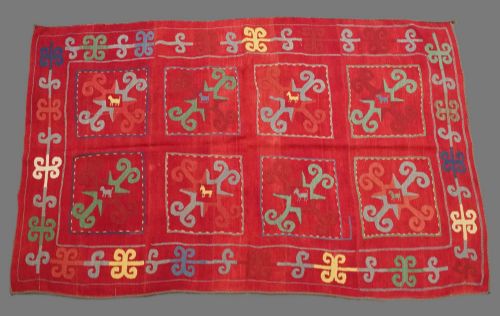
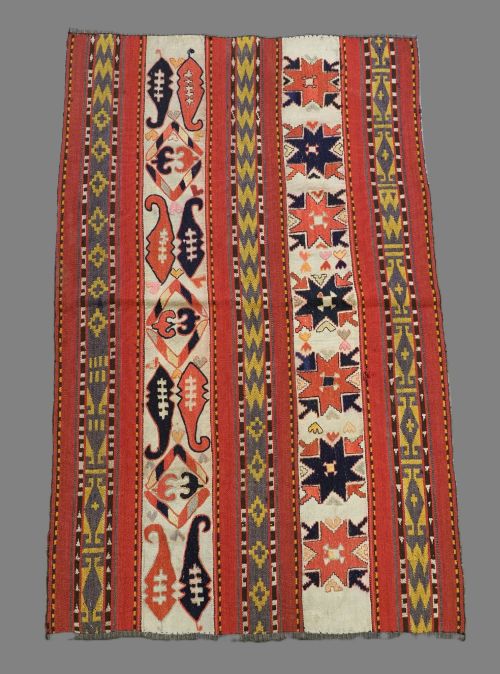
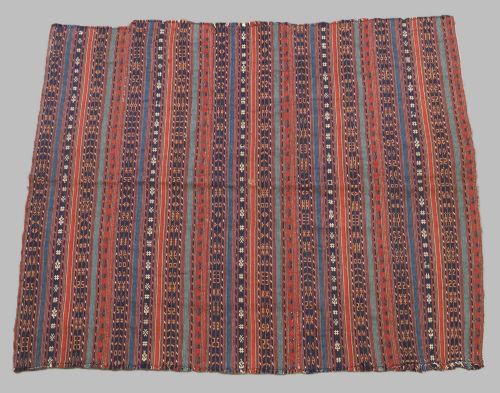
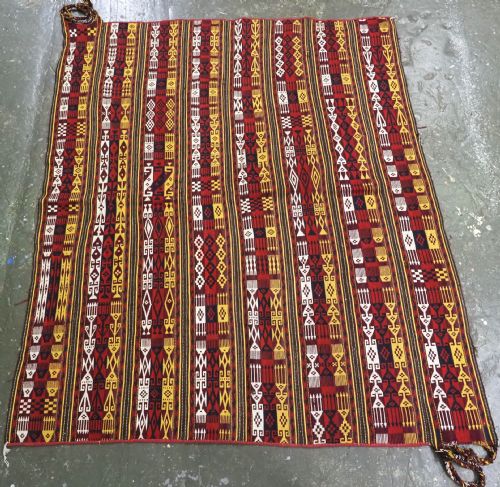


Red Uzbek Kilim
These red uzbek kilim textiles are bold Central Asian tribal rugs and panels offering striking graphic design for your floor or wall.
Red Uzbek Kilim
A red uzbek kilim brings together Central Asian tribal artistry and flatweave textiles, mostly originating from around 1890 to 1920. Buyers searching for this phrase encounter kilim rugs, small panels, saddlebag faces and textile covers from the Uzbek, Kungrad and Tartari regions.
The version most commonly met on this page is the Gajeri or Ghudjeri kilim, often featuring bold graphic or banded designs. Many examples are constructed from multiple woven strips joined together, ranging from four up to thirteen strips.
These pieces function successfully as decorative floor coverings, wall hangings or textile panels. Their distinct Central Asian folk art character suits interiors seeking genuine tribal texture and pattern.
How They Were Made
Makers utilised wool and cotton materials to construct these flatweave textiles, employing traditional techniques such as weft work and embroidery. Strips of fabric were woven individually before being sewn together to form larger panels, covers and rugs.
Surface decoration relies on graphic banded designs and embroidered suzani motifs applied across soft red backgrounds. The construction varies from simple small sizes made from tent bands to complex multi-strip compositions.
Red Uzbek Kilim Retail Price Guide 2026
Typical asking prices for red uzbek kilim among the pieces listed under this phrase on Sellingantiques today, from the lower quarter to the upper quarter. They describe what is for sale here now, not the wider market.
Some small gajeri kilims were repurposed directly from nomadic tent bands.
What Varies in Quality
The distinction between examples rests upon the complexity of the strip construction and the crispness of the graphic design. Pieces woven from numerous narrow strips demand greater labour and display more intricate banded patterns.
Visual appeal also depends on the depth and condition of the soft red wool and cotton dyes. Faded hues and strong tribal motifs distinguish the most striking panels from simpler regional items.
The Red Uzbek Kilim Glossary
- Kilim
- A flatweave carpet or rug produced without a pile by tightly interweaving warp and weft strands. This technique creates a flat fabric surface suitable for floor use or wall display.
- Suzani
- A type of embroidered Central Asian textile often incorporated into or associated with tribal flatweaves. These decorative needlework traditions feature distinctive regional patterns.
- Gajeri
- A specific Central Asian tribal kilim type known for bold banded designs and striking graphic layouts. These pieces frequently originate from Uzbek weaving traditions.
- Warp
- The stationary vertical threads held under tension on a loom before weaving begins. Weft threads are passed horizontally over and under these structural elements.
Red Uzbek Kilim: Frequently Asked Questions
What is a gajeri kilim?
A gajeri kilim is a Central Asian flatweave distinguished by bold graphic or banded designs. These textiles often originate from Uzbek weaving traditions.
Such pieces were traditionally utilised as rugs, covers or decorative panels within tribal tents and dwellings.
How are multi-strip kilims made?
Makers weave narrow individual strips of wool and cotton separately on traditional looms. These separate bands are then neatly joined together side by side to create a larger panel or rug.
Examples on this page record constructions ranging from four up to thirteen individual strips.
Where do these textiles originate?
These pieces originate from Central Asia, specifically associated with Uzbek, Kungrad and Tartari regional makers. The designs reflect authentic folk art and tribal traditions.
Production dates for these items cluster around the late nineteenth and early twentieth centuries.
How can I use a kilim panel?
Kilim panels and saddlebag faces adapt well to various interior settings as small floor rugs or distinct wall hangings. Their flat construction makes them straightforward to hang securely.
The graphic red patterns provide a strong focal point in traditional and modern rooms alike.