







Hand Embroidered Red Suzani
A hand embroidered red suzani brings vibrant Central Asian textile art into a room with striking geometric and floral patterns.
Hand Embroidered Red Suzani
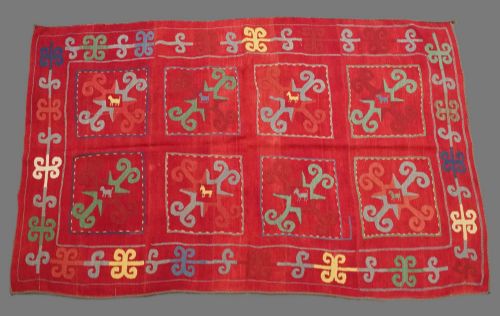
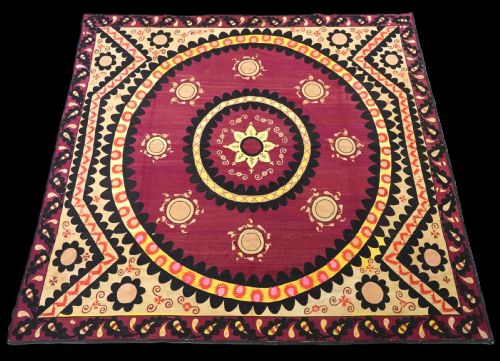
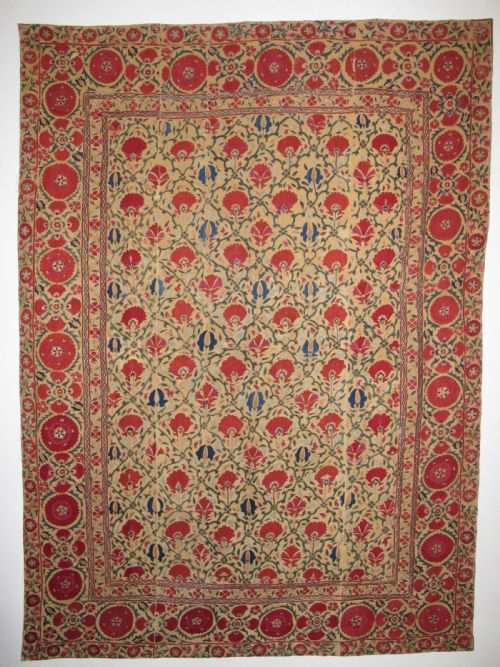
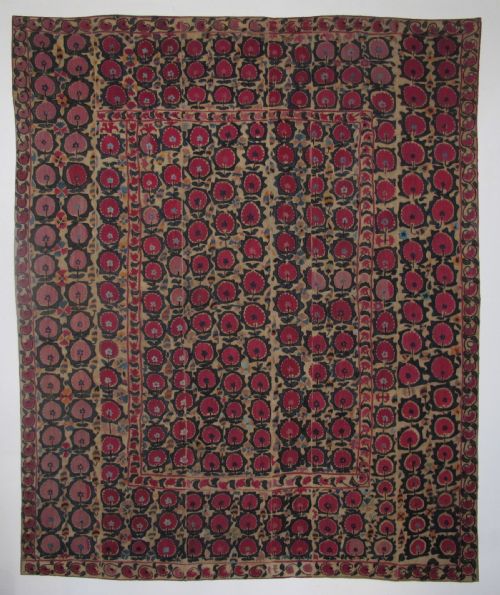
A hand embroidered red suzani is a traditional Central Asian textile, most frequently originating from Uzbekistan and created by regional groups including the Lakai tribe. These pieces serve primarily as wall hangings, covers, and domestic decorations.
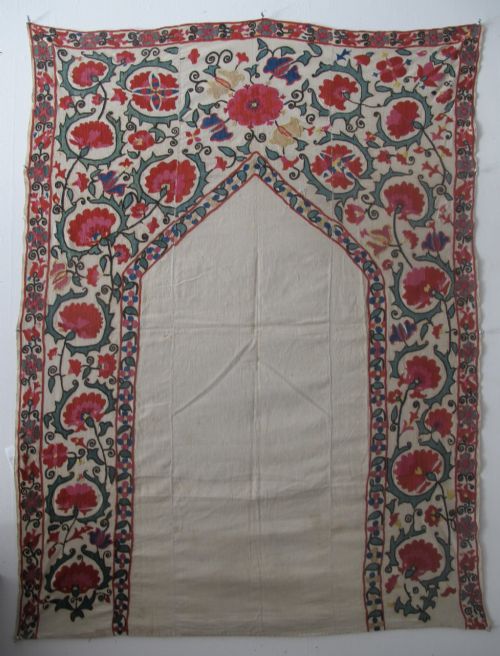
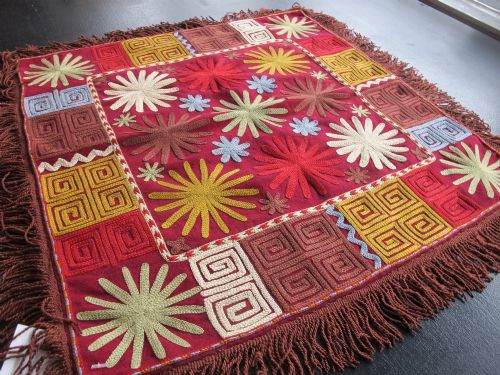
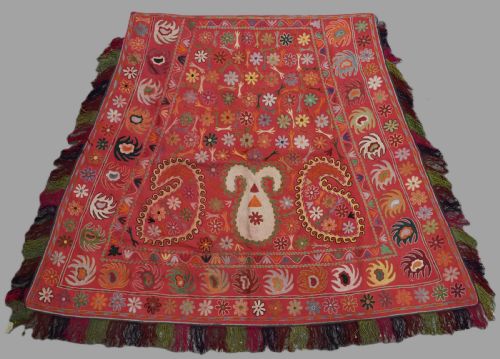
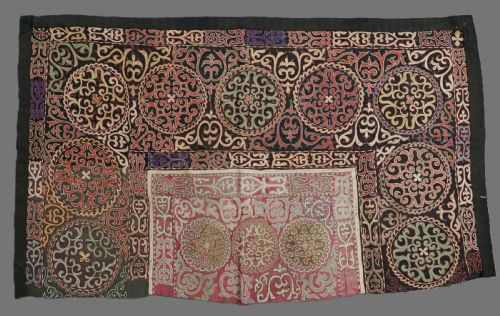
The selection here includes examples shaped as full suzanis, smaller nim suzanis, kilims, and specialised items like horse covers and yurt wall hangings. These textiles span periods from the mid-nineteenth century through to the early twentieth century.
Buyers will encounter distinct regional variations, such as Tashkent palak suzanis featuring central star motifs and Bokhara pieces showing detailed architectural or floral designs. The grounding colour is predominantly red, executed in cotton, wool, silk, or adras.
How they were made
The construction relies on needlework applied to a woven foundation, utilising silk thread on grounds of cotton, wool, or adras silk and cotton mix. Artisans executed these works by hand, producing dense surface coverage known as full work or regional tribal patterns.
Ground fabrics often consist of multiple panels joined together, as seen in examples woven in strips or stitched as smaller panels. The embroidery employs specialised stitches to build up floral, architectural, and tribal motifs across the red field.
Hand Embroidered Red Suzani Retail Price Guide 2026
Typical asking prices for hand embroidered red suzani among the pieces listed under this phrase on Sellingantiques today, from the lower quarter to the upper quarter. They describe what is for sale here now, not the wider market.
Lakai makers sometimes embroidered elaborate horse covers so their mounts looked as well dressed as the riders.
What varies in quality
Quality rests on the density and ambition of the needlework, separating heavily worked pieces with complex palak or architectural designs from simpler layouts. Fully embroidered surfaces demonstrate higher artisan investment than sparse arrangements.
The choice and handling of materials also distinguish examples, particularly the fineness of the silk thread and the weight of the supporting cotton, wool, or adras ground. Tighter, more precise execution of traditional motifs marks out the finer end of the range.
The Hand Embroidered Red Suzani Glossary
- Suzani
- A traditional embroidered textile from Central Asia, typically originating from Uzbekistan and featuring botanical or geometric motifs. The name derives from the Persian word for needlework.
- Nim Suzani
- A smaller version of a standard suzani, translating as half suzani. These pieces offer more compact dimensions while retaining the traditional embroidery and red ground.
- Palak
- A specific type of suzani characterised by heavy, full embroidery often centred around a large star motif. These large wall hangings demand extensive needlework.
- Adras
- A traditional Central Asian fabric woven from a blend of silk and cotton yarns. It serves as a textured ground for silk embroidery in regional textiles.
- Lakai
- A Central Asian tribal group known for distinctive, energetic embroidery styles applied to domestic items, horse covers, and small panels. Their work frequently incorporates bold geometric forms.
- Tush Kyiz
- A large embroidered wall hanging traditionally made in Kyrgyzstan for weddings, displayed inside a yurt. They feature symbolic designs worked in bright threads.
Hand Embroidered Red Suzani: Frequently Asked Questions
How were suzanis originally used?
These textiles were created as functional and decorative items within Central Asian homes, often serving as wall hangings, bed covers, or ceremonial furnishings.
Nomadic and settled communities used them to enrich domestic interiors, while specialised pieces functioned as horse covers or marriage panels.
What is the difference between a suzani and a nim suzani?
A standard suzani is a large format textile designed to cover a significant wall space or bed, whereas a nim suzani is roughly half that size.
Buyers choose between them depending on the available wall area and how densely decorated they want the space to feel.
How do I care for a textile wall hanging?
Display these pieces away from direct sunlight to protect the natural silk and cotton threads from fading over time.
Mounting them correctly distributes the weight evenly across the fabric rather than placing strain on a single edge.
How can I tell regional styles apart?
Regional origins are identified through specific design layouts and colour distributions, such as the prominent central stars found in Tashkent palak pieces.
Lakai and Bokhara examples display distinct tribal patterns and architectural influences that reflect their specific communities of origin.