





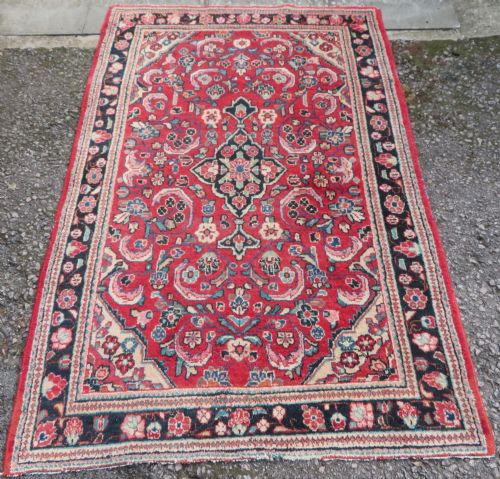
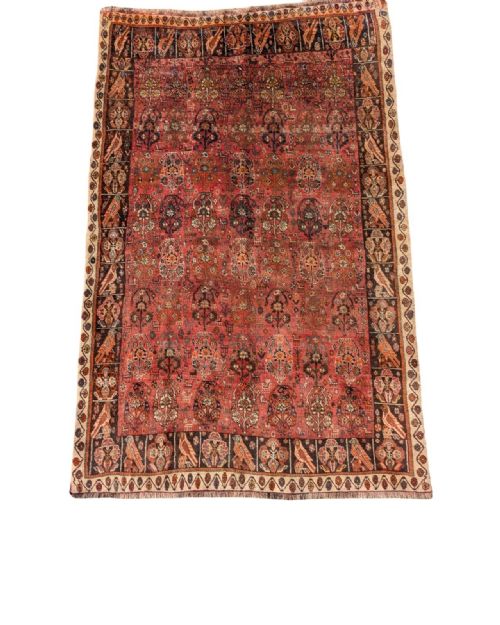
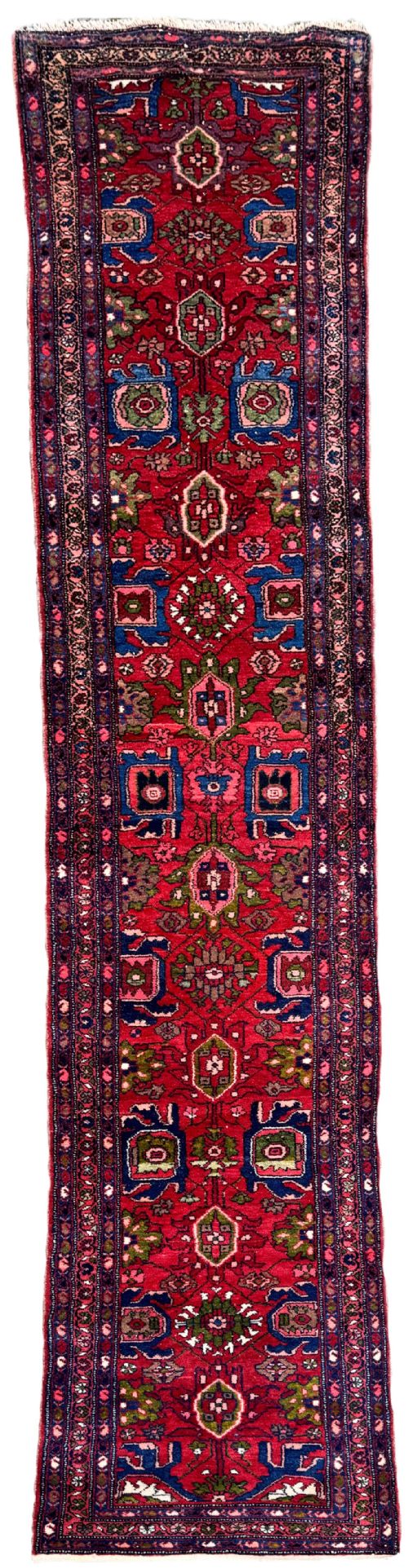
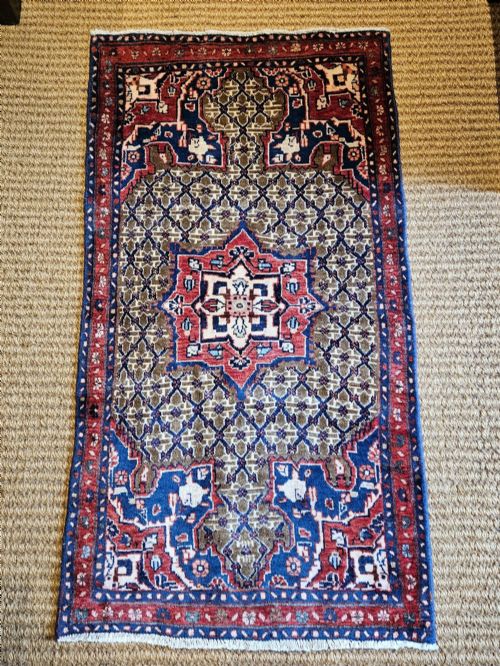
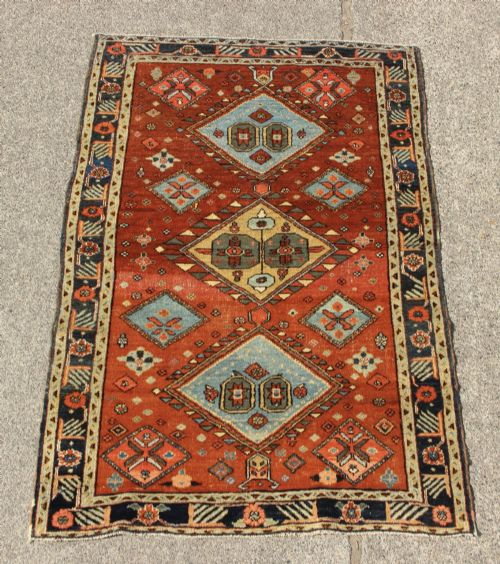

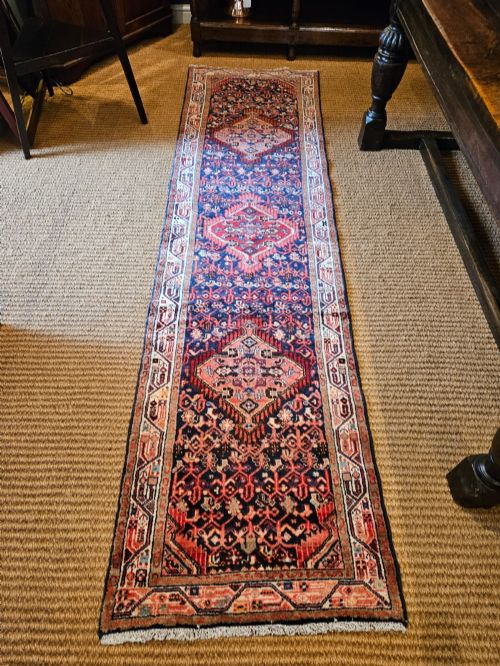
Red Persian Runner Rug
A red persian runner rug brings character to narrow hallways, combining traditional wool construction with centuries of regional weaving expertise.
Red Persian Runner Rug
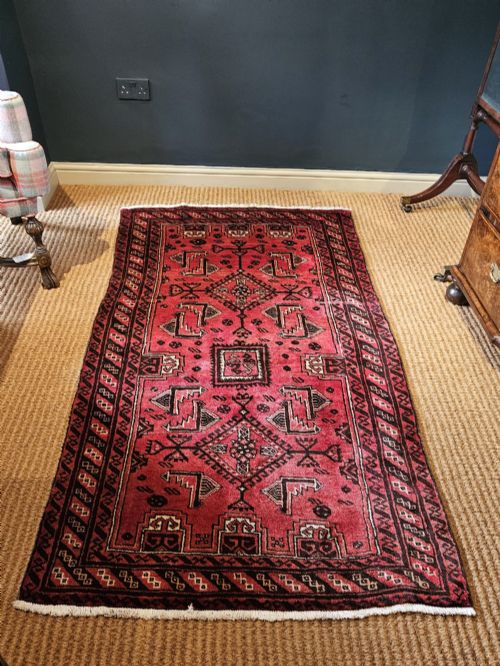
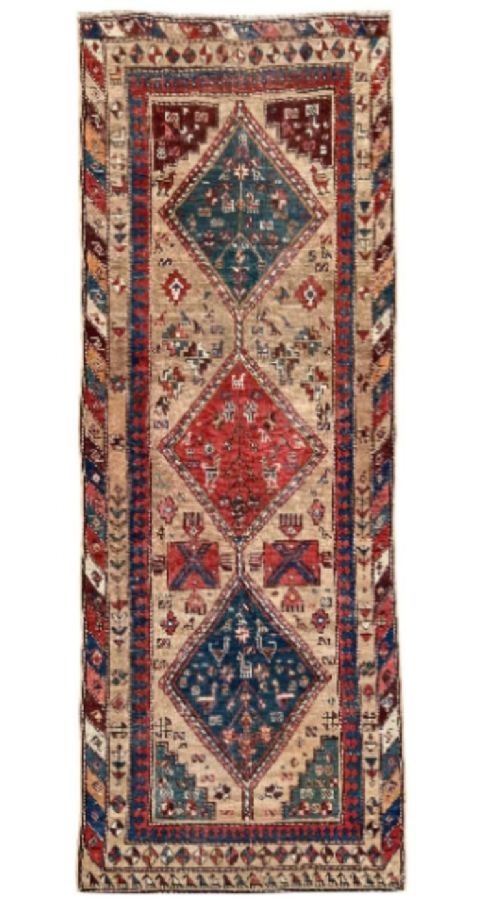
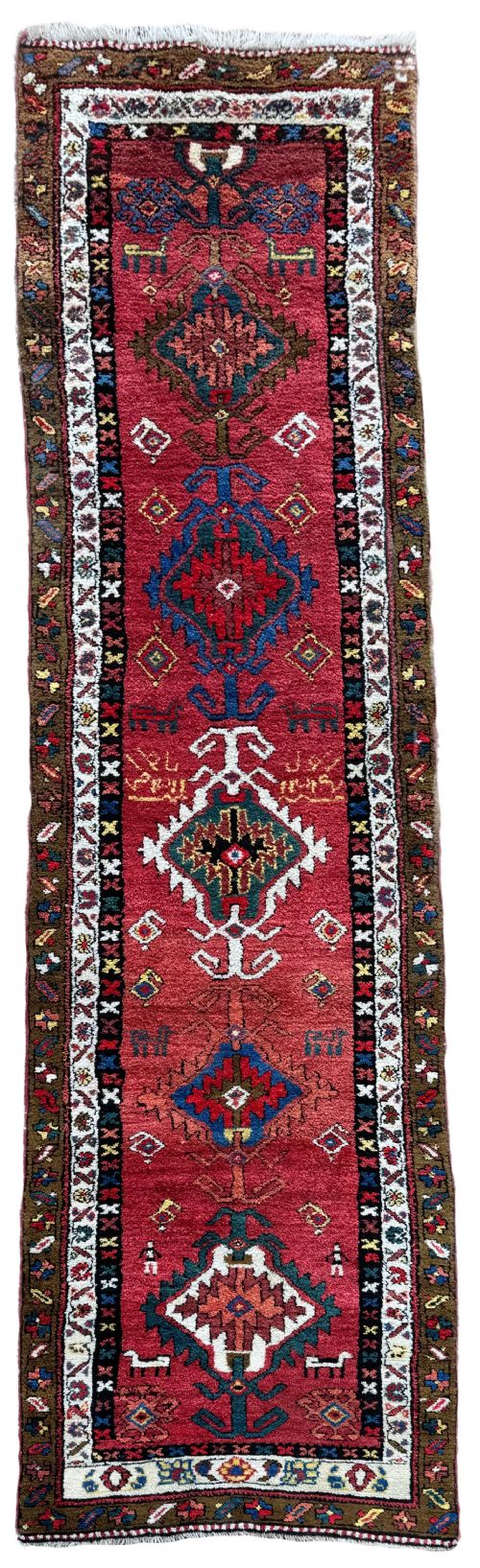
A red persian runner rug is a long, narrow carpet designed specifically for hallways, landings and corridors. These pieces originate from various regions and tribes, displaying distinctive geometric or all-over patterns that stretch across the length.
The selections available here span from the late nineteenth century through to the mid-twentieth century, capturing traditional village and tribal weaving methods. Common regional forms include Heriz, Hamadan, Saroukh and Kurdish pieces, each bringing specific patterns to the format.
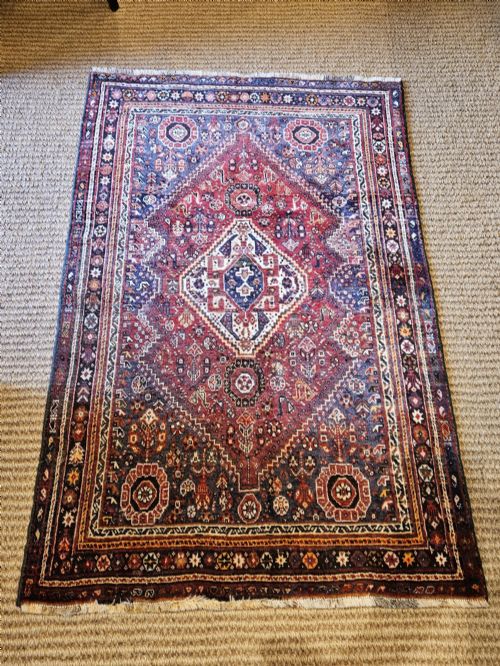
Buyers seeking a red persian runner rug encounter numerous styles, from bold tribal motifs to fine floral room carpets adapted into elongated formats. These textiles anchor linear spaces while adding warmth to wooden flooring.
Materials and Construction
The construction relies fundamentally on wool piles knotted onto cotton or wool foundations, providing the durability required for high-traffic corridors. Artisans utilised natural dyes to achieve rich crimson, rust and madder backgrounds that deepen in character over decades.
Weavers tied individual knots by hand across a vertical loom, incorporating traditional motifs such as the boteh pattern, Mina Khani designs and geometric medallions. The resulting textile combines structural resilience with flexible adaptability for domestic interiors.
Regional styles represented in the current selection encompass Heriz, Hamadan, Kurdish, Bakhtiar, and Baluch tribal traditions.
Evaluating Quality and Craftsmanship
Quality in these textiles depends on knot density, the precision of the geometric or floral layout, and the clarity of the natural dyes. Finer examples exhibit meticulous hand-knotting that allows intricate motifs to remain sharp along the entire length.
The integrity of the wool and the condition of the foundational structure determine longevity in heavy-use areas like hallways. Superior pieces maintain pile depth and structural tension despite decades of foot traffic.
The Red Persian Runner Rug Glossary
- Boteh
- A swirling almond or pear-shaped motif representing a leaf or cypress tree. It appears frequently in traditional Persian and tribal weaving.
- Runner
- A long, narrow carpet format intended for corridors, staircases and hallways. This shape accommodates linear architectural spaces.
- Natural Dyes
- Colourants derived from plants, insects and minerals rather than synthetic compounds. These substances produce rich, muted tones that age gracefully.
- Knot
- The individual loop of wool tied around the warp threads to form the pile of the carpet. Higher knot counts generally permit greater detail in design.
Red Persian Runner Rug: Frequently Asked Questions
Where should I place a runner?
These long carpets suit narrow spaces such as hallways, corridors and entryways where linear floor coverage is beneficial. They protect high-traffic floorboards while adding warmth and traditional character to transition areas.
Position the piece centrally to allow uniform borders of exposed floor on either side, ensuring doors can clear the pile height easily.
How do I maintain an antique wool runner?
Regular gentle vacuuming without a rotating brush roll prevents dust accumulation within the wool pile. Professional cleaning by specialists in antique textiles preserves the integrity of the natural dyes and foundations.
Rotation every six months ensures even wear patterns across the length when placed in busy corridors.
What is a tribal Persian design?
Tribal designs originate from nomadic or village weavers rather than urban workshops. These patterns feature bold geometric motifs, stylized animals and symbolic elements passed down through generations.
The aesthetic relies on memory and regional tradition rather than pre-drawn cartoon templates, resulting in charming irregularities.
How can I tell the age of a runner?
Age is determined by observing dye palettes, material characteristics, weave structure and regional design conventions. Earlier pieces from the nineteenth century often display softer, vegetable-dyed wools and distinct structural traits unique to specific village workshops.
Comparing construction techniques with documented regional examples helps narrow down the production era.