





Blue Hallway Carpet
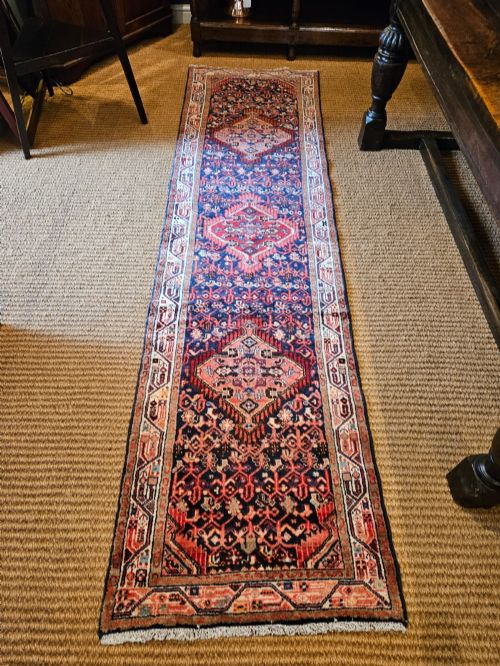
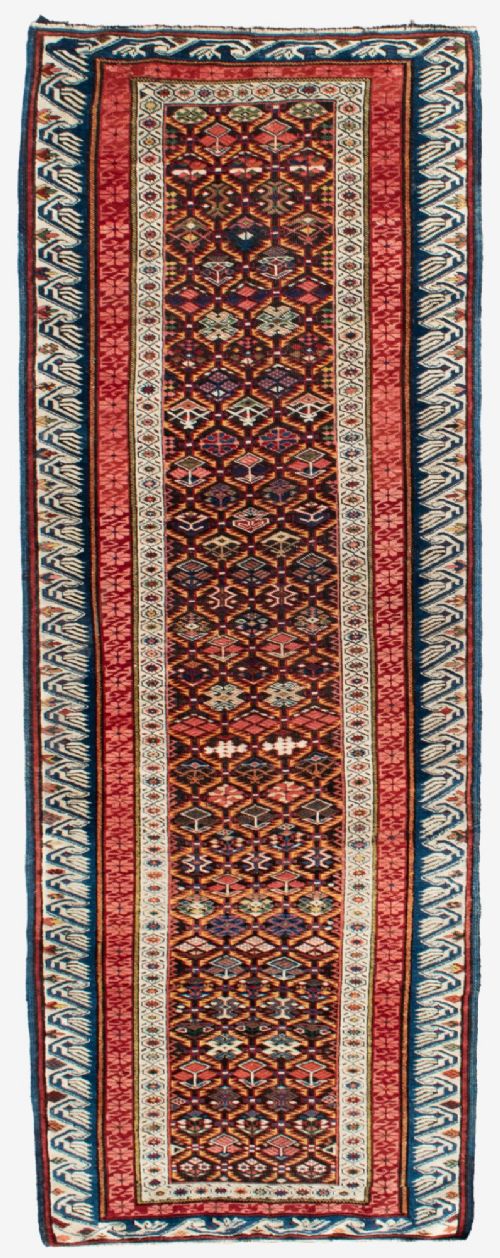
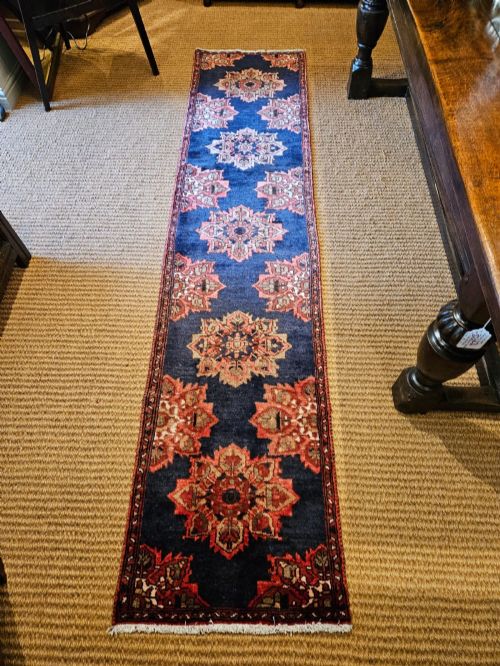
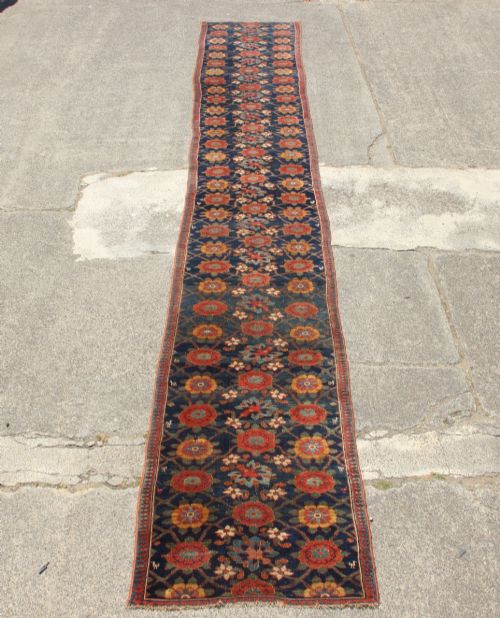
A blue antique hallway carpet brings character and depth to a narrow threshold, offering hard-wearing traditional weave and centuries of regional dye work.
Blue Hallway Carpet
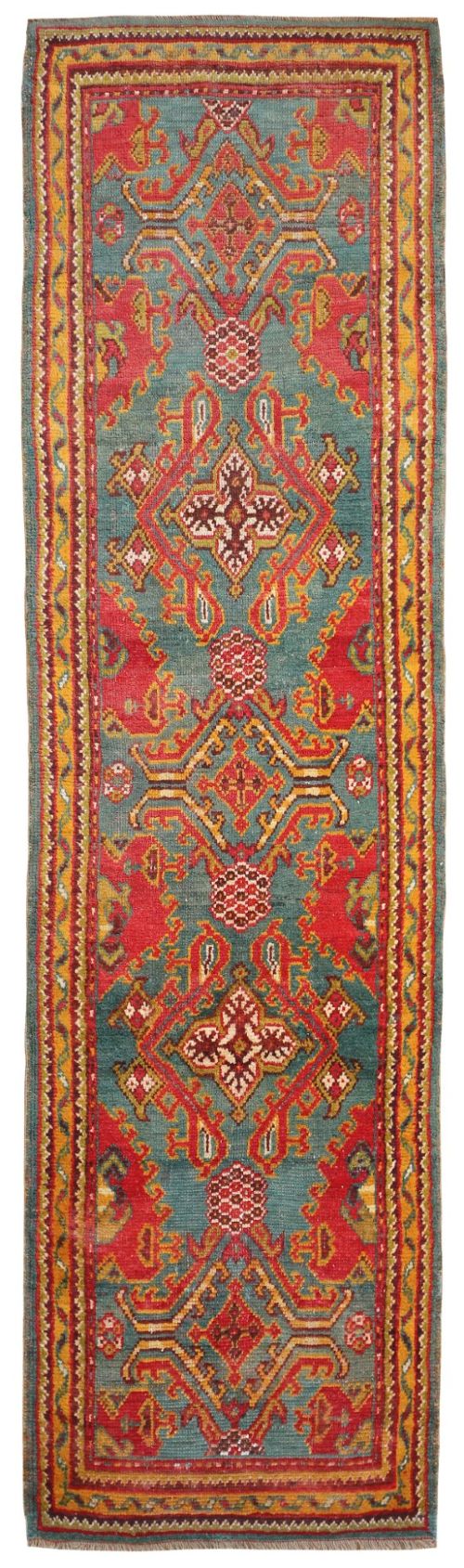
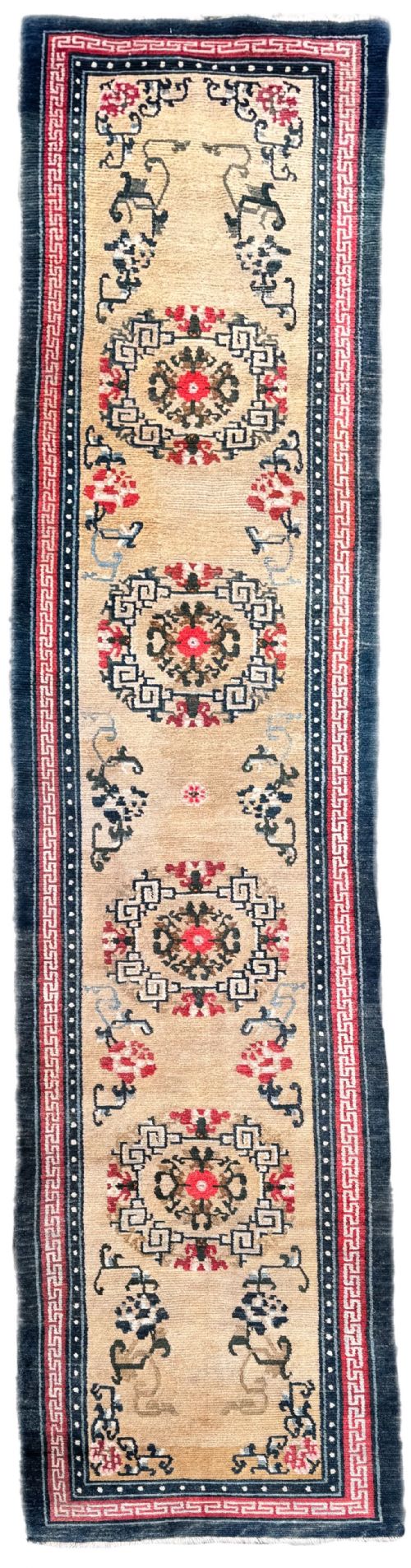
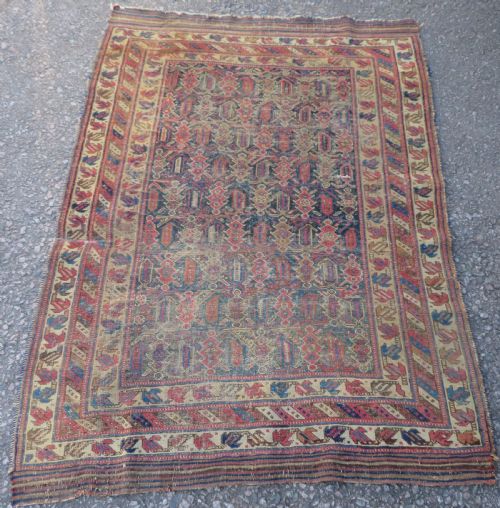
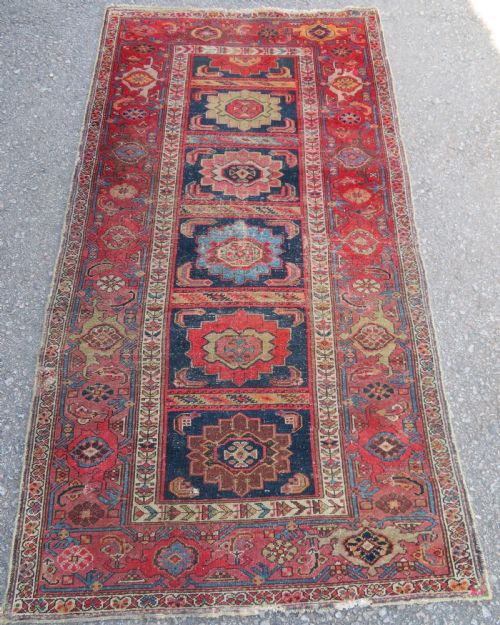
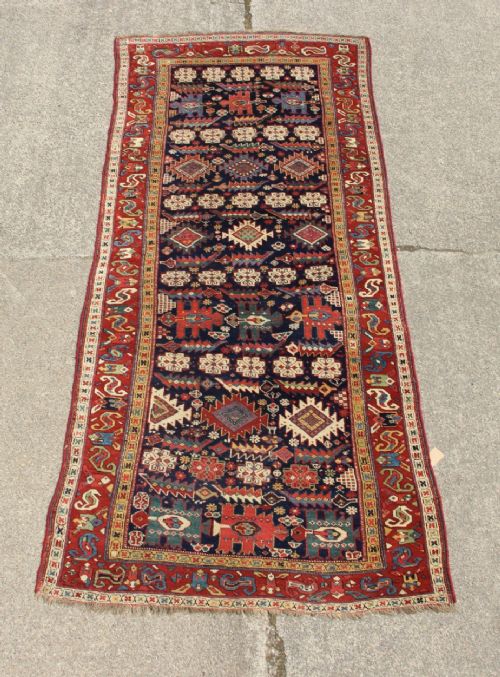
A blue antique hallway carpet encompasses long, narrow floor coverings designed specifically for passages and corridors, originating from workshops and tribal regions across Persia, the Caucasus, and Anatolia. These pieces typically date from the nineteenth century up to the 1930s, reflecting diverse weaving traditions from Heriz, Ushak, Kurdish, and Caucasian centres.
Materials and construction methods
The foundation and pile of these carpets rely heavily on wool, cotton, and hand-spun wool, providing the structural resilience necessary for high-traffic corridors. Weavers knotted natural fibres by hand on vertical looms, utilising durable vegetable and natural dyes that yielded deep indigo and blue tones.
Structural integrity stems from dense knotting and sturdy wool pile combined with cotton or wool warp and weft threads. This traditional construction allows the textiles to withstand decades of foot traffic while maintaining their structural form.
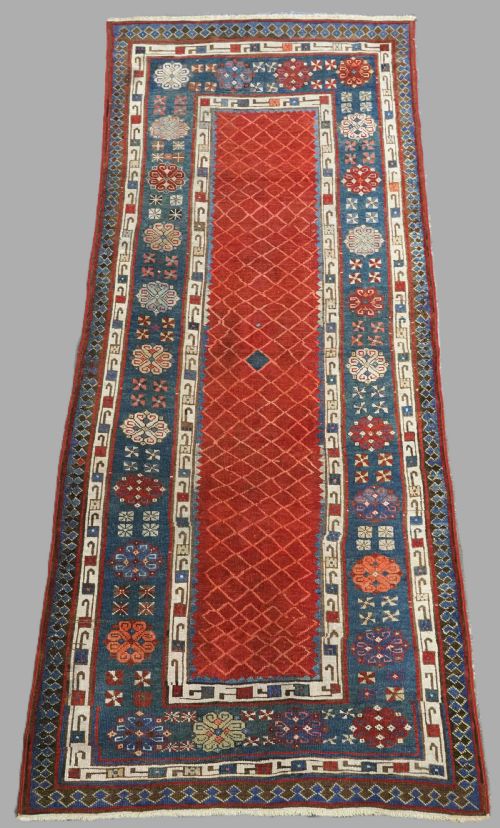
Some resilient runners carry the delightful irregularity of being visibly crooked, tracing the organic movement of hand-loomed tribal craftsmanship.
Distinguishing quality across the range
Quality in these carpets rests on the fineness of the weave, the intricacy of the geometric or floral design, and the clarity of the natural blue dye work. Tighter knot density and precise execution of traditional motifs such as the Mina Khani or lattice patterns separate finer workshop pieces from simpler tribal productions.
The condition of the wool pile and the integrity of the foundation threads also determine the grade of a runner. Pieces that retain their original outer edges and end finishes demonstrate superior preservation compared to heavily worn or distressed examples.
The Blue Hallway Carpet Glossary
- Runner
- A long, narrow carpet format specifically proportioned for corridors, hallways, and staircases. These pieces measure significantly longer than they are wide.
- Warp
- The stationary vertical threads stretched on a loom that form the structural skeleton of the carpet. Weft threads are interlaced across these vertical cords.
- Weft
- The horizontal threads passed through the warp threads after each row of knots is tied to secure the pile in place. Together with the warp, it forms the woven foundation.
- Pile
- The upright cut or looped yarn surface of a carpet that forms the soft upper layer. Hand-spun wool is frequently utilised for this component in older rugs.
- Natural dye
- Colourants derived from plants, insects, and minerals utilised before synthetic aniline dyes became widespread. These materials produce rich indigo and blue shades that age with subtle variation.
Blue Hallway Carpet: Frequently Asked Questions
How do I measure my hallway for a runner?
Measure the clear floor space of your corridor, leaving an equal margin of bare wood or stone visible around the perimeter of the rug. Ensure doors swing freely over the combined thickness of the carpet and any underlay you plan to use.
Account for length by stopping the runner a short distance before doorways and thresholds to create a balanced layout. Narrow formats are specifically produced to navigate these restricted spatial parameters without crowding the walls.
Are these carpets suitable for heavy foot traffic?
Traditional runners woven with dense wool pile and sturdy foundations were originally constructed for daily domestic use in busy entryways. The natural elasticity and resilience of hand-spun wool fibres allow the pile to withstand continuous walking.
Pairing the textile with a quality modern non-slip underlay prevents shifting and absorbs impact, further protecting the vintage foundation from undue friction against hard floors.
What is a Heriz runner?
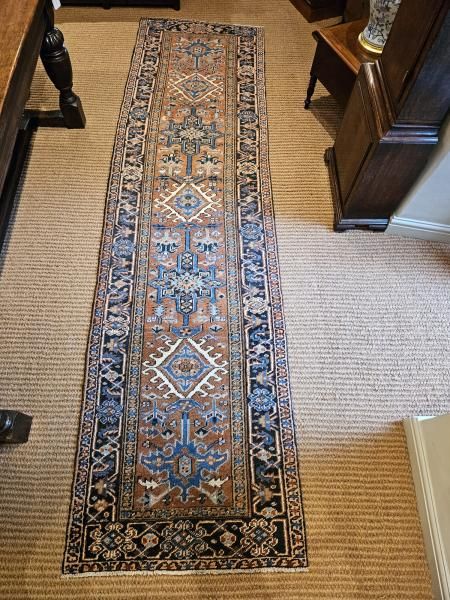
A Heriz runner originates from the North-West Persian region and is recognised for large-scale, rectilinear medallion designs and robust geometric frameworks. These pieces utilise sturdy wool foundations suited to long corridors.
The distinctive blue and red colour combinations reflect the mineral-rich mountain waters of the region, which traditionally set the tone for the durable natural dyes.