



Vintage Heriz Runner
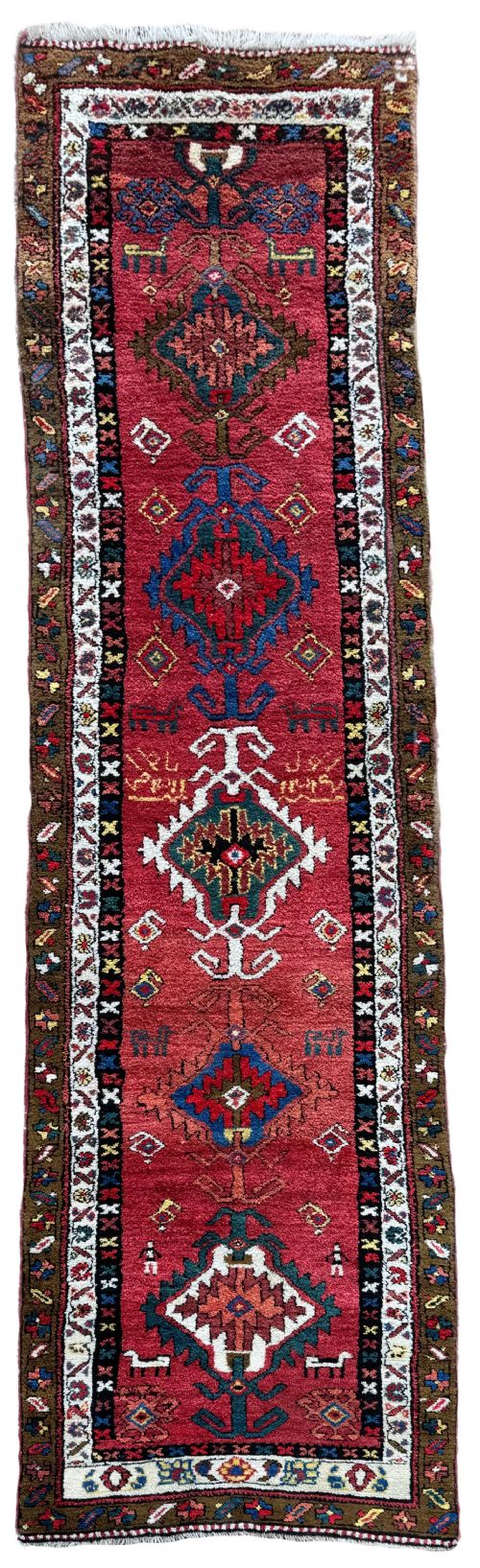
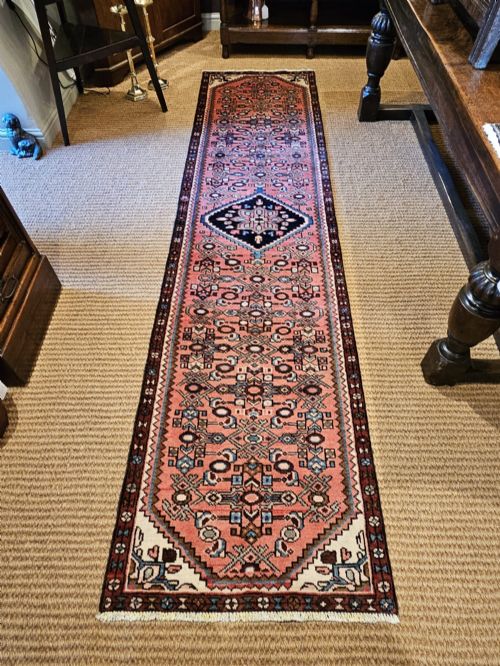
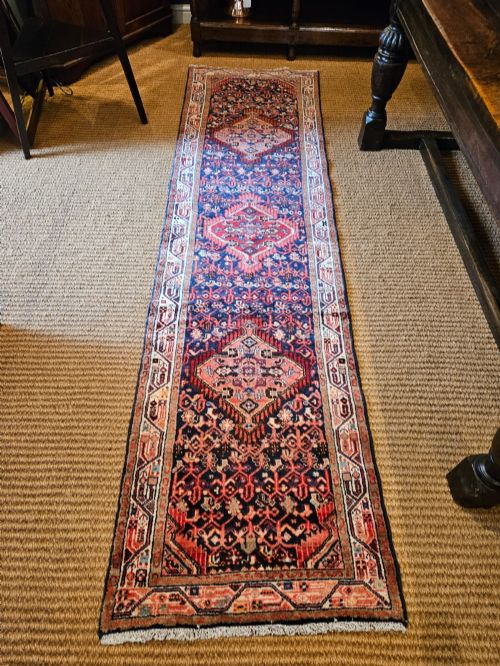
A vintage heriz runner brings bold geometric medallion design and durable wool construction straight to long hallways.
Vintage Heriz Runner
A vintage heriz runner is a hand-knotted hallway carpet originating from the Heriz region of Northwest Persia, dating predominantly from the late nineteenth century through the early decades of the twentieth century. These pieces serve narrow domestic spaces like corridors and landings where traditional floor coverings must combine visual presence with physical endurance.
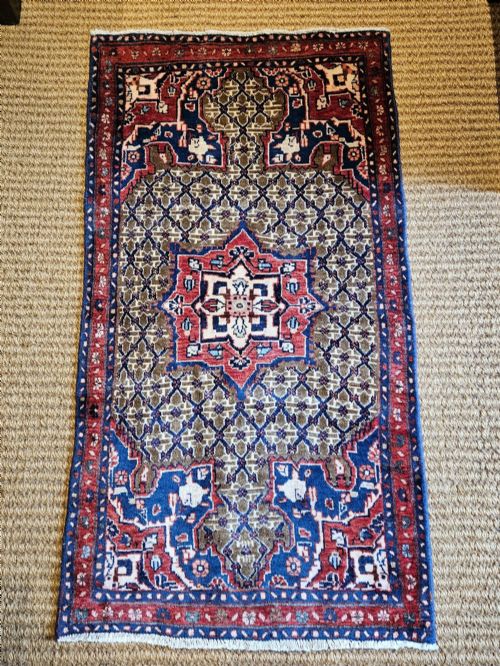
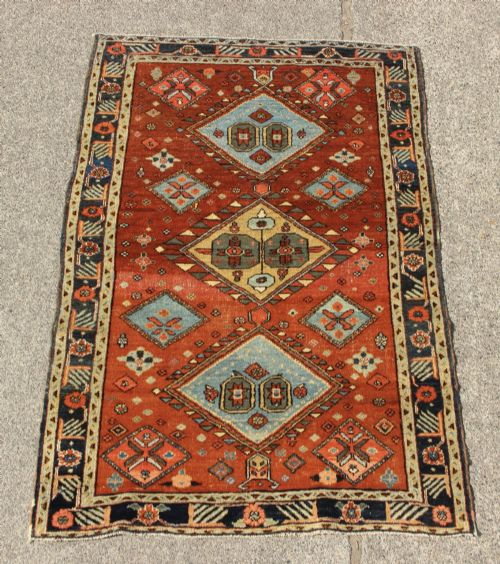
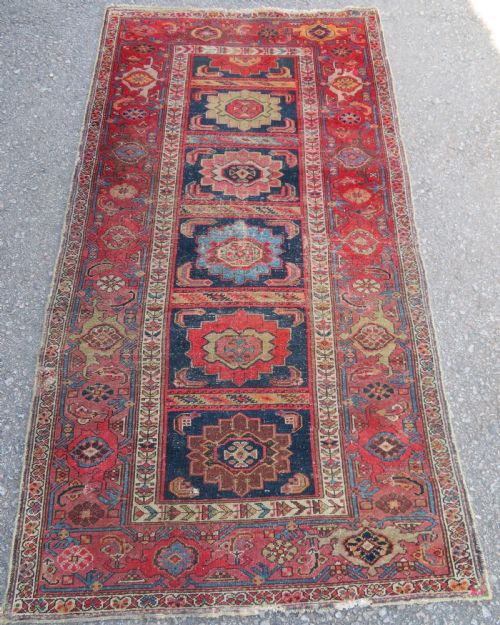
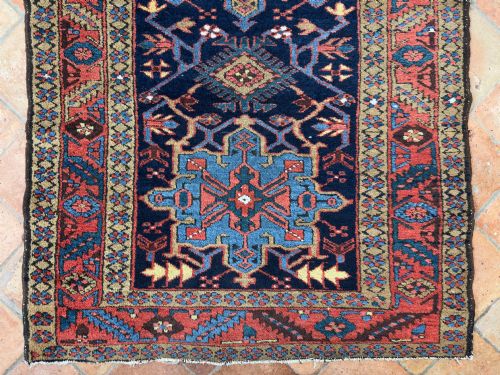
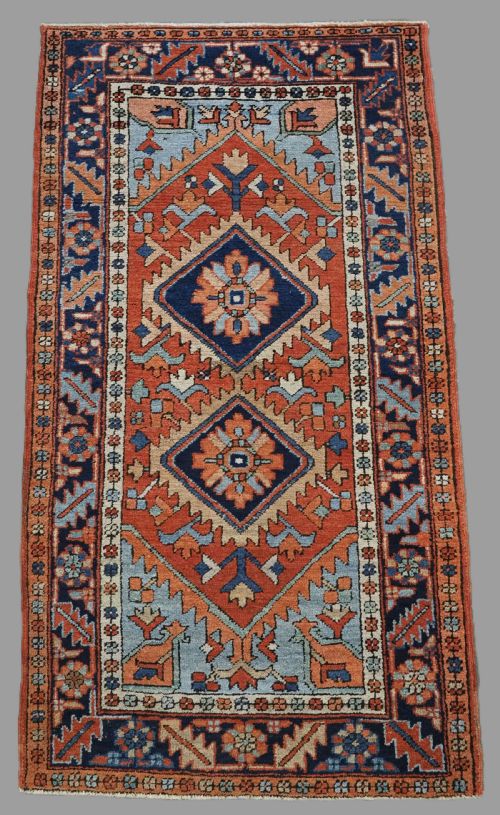
The most common examples on this page follow the Heriz style, alongside related regional weaves such as Karaja, Serapi, Gorevan, and Bakshiash, spanning dates from the eighteen-eighties to the nineteen-thirties. They arrive as long, narrow formats featuring repeating geometric patterns and central medallions tailored specifically for heavy transit areas.
How they were made
Weavers constructed these runners using hand-spun wool for the pile, knotted densely onto a sturdy cotton foundation to withstand decades of foot traffic. This combination of wool and cotton produces a firm, stable textile that resists curling at the edges.
Dyers utilised natural vegetable and mineral sources to colour the wool, yielding rich terracotta, navy, and ivory tones that mellow gracefully over time. The knotting technique employs heavy geometric drafting rather than curves, giving each motif its distinct stepped and angular character.
Listings feature pieces spanning from the eighteen-eighties to the nineteen-thirties, constructed from wool and cotton.
What varies in quality
Knot density and wool quality govern the structural longevity of each runner, dictating how sharply the geometric motifs resolve against the ground field. Tighter knotting on the cotton warp produces a crisper pattern and a firmer handle underfoot.
The saturation and balance of the dye palette separate standard production from superior examples, particularly in the handling of the central medallion and corner spandrels. Greater clarity in the contrasting border bands indicates a higher grade of workshop execution.
Waring and Gillow
The Vintage Heriz Runner Glossary
- Runner
- A long, narrow carpet format designed primarily for hallways, corridors, and staircases. Dimensions typically feature a high length-to-width ratio.
- Medallion
- The central ornamental motif dominating the field of the rug. In this region, it frequently takes a bold, geometric, multi-sided polygon shape.
- Serapi
- A sub-style associated with older Heriz carpets, characterised by a more open field design and softer, muted dye palettes. These examples often date to the nineteenth century.
- Karaja
- A neighbouring weaving village producing smaller rugs and runners with closely related geometric layouts and tribal motifs. They share the robust wool construction typical of the region.
Vintage Heriz Runner: Frequently Asked Questions
How do I measure for a runner?
Measure the clear floor space of your hallway, leaving an equal margin of bare timber or stone visible around the perimeter of the rug. Ensure doors swing freely over the combined height of the wool pile and underlay.
Account for fixed obstacles like radiator pipes and skirting boards when noting the maximum usable length and width. A well-fitted runner stops short of thresholds to maintain clean sightlines along the corridor.
Where should I place a runner?
Place these long formats in high-traffic transit zones such as entrance halls, long corridors, and wide stair landings. The dense wool pile absorbs sound and cushions footsteps effectively in busy passageways.
Avoid damp areas or spaces exposed to direct, unshaded sunlight for prolonged daily periods. Kitchen galleys and bedrooms also accommodate narrow formats well when paired with appropriate non-slip underlay.
Are these runners durable?
The combination of hand-spun wool pile and sturdy cotton warps makes these traditional village rugs exceptionally resilient. Generations of domestic use prove their capacity to endure heavy foot traffic without losing structural integrity.
Regular rotation distributes wear evenly across the length of the runner, extending its active lifespan in busy corridors. Quality underlay further protects the foundation from friction against hard subfloors.