

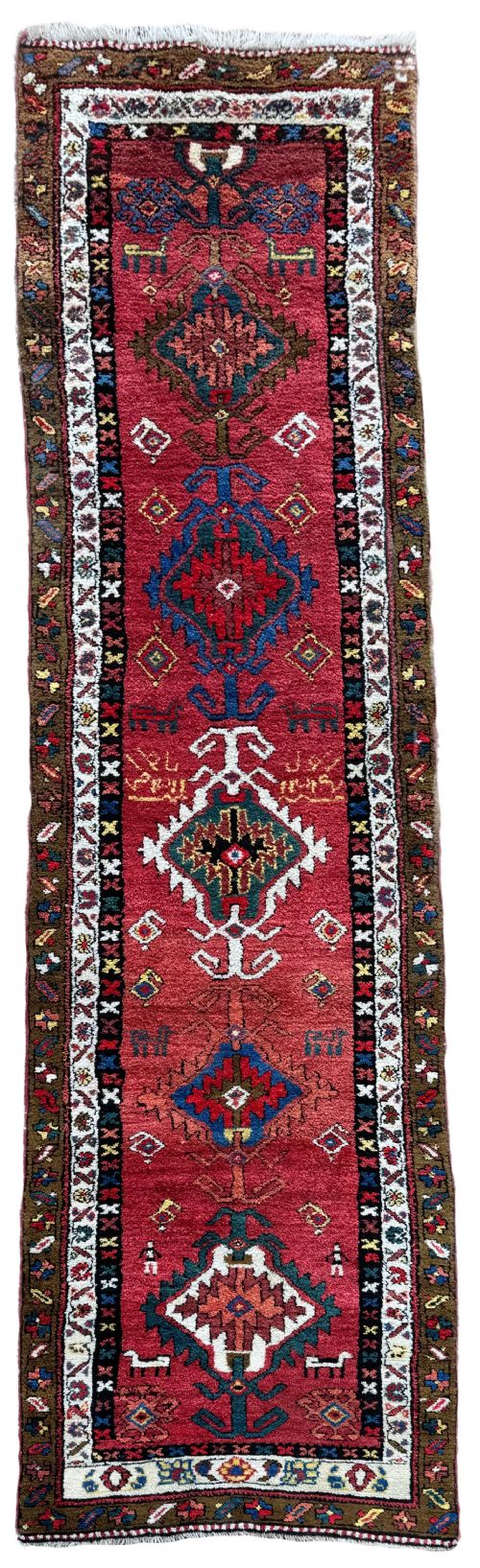
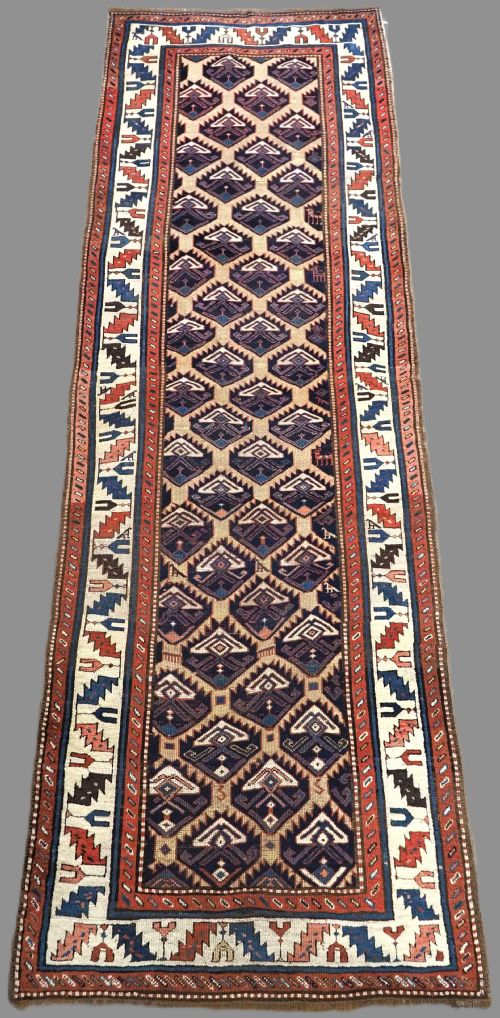
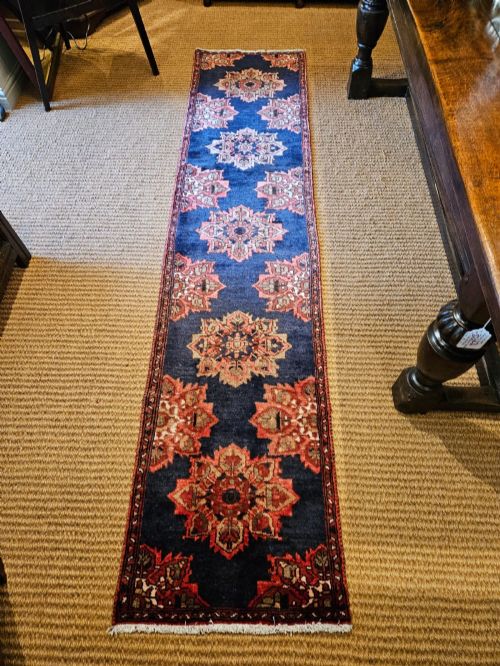
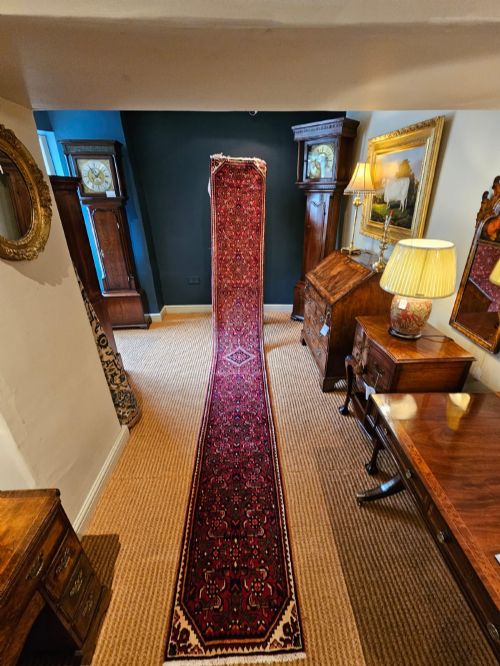


Traditional Hall Runner
A traditional hall runner brings warmth and character to narrow spaces through enduring woven patterns from Persian, Caucasian, and Anatolian traditions.
Traditional Hall Runner
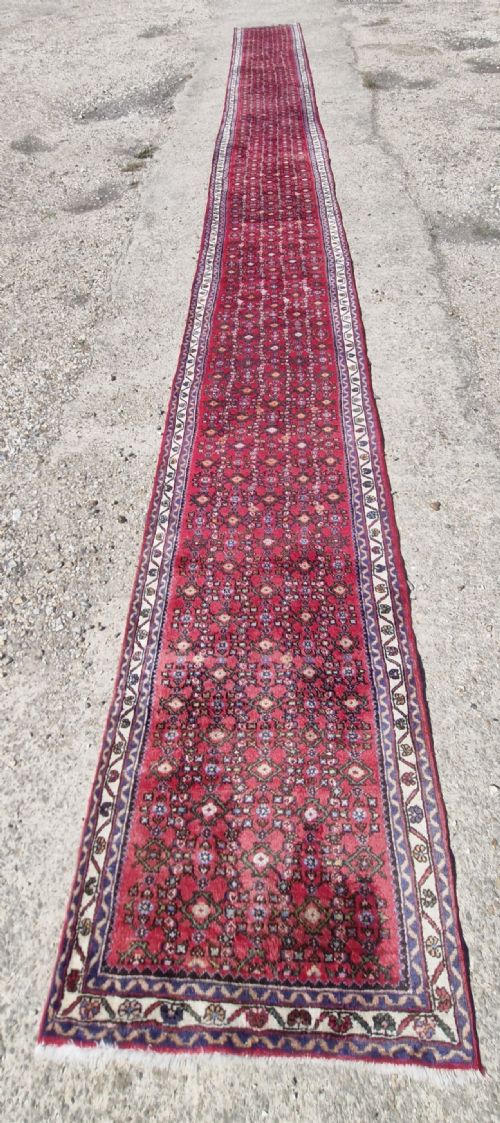
A traditional hall runner is a long, narrow floor covering designed specifically for corridors, stairways, and landings. These pieces bridge rooms while protecting high-traffic wooden or tiled floors from daily wear.
Most examples found here originate from the nineteenth and early twentieth centuries, spanning regions such as Persia, the Caucasus, and Anatolia. Tribal and village workshops produced these elongated formats to fit domestic architectural spaces.
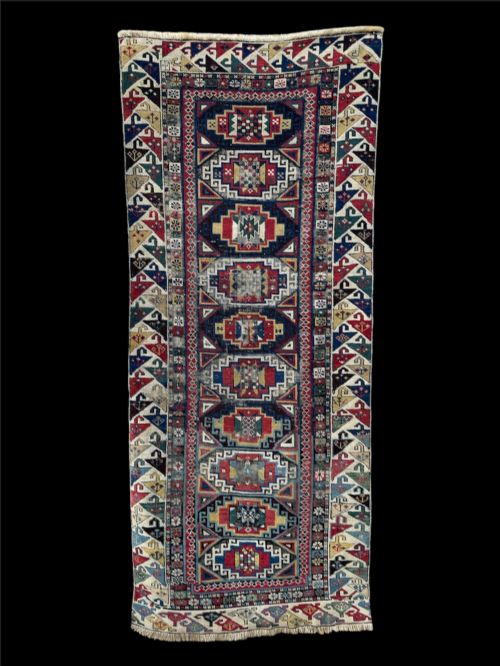
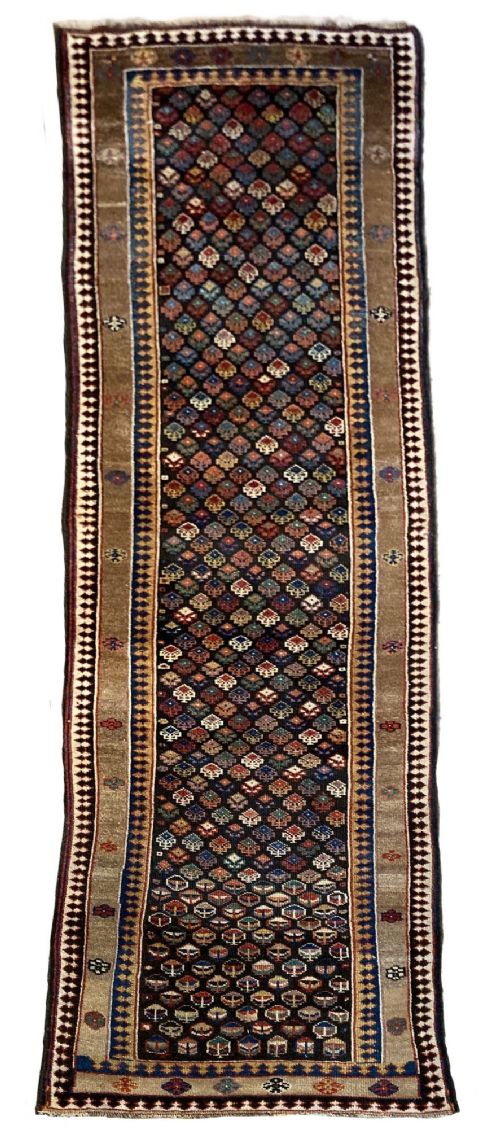
Makers utilised distinct regional designs, ranging from geometric Caucasian lattices to curvilinear Persian medallions. Each runner reflects the aesthetic traditions of the specific weavers who knotted them by hand.
How they were made
Weavers constructed these runners primarily using wool and cotton foundations, often incorporating hand-spun wool for the pile. Certain pieces also feature camel hair within the weave to provide natural coloration and varied texture.
Natural dyes infused the wool with deep tones of indigo, madder red, and earthy neutrals that age gracefully over decades. Artisans knotted each strand securely onto warp threads before finishing the edges with sturdy side cords.
The listings show runners spanning from the nineteenth century through the 1960s, featuring wool, cotton, and camel hair materials.
What varies in quality
Knot density and structural tightness dictate the foundational integrity of any woven runner. Higher knot counts per square centimetre allow for crisper geometric outlines and greater resilience under foot traffic.
The purity and depth of natural dyes significantly influence visual appeal across the spectrum. Artisans who mastered dye baths achieved saturated hues that mellow harmoniously with age rather than fading harshly.
The Traditional Hall Runner Glossary
- Runner
- A long, narrow carpet format specifically proportioned for corridors, hallways, and staircases. These pieces measure significantly longer than they are wide.
- Pile
- The vertical surface of a rug formed by the cut ends of knotted yarn. This soft upper layer absorbs friction and displays the woven pattern.
- Warp
- The stationary longitudinal threads stretched taut on a loom before weaving begins. Weavers knot the pile directly around these structural foundation threads.
- Natural dye
- Colouring derived from plant, insect, or mineral sources rather than synthetic chemical compounds. These traditional colourants produce rich, nuanced tones.
- Boteh
- A traditional teardrop or almond-shaped motif with a curved upper tip. This ancient symbol appears frequently in Persian and Caucasian textile designs.
Traditional Hall Runner: Frequently Asked Questions
Where should I place a traditional hall runner?
These narrow carpets suit corridors, entryways, and landings where floor space is restricted. Their elongated proportions guide movement through a home while softening hard walking surfaces.
Ensure you measure the precise length and width of your hallway before selecting a piece. Leave a small margin of exposed floor around the edges to frame the runner properly.
How do I clean an old wool runner?
Gentle, regular suction vacuuming without a rotating brush roll removes embedded dust and grit from the pile. Avoid shaking or beating vintage textiles, as this stresses fragile foundation threads.
For deeper maintenance, consult a specialist in antique rug conservation rather than attempting chemical washing at home. Professional cleaners understand how to protect natural dyes and delicate wool.
Are these runners durable enough for daily use?
Hand-knotted wool textiles withstand generations of foot traffic when placed on a quality underlay. The natural lanolin in traditional wool fibres resists dirt and cushions the pile against constant pressure.
Positioning a suitable rug pad underneath prevents slipping and absorbs impact. This simple addition significantly extends the working lifespan of any antique hallway floor covering.
How do I identify a Caucasian runner?
Caucasian pieces typically feature bold geometric medallions, hooked polygons, and sharp diagonal lines. The colour palettes often rely on strong contrasts of indigo blue, red, and ivory.
Weavers from the Caucasus region favoured stiff, structured layouts over the flowing florals found in some Persian workshops. Their distinct tribal character remains easy to recognise once you examine several examples.