



Antique Serapi Runner
An antique serapi runner brings distinct Persian geometry and durable village weave to a hallway, offering character that modern floor coverings simply lack.
Antique Serapi Runner
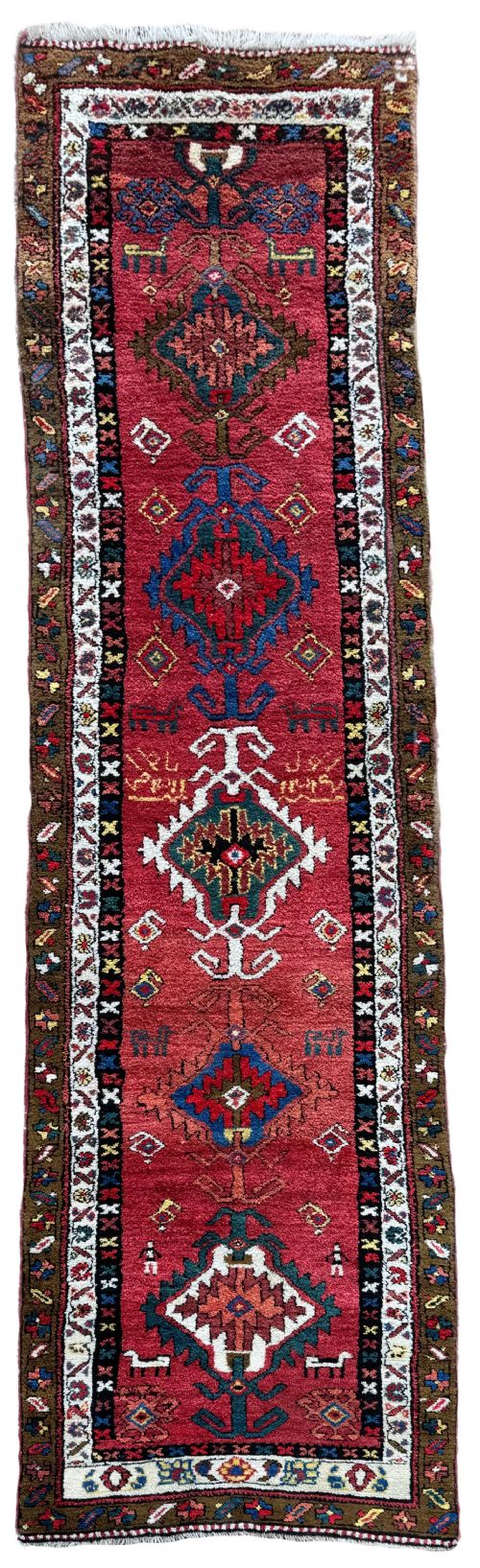
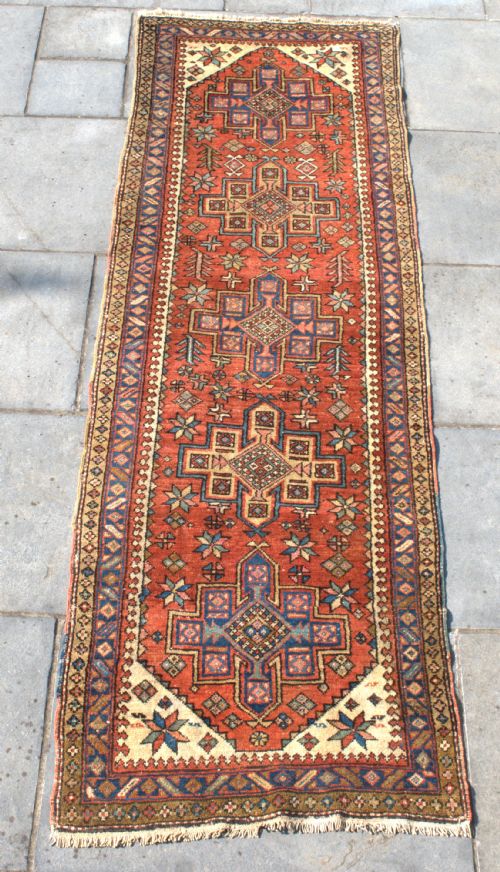
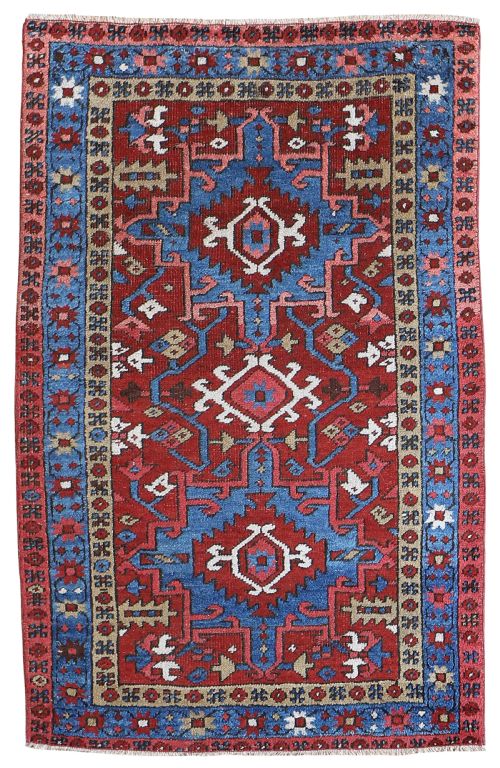
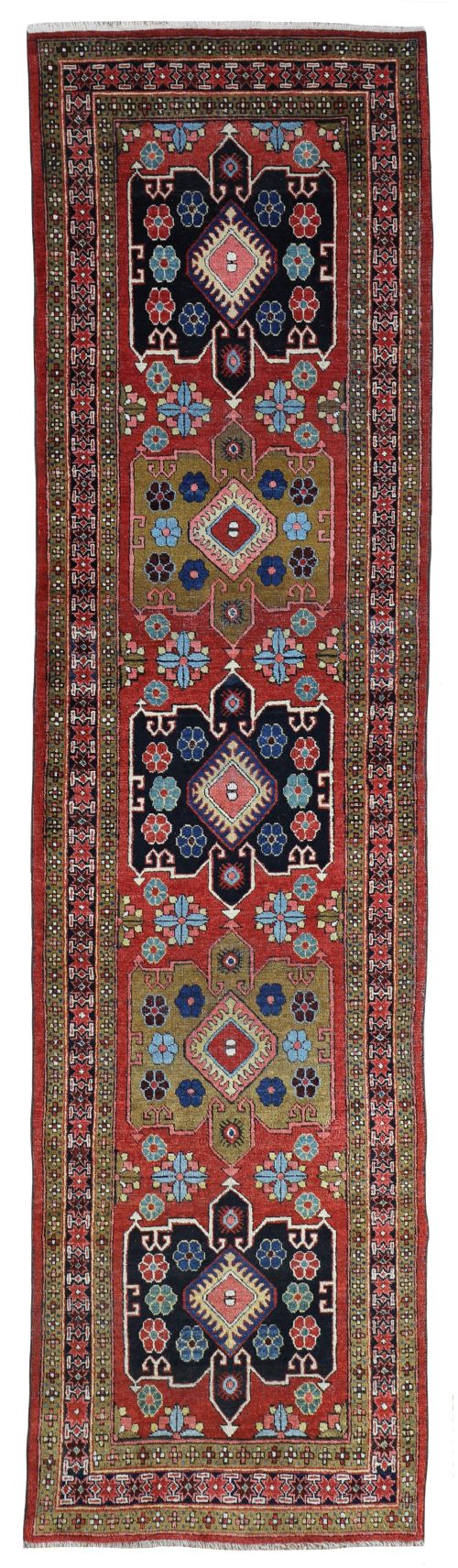
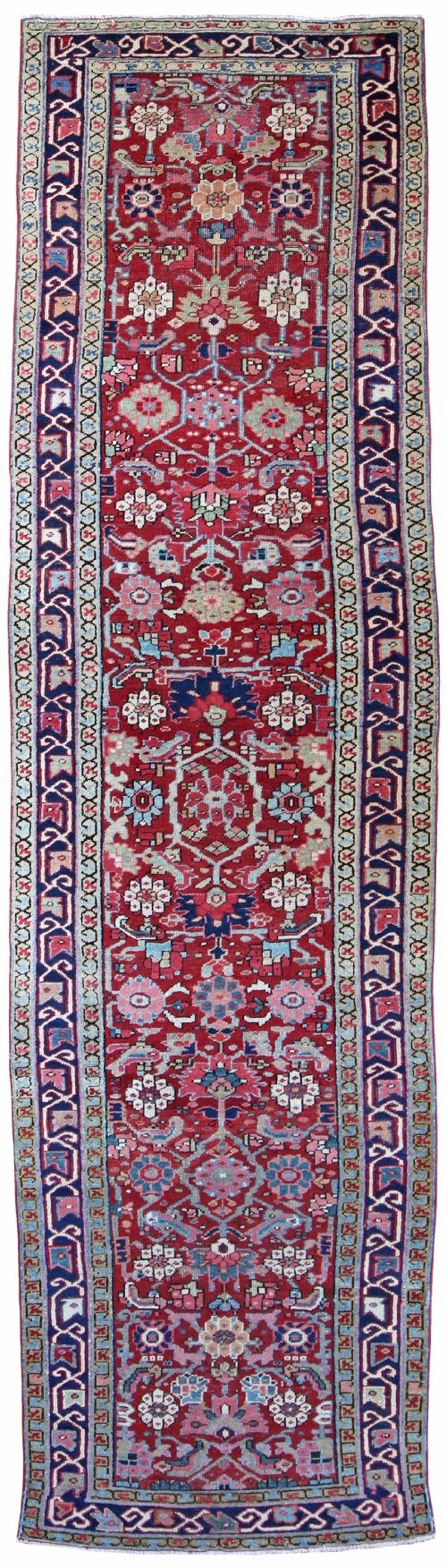
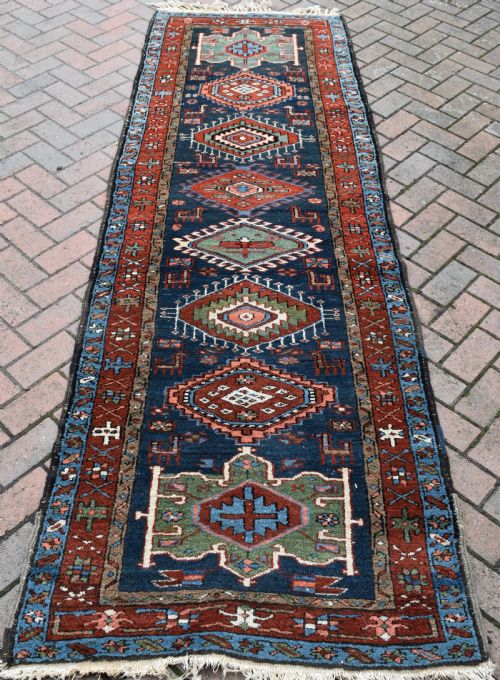
When searching for an antique serapi runner, buyers look at long, narrow floor coverings originating from Persia. These pieces share stylistic ties with the Heriz region, often grouping under traditional Persian and Persian Heriz classifications.
The versions met most frequently on this page span the late nineteenth century and the early twentieth century, specifically from eighteen seventy through to nineteen twenty. They appear as runner rugs, hallway runners, and long gallery carpets.
Buyers choose these formats to anchor long corridors and narrow spaces with historical textiles. Each runner displays the characteristic large-scale geometric medallion layouts and balanced borders typical of the weaving tradition.
How they were made
These carpets and runners rely on wool for the pile and cotton for the structural foundation. Weavers knotted the wool onto cotton warps and wefts to build a dense and resilient surface suited for heavy foot traffic in hallways.
The construction involves traditional village hand-knotting techniques practiced across Persian workshops during the nineteenth and early twentieth centuries. This combination of materials produces a sturdy structure that maintains its integrity over generations of use.
Listings span production dates from eighteen seventy through to nineteen twenty, utilising wool and cotton across runner and carpet formats.
What varies in quality
The distinction between tiers of quality rests upon the crispness of the geometric drawing and the proportion of the central medallion within the field. Superior examples maintain balanced borders and harmonious proportions across long narrow dimensions.
Quality also shows in the handling of the wool pile and the precision of the village weave. Tighter knotting supports clearer rendering of traditional Persian motifs along the runner length.
The Antique Serapi Runner Glossary
- Serapi
- A sub-category of Persian Heriz carpets known for bold, geometric medallion designs and spacious fields. These pieces date from the nineteenth and early twentieth centuries.
- Heriz
- A rug-producing region in northwest Persia renowned for durable village carpets. Pieces from this area frequently feature strong geometric layouts.
- Runner
- A long, narrow carpet format designed specifically for hallways, corridors, and stairs. Dimensions typically feature a high length-to-width ratio.
- Medallion
- The central ornamental design element placed in the middle of the carpet field. In these rugs, it often takes a large geometric or polygonal form.
- Pile
- The upright yarn loop surface of the carpet that forms the soft texture. It consists of wool knotted onto a cotton foundation.
Antique Serapi Runner: Frequently Asked Questions
Where do antique serapi runners come from?
These runners originate from Persia, specifically connected to the weaving traditions of the Heriz region. Village weavers produced them in the nineteenth and early twentieth centuries.
Their distinct geometric styles and village construction methods separate them from city-made Persian workshop carpets of the same era.
How do I use a runner in a hallway?
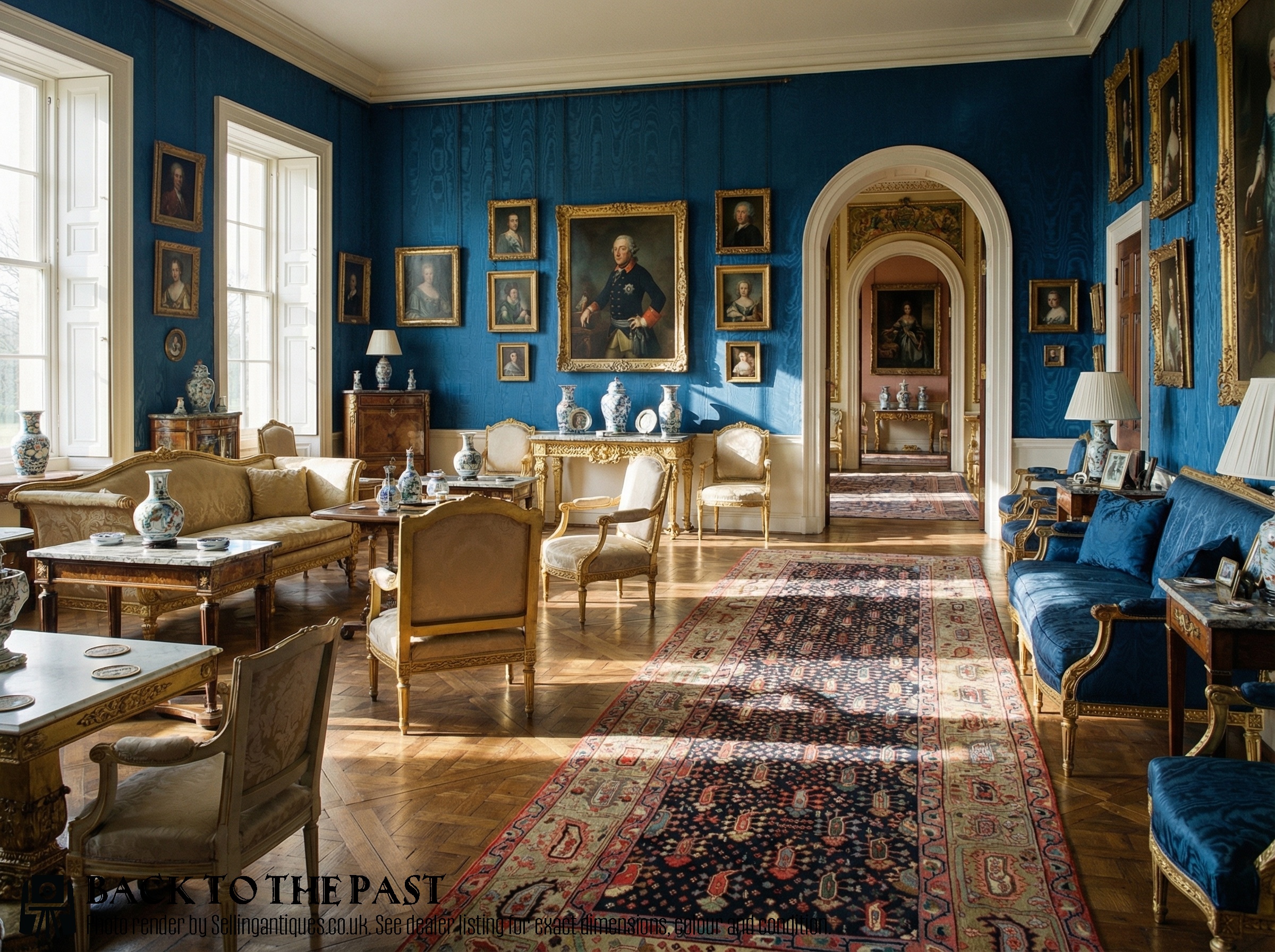
Long narrow formats suit corridors, entrance halls, and gallery spaces where linear floor coverings soften hard flooring. They protect high-traffic floorboards while adding traditional Persian character to otherwise plain passage areas.
Measure the clear floor space carefully, leaving a uniform border of exposed wood or stone around the edges.
What materials make up these carpets?
The pile consists of wool, which provides softness and resilience underfoot. A cotton foundation of warps and wefts supports the knotted wool structure.
This combination ensures the textile remains stable along extended runner dimensions.
How do I date an antique runner?
Dating relies on stylistic traits, structural characteristics, and material analysis compared against documented pieces from eighteen seventy to nineteen twenty. Changes in wool quality and natural dye usage offer clues to the period of production.
Most examples on this page span the late nineteenth and early twentieth centuries.