
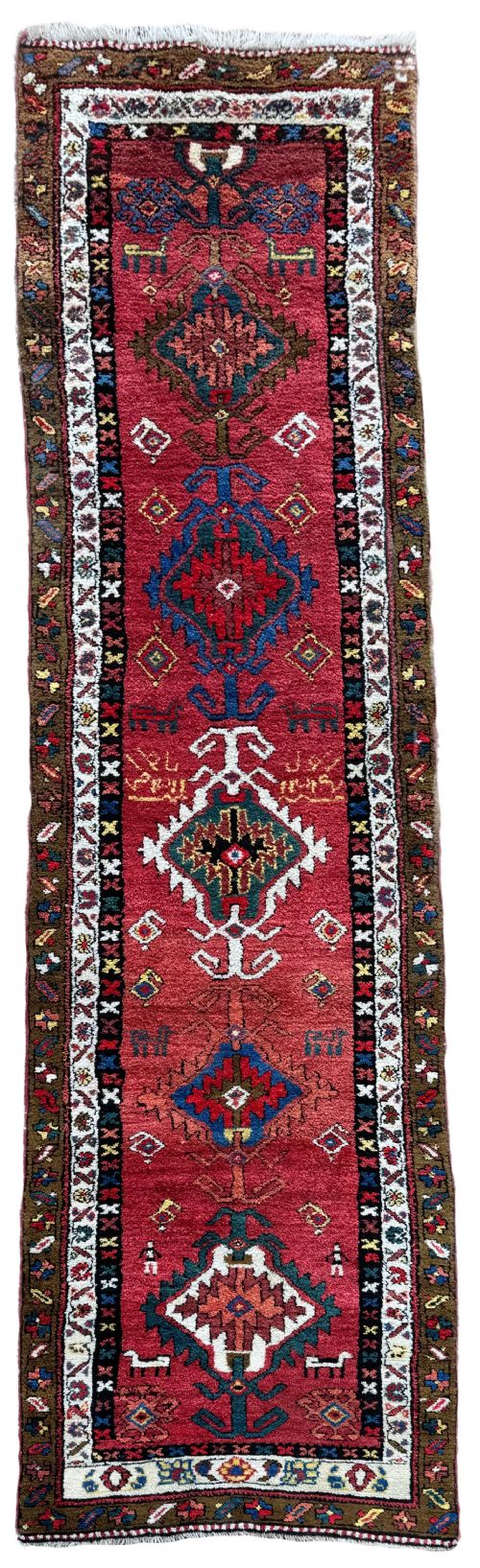
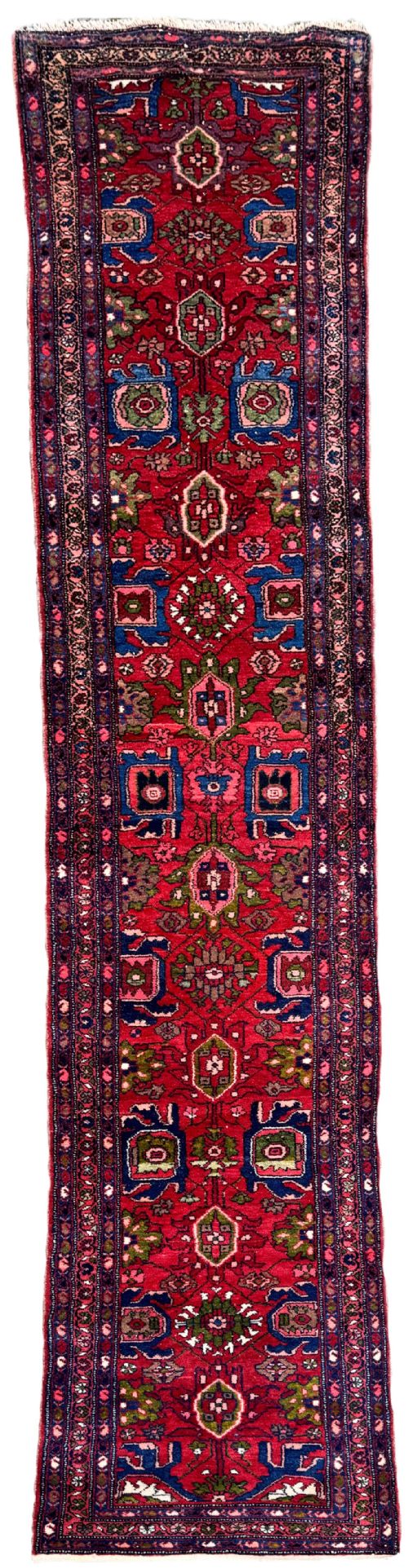
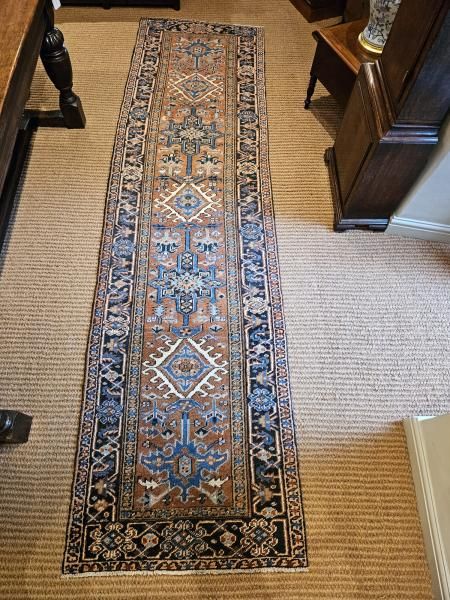
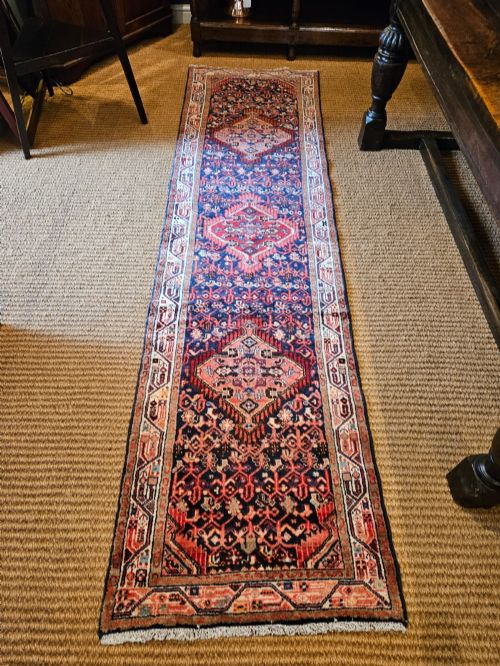
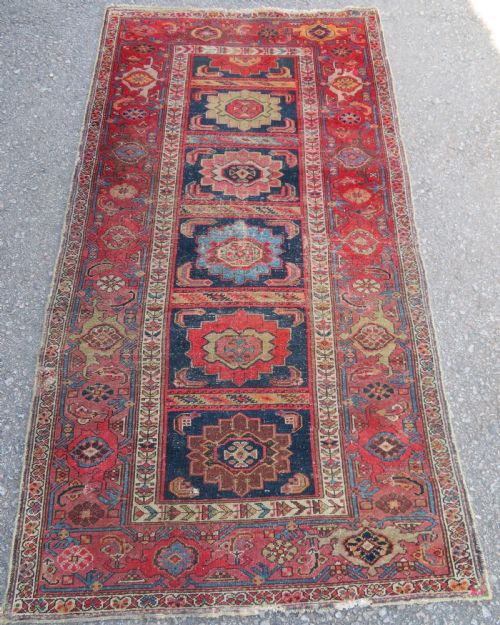
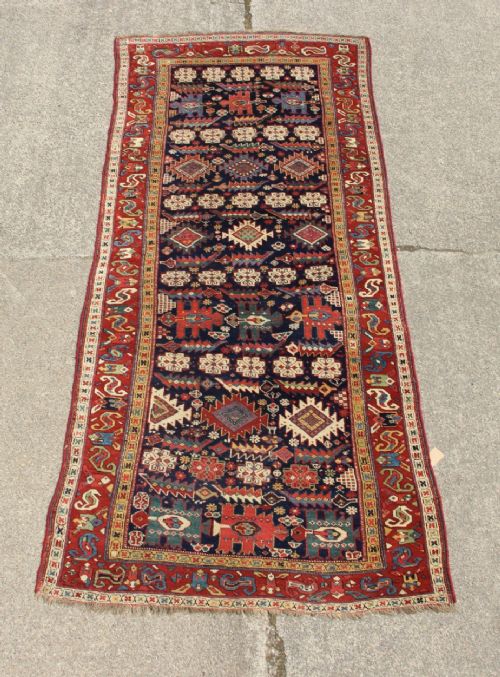

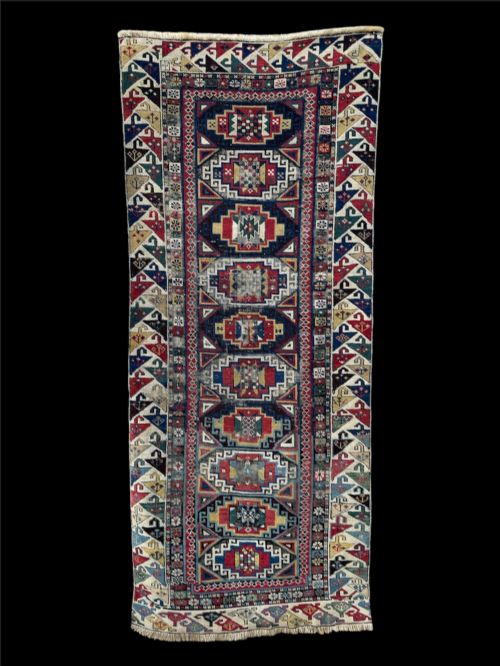
Long Persian Hallway Runner
A long persian hallway runner brings substantial character and length to domestic corridors through traditional village and tribal weaving.
Long Persian Hallway Runner
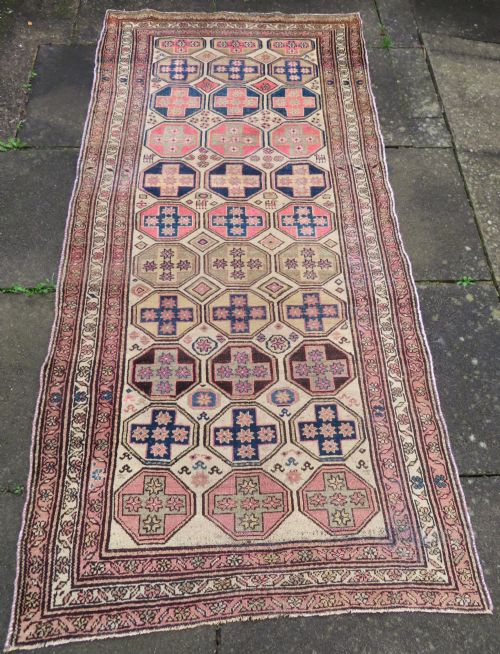
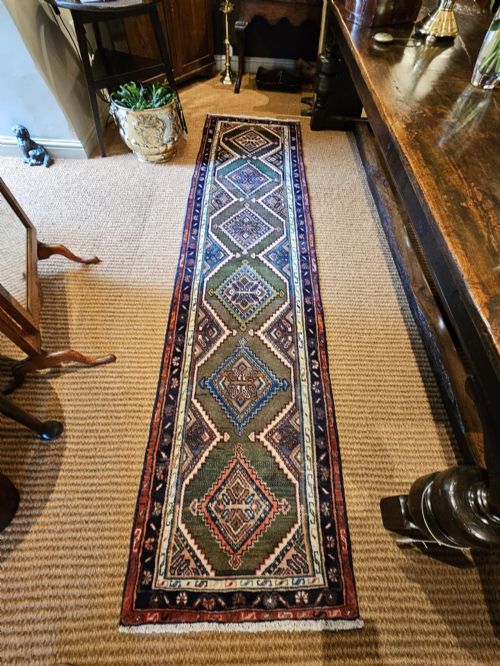
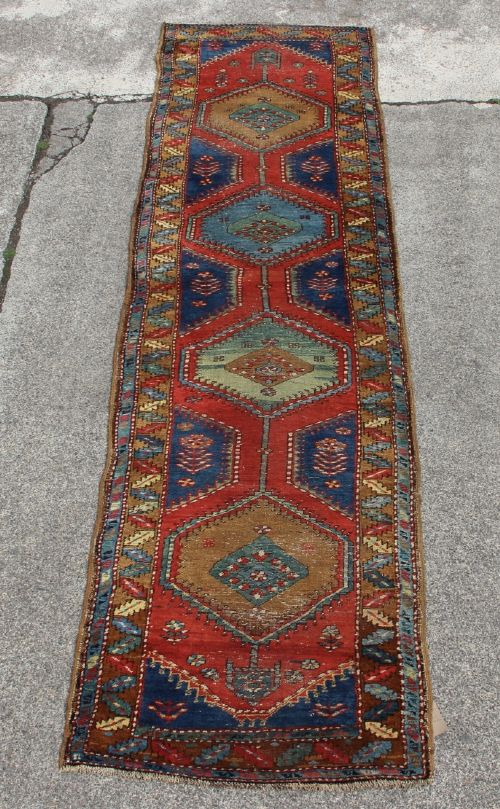
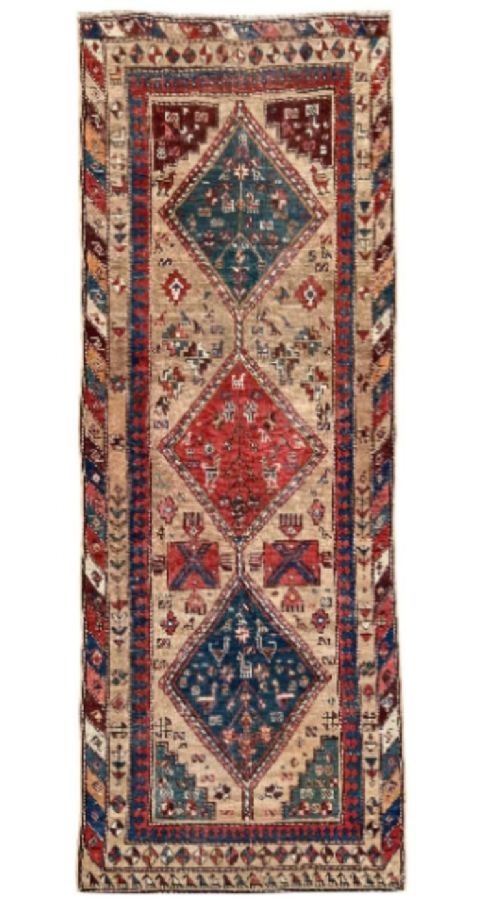
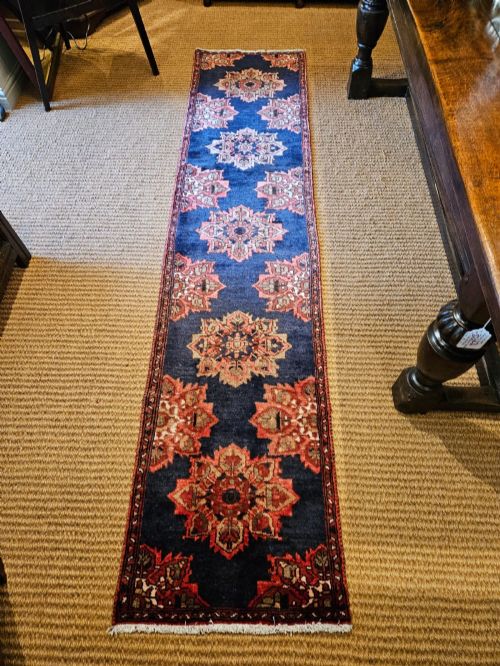
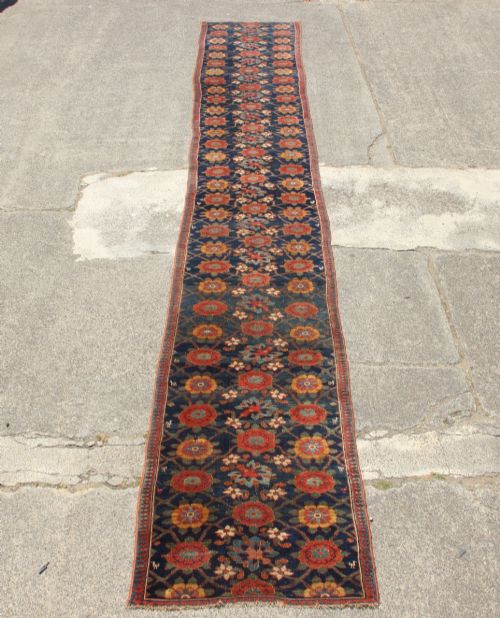
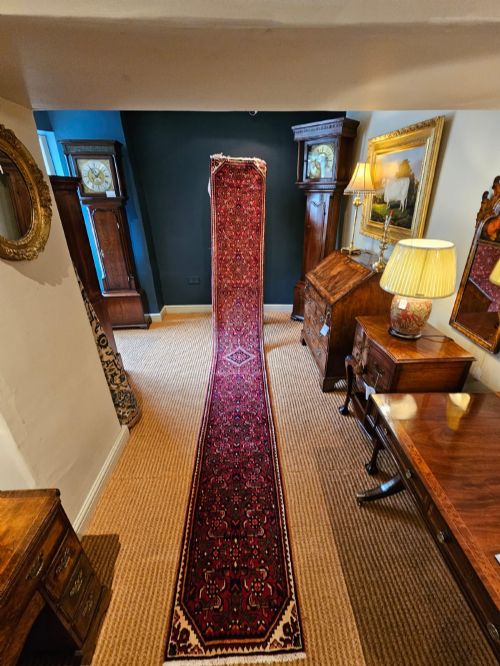
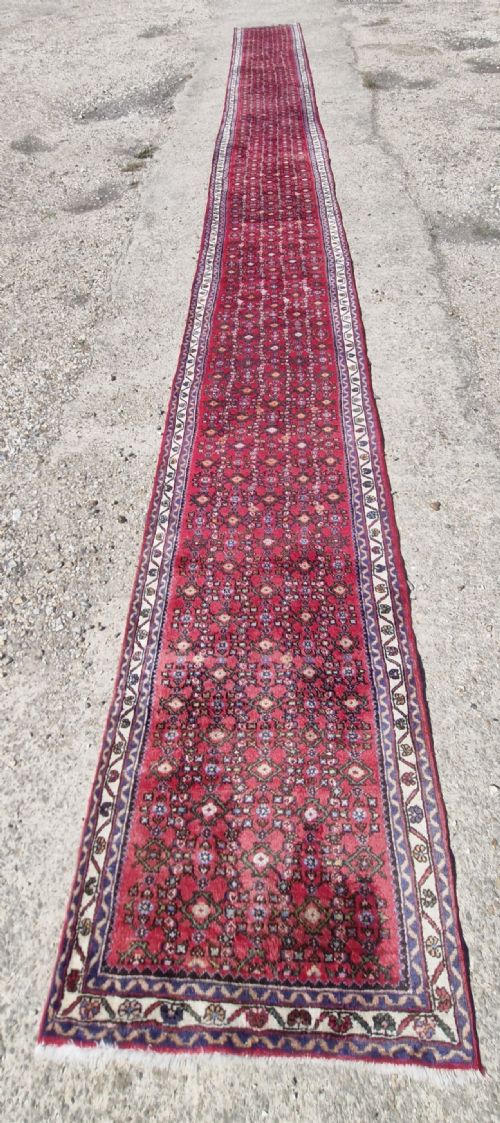
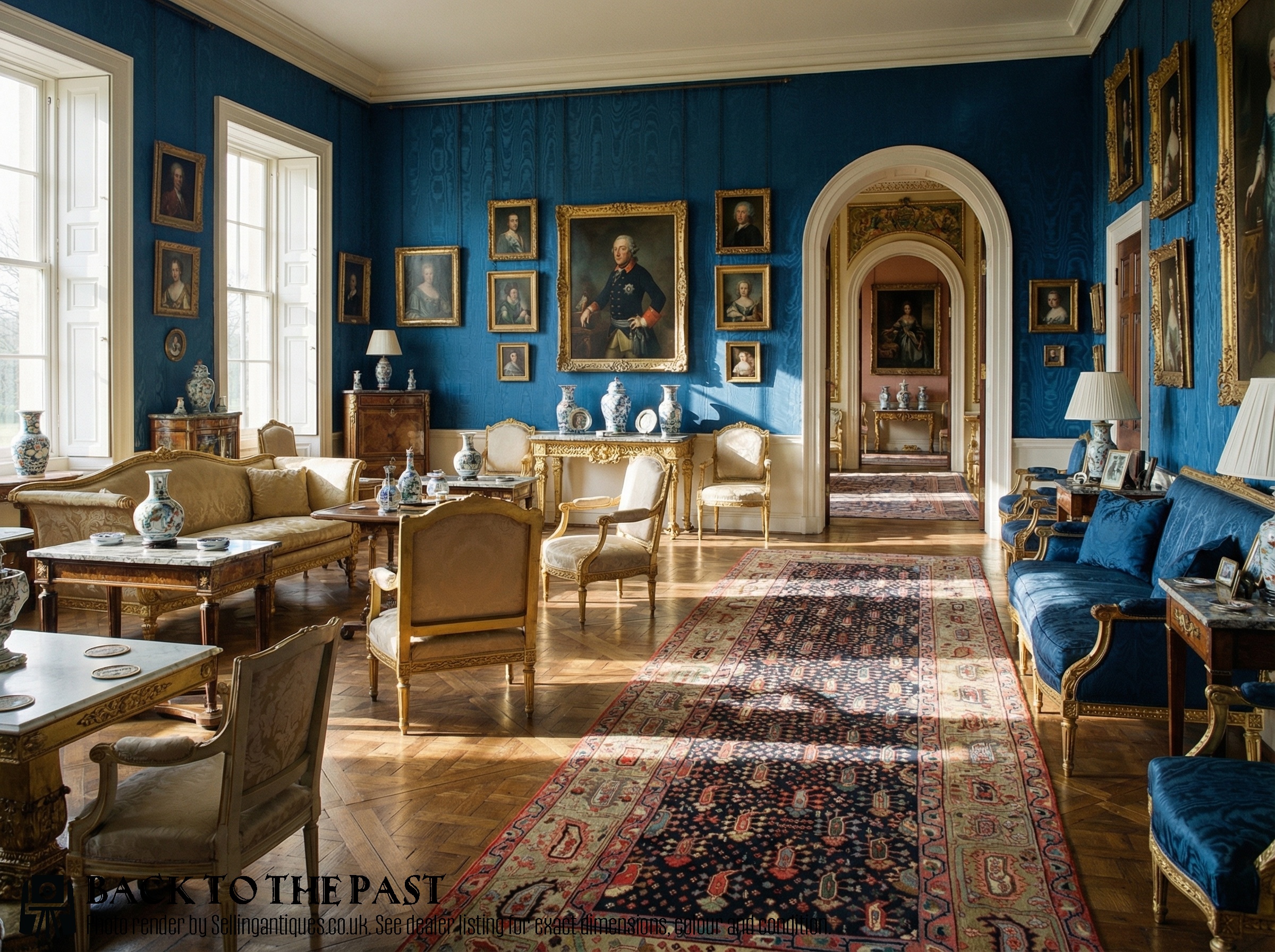
A long persian hallway runner provides linear pattern and deep warmth for extended domestic spaces. These pieces span origins from Heriz, Hamadan, Bidjar and Kurdish regions, created to fit narrow floors.
Most examples encountered here date from the nineteenth century into the early decades of the twentieth century. They arrive in various lengths, occasionally reaching exceptional proportions for grand country houses.
The aesthetic relies on tribal geometry, medallion layouts and repeating boteh or mina khani motifs. Weavers adapted these patterns to suit the elongated format required for hallways.
Materials and construction
Production rests upon foundations of hand-spun wool and cotton, worked by hand into durable pile surfaces. Natural dyes impart depth to colours including navy blue, olive green and rich madder reds.
Weavers knotted the wool densely onto warp threads, creating resilient carpets intended to withstand heavy foot traffic. Edge finishes and selvedges were bound securely by hand to protect the structure over decades of use.
Listings feature wool, cotton and hand-spun wool across periods spanning the nineteenth and twentieth centuries.
Distinctions in quality
Quality rests upon the density of the knotting and the precision of the tribal design execution. Finer examples display intricate geometry and crisp drawing within the medallion or all-over field patterns.
The integrity of the foundation wool and the stability of the original dyes also separate standard pieces from superior specimens. Gradations in pile retention and the crispness of secondary borders reveal the weaver's original skill.
The Long Persian Hallway Runner Glossary
- Kelleh
- A large format rug or runner, typically longer than standard room-sized carpets but broader than typical corridor runners. These substantial pieces served major reception rooms or expansive halls.
- Mina Khani
- A repeating pattern of stylised flowers linked by a lattice network, frequently seen in Kurdish and Persian weaving. This design creates a balanced rhythm along narrow formats.
- Bidjar
- A town in western Iran known for exceptionally heavy, dense Kurdish carpets woven with a stiff foundation. These structures withstand immense wear while retaining intricate detail.
- Heriz
- A region in northwest Persia famous for bold geometric medallions and robust wool. Runners from this area utilise striking architectural motifs.
- Hamadan
- A major trading hub in western Persia gathering village and tribal rugs from surrounding districts. Pieces bearing this attribution display diverse geometric field designs and sturdy construction.
Long Persian Hallway Runner: Frequently Asked Questions
Are these runners suitable for heavy traffic areas?
Traditional village and tribal carpets were constructed specifically for domestic durability using thick wool pile. Hand-spun materials and tight knotting provide natural resilience against daily wear.
Underlays help maintain stability on smooth hallway floors, preventing slip and reducing friction against the base threads. Regular rotation distributes foot traffic evenly across the length.
How do I identify a Kurdish tribal runner?
Kurdish pieces often exhibit saturated natural dyes, dense wool and characteristic geometric motifs such as repeating flowers or lattice fields. The handling of the wool feels substantial and robust.
Look for idiosyncratic tribal touches in the border designs and minor shifts in symmetry that reveal hand-weaving traditions distinct from city workshops.
What maintenance do antique wool runners require?
Gentle vacuuming without a rotating brush roll keeps dust from settling deep into the wool pile. Professional cleaning by specialists in antique textiles preserves the natural lanolin.
Keep pieces away from prolonged direct sunlight to protect natural dye colours. Prompt attention to spills prevents staining on cotton and wool foundations.