
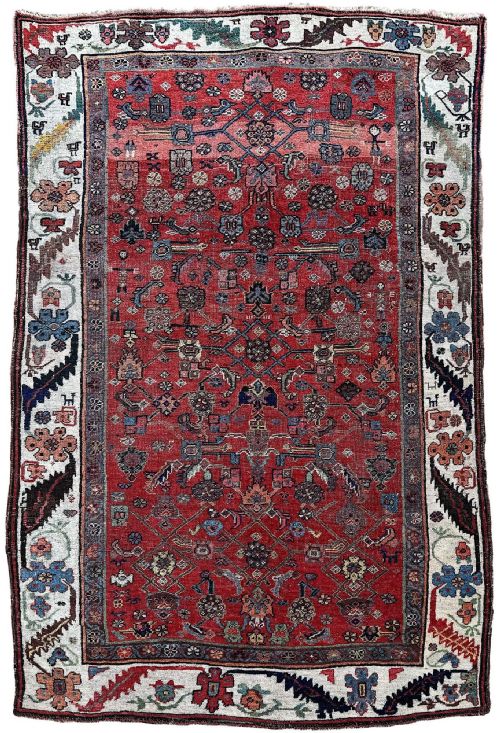
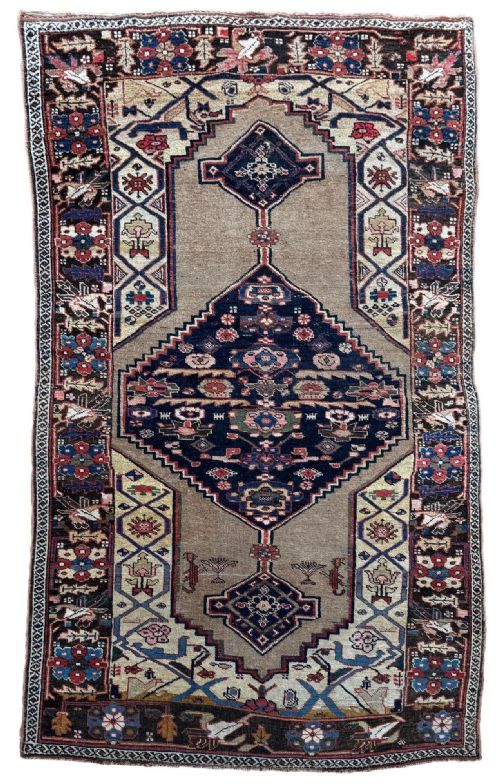


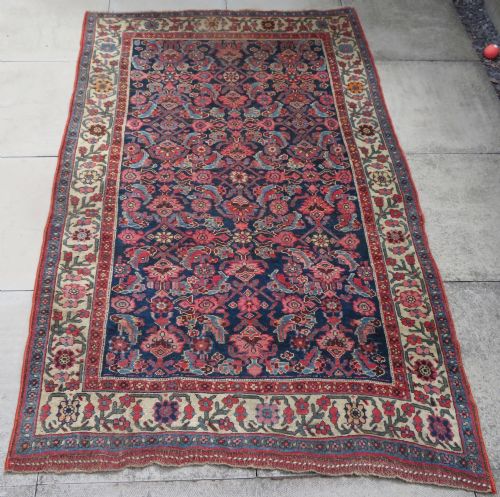
Kurdish Bidjar Carpet
These kurdish bidjar carpet pieces bring enduring Persian tribal craftsmanship into your home through dense wool and cotton structures.
Kurdish Bidjar Carpet
A kurdish bidjar carpet represents traditional weaving from Persian tribal workshops, appearing in formats like runners, long rugs, bag faces, and large carpets. The examples here span multiple decades from the late nineteenth century into the early twentieth century.
Most pieces you encounter on this page take the form of rugs and area rugs, alongside larger kelleh formats. Their origins connect directly to the Kurdish weavers of the Bidjar region in Persia.
The selection ranges from smaller tribal village rugs to substantial carpets, reflecting traditional Persian tribal styles. Each item demonstrates the distinct character of nineteenth and early twentieth-century Kurdish weaving.
Materials and construction
The construction relies fundamentally on wool and cotton as the primary materials. Weavers utilised these durable natural fibres to build robust foundations and dense pile surfaces.
The integration of wool and cotton supports the heavy, resilient structures characteristic of these carpets. This material combination ensures the dense knotting and firm handle associated with the tradition.
The site listings feature materials limited strictly to wool and cotton across all periods.
Distinctions in quality
Quality differences emerge through the handling of wool and cotton, alongside the precision of the tribal designs. Denser knotting creates a stiffer, more durable fabric that retains its structural integrity over generations.
Visual variety also influences the character of each piece, from standard tones to unusual ground colours like lemon. The clarity and execution of Persian tribal motifs separate standard village pieces from finer examples.
The Kurdish Bidjar Carpet Glossary
- Bidjar
- A town and region in western Iran known for producing exceptionally durable carpets with dense wool foundations. Weavers here developed distinctive Kurdish styles.
- Kelleh
- A large format carpet, typically longer and narrower than standard room-size carpets. This traditional shape suits specific hallway and gallery spaces.
- Bag face
- The front panel of a storage bag produced by nomadic or tribal weavers, now often displayed as a small decorative rug. It preserves portable tribal artistry.
- Runner
- A long, narrow carpet format designed primarily for corridors or staircases. These pieces provide functional floor coverage in linear spaces.
- Tribal
- Pertaining to designs and methods created by distinct cultural groups rather than urban manufactories. These patterns reflect traditional community motifs and local heritage.
Kurdish Bidjar Carpet: Frequently Asked Questions
How do I date a kurdish bidjar carpet?
Dating relies on stylistic indicators, structure, and materials recorded across pieces from periods such as the late nineteenth and early twentieth centuries. Comparing structural density and wool characteristics helps place a piece within its likely era.
Changes in dye palettes and weave execution also provide clues to whether a rug originates from the eighteen-eighties or the nineteen-twenties.
Where were these carpets made?
These carpets originate from the Bidjar region in Persia, produced by Kurdish tribal weavers in villages and regional settlements. The local style developed distinct characteristics tied to these specific communities.
Their methods utilise regional wool and cotton resources combined with traditional Persian weaving techniques.
What is a kelleh format?
A kelleh is a specific large rectangular format that is longer than it is wide, differing from standard square carpets. This shape historically served large reception rooms in Persian homes.
They offer a balanced presence in long spaces while displaying the full breadth of tribal design elements.
How should I care for a wool rug?
Wool and cotton construction requires regular gentle vacuuming without a beater bar to protect the pile surface. Professional cleaning maintains the integrity of the natural fibres.
Keeping the piece out of harsh direct sunlight prevents fading of the traditional wool pile.