
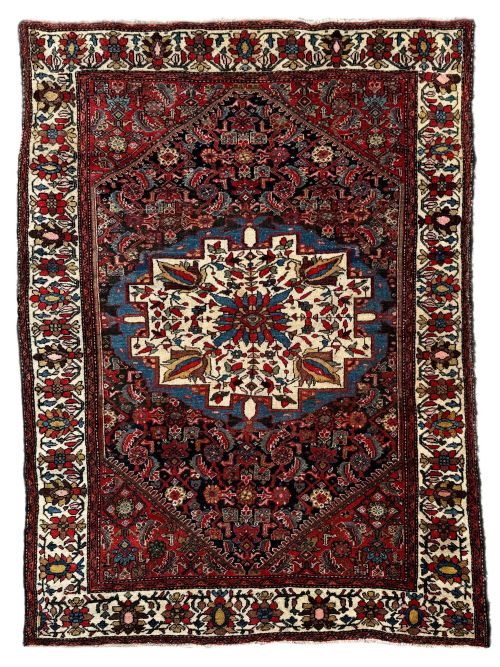


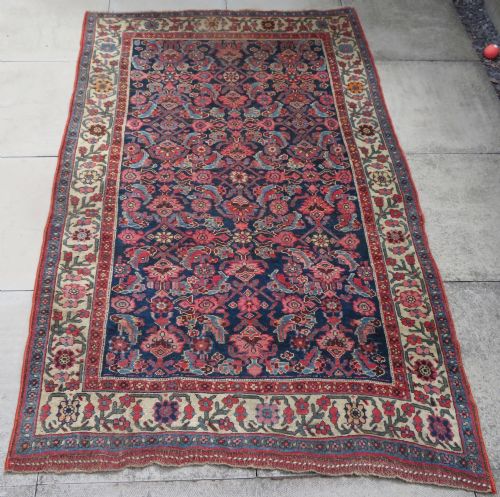
Antique Bijar Runner
An antique bijar runner delivers heavy Kurdish weave and dense wool pile that stands up to centuries of traffic.
Antique Bijar Runner
An antique bijar runner represents the durable village and tribal weaving of West Persia, specifically associated with Kurdish makers in Kurdistan. When you search for an antique bijar runner, you encounter long, narrow formats designed for hallways and galleries, often woven with heavy foundations and sturdy wool pile.
The evidence shows these pieces span from the late nineteenth century into the early twentieth century, taking forms such as narrow kilim runners and heavy knotted carpets. Persian tribal styles dominate the selection, bringing geometric motifs and robust structures straight from the weaving floors of Bijar.
How they were made
Weavers constructed these runners using hand-spun wool and cotton, combining knotted pile techniques with flatweave methods in kilim formats. The materials provide substantial weight and rigidity, which historically earned these textiles the reputation of iron rugs.
Makers utilised sturdy cotton foundations alongside dense wool tufts, packing the knots tightly to create a stiff handle that resists curling at the edges.
Some runners are affectionately called iron rugs because their dense packing makes them notoriously difficult to fold.
What varies in quality
Quality rests in the density of the wool and the crispness of the tribal patterns, separating tightly packed village weaves from looser structures. The handling of the foundation materials also dictates the grade, as firmer packing produces a heavier, more resilient rug.
The distinction between a standard village piece and a finer example lies in the precision of the linked medallions and the purity of the hand-spun wool employed in the pile.
The Antique Bijar Runner Glossary
- Bijar
- A town in western Iran known for producing exceptionally heavy and durable Kurdish carpets and runners.
- Kelleh
- A traditional Persian format describing a rug that is longer than it is wide, though typically broader than a standard runner.
- Kilim
- A flatwoven textile produced without a pile, resulting in a lightweight runner suitable for summer floors or wall hanging.
- Mina Khani
- A repeating floral lattice pattern frequently found across Persian village and tribal weaving.
- Senneh
- A neighbouring weaving centre whose style often blends with Bijar production in Kurdish textiles.
Antique Bijar Runner: Frequently Asked Questions
Where were antique bijar runners made?
These runners originate from the town of Bijar and the surrounding Kurdish villages in western Persia. Local weavers developed distinctive techniques using heavy wool and dense knotting.
Production centred on tribal households and small workshops rather than large urban manufactories. This regional identity imparts the characteristic heavy structure seen in surviving pieces.
How do I clean an antique runner?
Professional dusting and gentle surface cleaning suit these heavy wool textiles best. Avoid immersing large Kurdish carpets in water without specialist knowledge.
Regular light vacuuming without a rotating brush helps prevent grit from settling into the deep pile. Specialist textile conservators should handle any restorative washing.
Can I use these runners in hallways?
Their dense construction and narrow proportions make them ideal for heavy traffic areas like corridors and landings. The stiff wool pile withstands frequent footsteps without losing its structural integrity.
Underlay helps keep the runner stable on wooden or stone floors and prevents premature wear from friction. This practical strength explains why many examples survive in daily use.
How do I date a Bijar runner?
Dating relies on comparing wool quality, natural dye characteristics, and structural evidence against documented nineteenth and early twentieth-century examples. Earlier pieces often display hand-spun wool with subtle variations in tone.
Stylistic shifts from tribal geometric layouts to structured medallions also offer chronological clues. Comparing the knot density and edge binding helps narrow down the decade of production.