
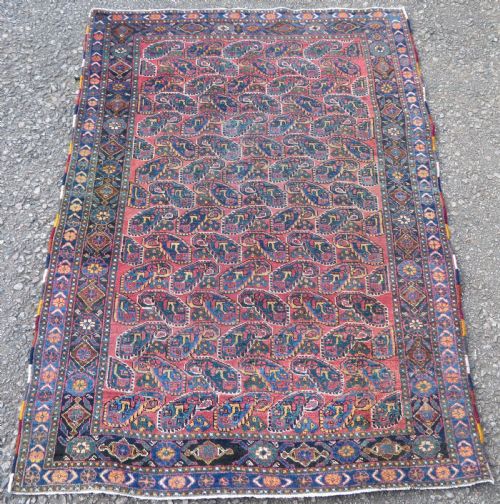
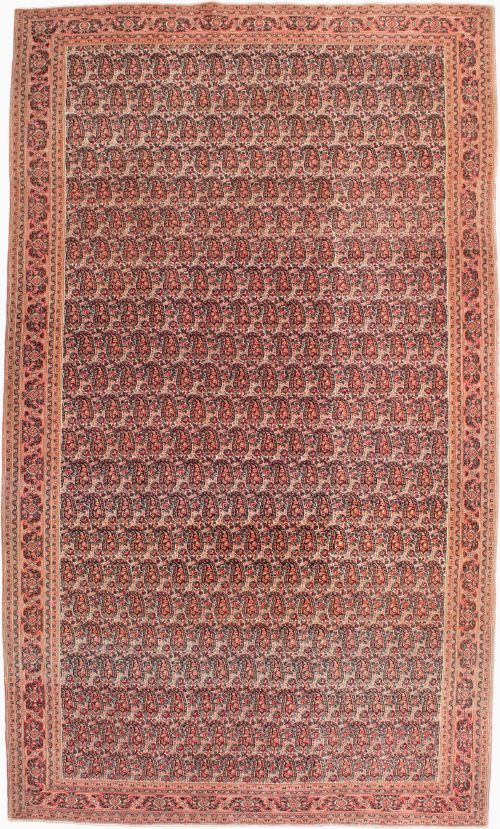


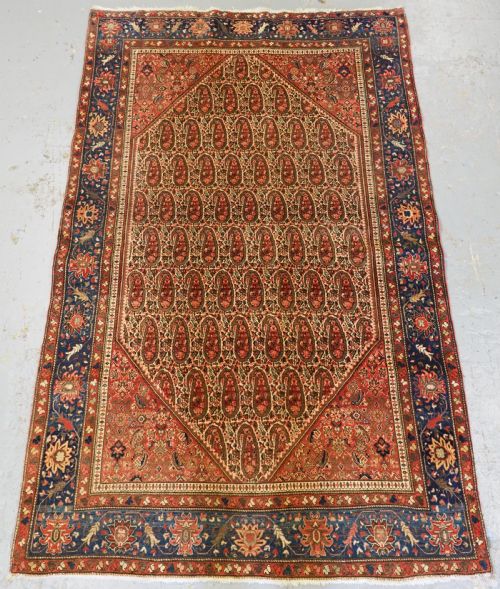


Traditional Paisley Motif Carpet
These traditional paisley motif carpet pieces bring hand-knotted Persian wool and cotton artistry into your interior, prized for rich heritage designs.
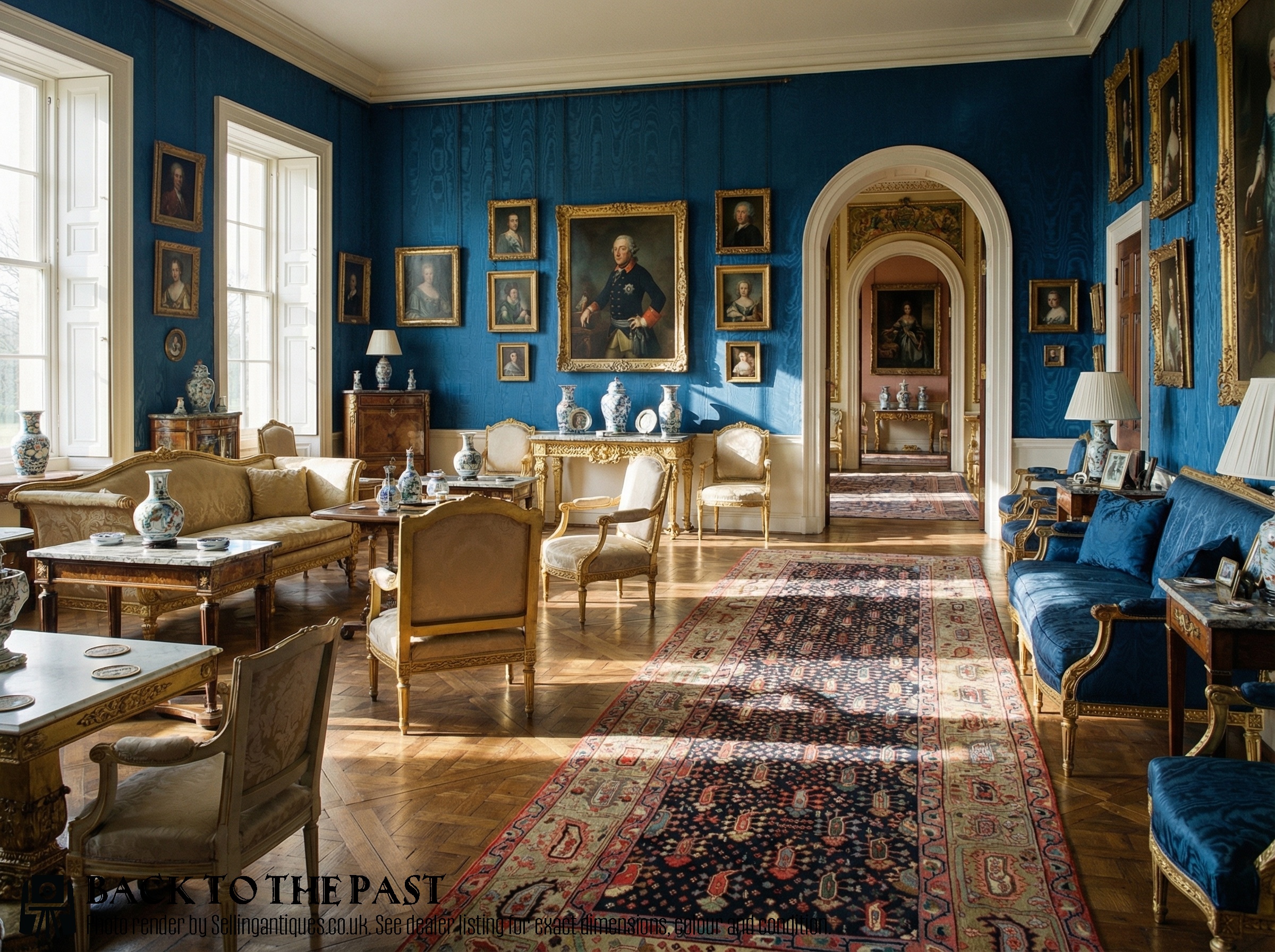
Traditional Paisley Motif Carpet
A traditional paisley motif carpet search brings up hand-knotted rugs and carpets originating from Persian workshops, villages, and tribal regions. These floor coverings span the late nineteenth century through to the early decades of the twentieth century. Examples include room-sized carpets, long runners, and compact area rugs.
You encounter forms bearing distinct regional weaves such as Serapi, Kirman, Afshar, Sultanabad, and Kurdish. The designs frequently incorporate boteh motifs, repeat floral patterns, and tribal layouts executed in wool and cotton. Each piece reflects the specific weaving traditions of its Persian origin.
The aesthetic centres on intricate pattern work created by generational weavers using durable materials. These textiles function equally well as practical floor coverings or focal points within a room. Collectors value them for their authentic period craftsmanship and enduring utility.
What varies in quality
The standard of a traditional paisley motif carpet rests on the precision of its knotting and the complexity of its design execution. Finer examples display high knot counts that allow intricate boteh and floral motifs to render with sharp definition. Weaving density differs between village productions and city workshops, influencing the overall handle and drape of the textile.
Material selection also dictates quality, particularly the grade of wool employed in the pile and the evenness of the cotton foundation. Superior wool yields a lustrous finish and resilient surface that withstands foot traffic while maintaining soft colour interaction. The harmony of natural dye absorption across the field further separates standard productions from exceptional workshop creations.
Listings feature wool and cotton materials across rugs and runners from the nineteenth and early twentieth centuries.
The Traditional Paisley Motif Carpet Glossary
- Boteh
- A traditional almond-shaped or teardrop motif of Persian origin that resembles a curled palm leaf or pinecone. It forms the primary design element found across many antique rugs and carpets.
- Knot density
- The number of knots per square unit on the reverse of a rug. Higher density often indicates finer detail and greater workshop labour.
- Foundation
- The structural base of a rug, comprising warp and weft threads usually made of cotton or wool. The pile knots are tied around these foundational threads.
- Runner
- A long and narrow carpet format specifically designed for hallways, corridors, or alongside furniture. These pieces feature elongated pictorial fields.
- Pile
- The upright yarn surface of a rug formed by cut or uncut knot loops. It provides the tactile texture and visual depth of the textile.
Traditional Paisley Motif Carpet: Frequently Asked Questions
Where were these rugs made?
These rugs originated across various regions of Persia, including tribal territories, rural villages, and established weaving centres. Each area utilised distinct local motifs and structural techniques.
Weavers in places such as Kirman, Serapi, and Afshar produced specific styles that reflect their geographic communities and cultural heritage.
What materials compose these carpets?
The primary materials are wool and cotton, utilised respectively for the soft pile and the supporting foundation structure. Natural dyes derived from local plants provided the original colour palette.
This combination of materials ensured both structural durability for floor use and a comfortable texture underfoot.
How do I care for an antique rug?
Maintenance involves regular gentle vacuuming without rotating brush heads to prevent fibre damage. Professional cleaning by specialists in antique textiles is recommended periodically.
Keeping the rug away from prolonged direct sunlight helps preserve the natural dyes used in the wool.
What is a boteh design?
A boteh is a recurring teardrop or almond-shaped motif representing a floral or vegetative symbol. It appears frequently in traditional Persian weaving.
Weavers arranged these motifs in all-over patterns or formal medallions across the carpet field.