

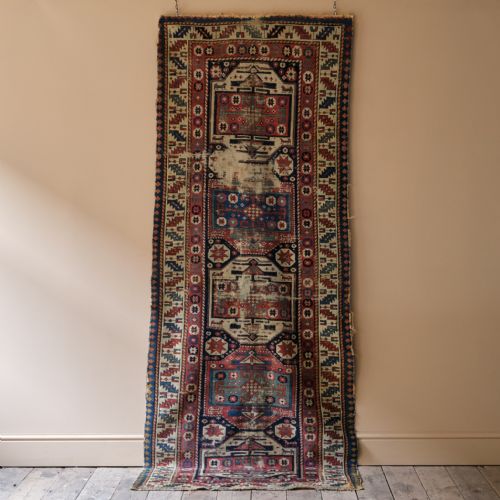


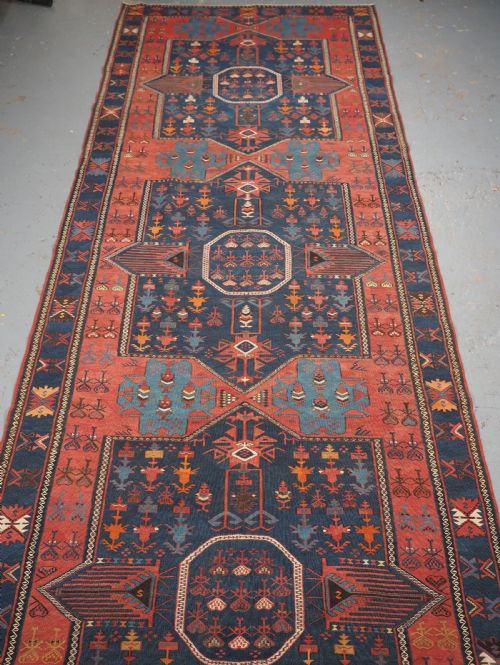


Large Hallway Runner Rug
These large hallway runner rugs span the nineteenth and early twentieth centuries, offering durable wool and cotton construction for expansive floors.
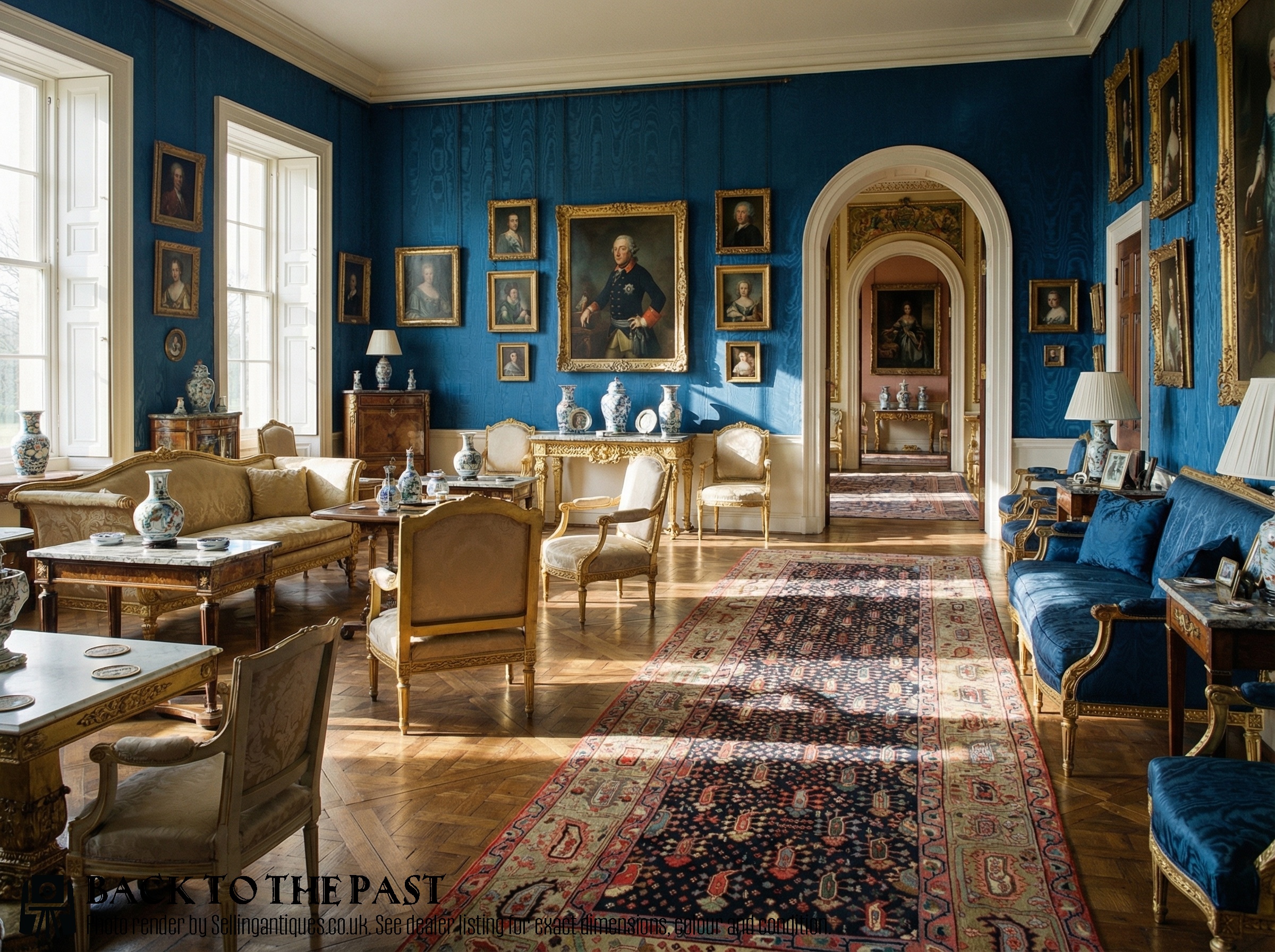
Large Hallway Runner Rug
When you search for a large hallway runner rug, you examine long formats designed for corridors and galleries, primarily originating from Persian and Caucasian weaving traditions. The examples found here span periods from the mid-nineteenth century through to the early twentieth century, including styles such as Persian Tribal, Caucasian, Ersari Turkmen, and traditional Kurdish designs.
The primary forms on this page include room-size carpets, kellehs, gallery carpets, and long runners woven in wool and cotton. Pieces such as the Akstafa long runners and Bidjar kellehs demonstrate the elongated proportions characteristic of this category.
How they were made
These textiles employ wool for the pile and foundation yarns, frequently paired with cotton for structural warps and wefts. The combination of resilient wool pile and sturdy cotton foundations provided the structural integrity required for heavy foot traffic in domestic and commercial hallways.
Weavers utilised traditional knotting and flatweaving techniques across regional workshops and nomadic camps, producing diverse structures from deep-pile pile carpets to flatwoven kilims. Natural dyestuffs and hand-spun materials created the varied surface textures and rich visual depth seen across these nineteenth and early twentieth-century floor coverings.
Listings feature wool and cotton rugs dating from the mid-nineteenth century to the early twentieth century.
What varies in quality
Quality in these long carpets rests upon the density of the weave, the precision of the tribal or regional motifs, and the integrity of the wool. Finer knotting allows intricate medallion and boteh designs to remain sharp along extended corridors.
The condition of the wool pile and the stability of the cotton foundation determine structural longevity. Pieces retaining full pile alongside original selvedges and ends represent the upper tier of survivals from this era.
The Large Hallway Runner Rug Glossary
- Kelleh
- A large format rectangular carpet, typically longer than it is wide, traditionally produced in Persian and Kurdish workshops.
- Kilim
- A flatwoven textile produced without a raised pile, utilising interlocking weft techniques to create geometric patterns.
- Boteh
- A traditional almond-shaped motif with a curved upper end, frequently repeated across Persian and Caucasian runner fields.
- Medallion
- A central ornamental design element placed symmetrically within the field of a rug or carpet.
Large Hallway Runner Rug: Frequently Asked Questions
How do I clean a large runner rug?
Gentle surface brushing and professional specialist washing preserve antique wool fibres.
Avoid harsh chemical treatments that strip natural lanolin from the pile.
Where should I place a long runner?
These pieces suit extended corridors, hallways, and large gallery spaces.
Ensure adequate underlay is utilised to prevent slipping on smooth floors.
How do I date these antique rugs?
Dating relies on stylistic motifs, structural materials, and regional weaving characteristics.
Nineteenth-century examples often feature distinct natural dyes and hand-spun wool structures.
What is the difference between a kelleh and a runner?
A kelleh generally denotes a broader, extended carpet format used in large reception spaces.
Runners typically feature narrower proportions specifically tailored for corridors and halls.