


Camel Wool Runner
These camel wool runner pieces are woven tribal and village textiles defined by un-dyed camel hair grounds, offering lasting durability for a hallway.
Camel Wool Runner
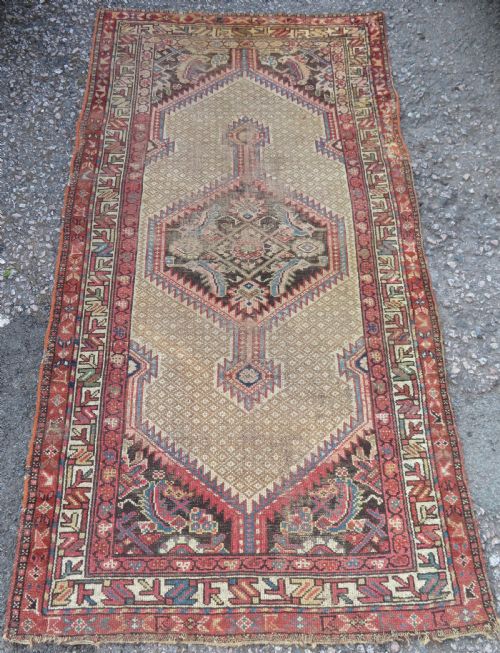
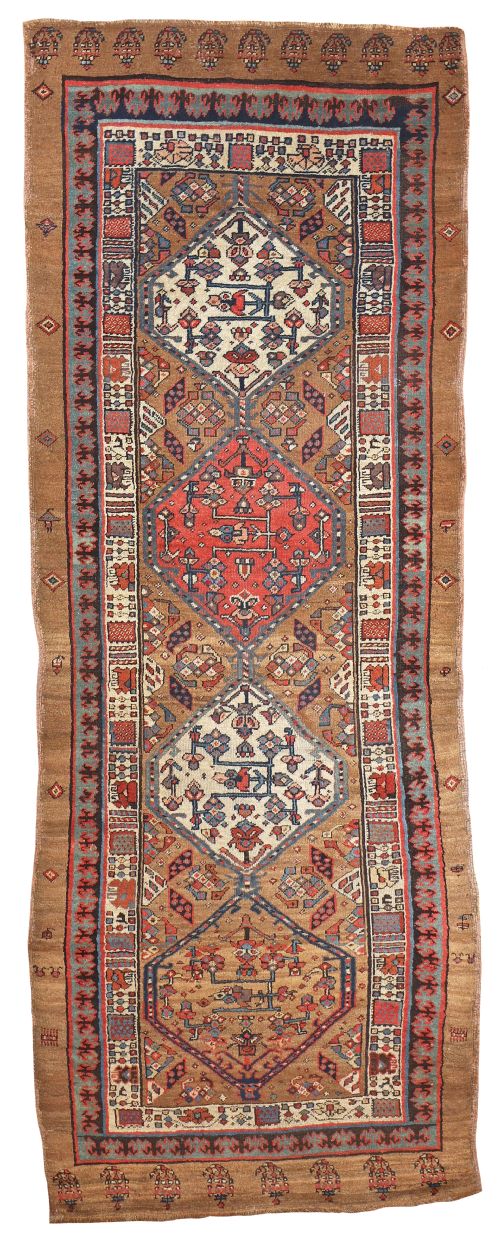
A camel wool runner is a long, narrow floor covering created by tribal and village weavers in regions such as Persia and Central Asia. When you search for this phrase, you will most frequently encounter nineteenth- and early-twentieth-century pieces originating from workshops or nomadic groups in areas like Sarab and Baluchistan. These items typically feature elongated formats suited for corridors and passageways.
The distinctive visual identity of a camel wool runner rests upon the natural colour of the fleece, which ranges from pale fawn to deep golden brown. This un-dyed ground serves as a neutral canvas for geometric medallions, latch hooks, tree of life motifs, and stylised animal figures. Tribal groups such as the Baluch, Turkmen, and Ersari frequently utilised these durable animal fibres alongside hand-spun wool and cotton foundations.
What varies in quality
The quality of a camel wool runner is determined by the fineness of the knotting and the handling of the natural camel ground. Fenser knots per square decimetre allow for crisper rendering of intricate latch hook medallions and animal motifs. Coarser pieces display broader, simpler designs with less structural density.
Material selection also dictates the grade of the textile, distinguishing between evenly spun hand-spun wool and irregular yarn. The purity and lustre of the un-dyed camel hair influence the overall visual depth of the field. Uniformity in the narrow format and integrity of the original side cords indicate superior regional craftsmanship.
Camel Wool Runner Retail Price Guide 2026
Typical asking prices for camel wool runner among the pieces listed under this phrase on Sellingantiques today, from the lower quarter to the upper quarter. They describe what is for sale here now, not the wider market.
Certain antique Sarab runners occasionally preserve whimsical depictions of small animals wandering across the camel wool ground.
The Camel Wool Runner Glossary
- Camel hair
- The soft, durable fibre harvested from camels and utilised un-dyed for the background of tribal rugs. It provides a natural golden-brown hue.
- Runner
- A long, narrow carpet format designed specifically for corridors, hallways, and narrow spaces. These pieces measure significantly longer than they are wide.
- Latch hook
- A geometric motif resembling a squared hook, frequently repeated along medallions in tribal weaving. It is a defining characteristic of many Persian and Baluch pieces.
- Torba
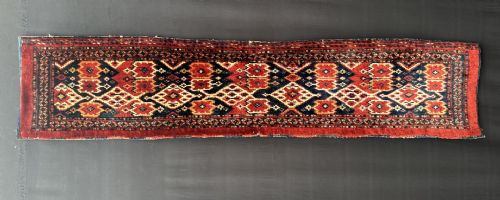
- A small dowry bag or trapping produced by Turkmen tribes, often featuring intricate guls or ikat designs. They were originally used for storage inside tents.
- Prayer rug
- A small textile featuring a mihrab or niche design indicating the direction of prayer. These pieces were utilised for personal devotion.
Camel Wool Runner: Frequently Asked Questions
Where were camel wool runners made?
These runners were produced primarily in North West Persia, particularly the Sarab region, as well as by tribal groups across Central Asia, Afghanistan, and Turkmenistan. Nomadic and village weavers utilised local materials suited to their environment.
Production spanned the nineteenth and early twentieth centuries, with traditional designs passed down through generations of weavers within specific tribal confederations.
How do I style a narrow hallway runner?
A narrow runner suits long corridors, entryways, and narrow passageways where a durable floor covering is required. The neutral camel ground complements both traditional and modern interior schemes.
Ensure you place an appropriate underlay beneath the textile to prevent sliding and to protect the hand-spun wool foundation from premature wear.
What is a Baluch prayer rug?
A Baluch prayer rug is a compact tribal textile featuring a distinct prayer niche design created by nomadic weavers in the borderlands of Persia and Afghanistan. These pieces often incorporate camel wool grounds and mixed techniques.
Weavers decorated these small formats with geometric motifs and tree of life patterns for personal ritual use within nomadic camps.
How do I identify a Sarab runner?
Sarab runners originate from North West Persia and are distinguished by their long, narrow proportions and characteristic camel hair grounds. They frequently display geometric medallions and traditional village patterns.
The un-dyed camel wool background provides a muted, natural tone that sets these pieces apart from more brightly coloured city carpets.