



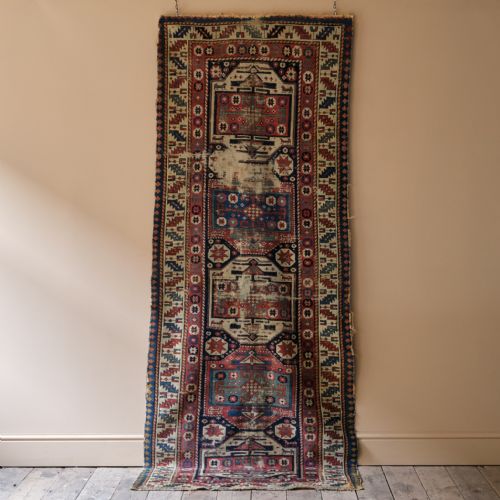


Caucasian Style Runner
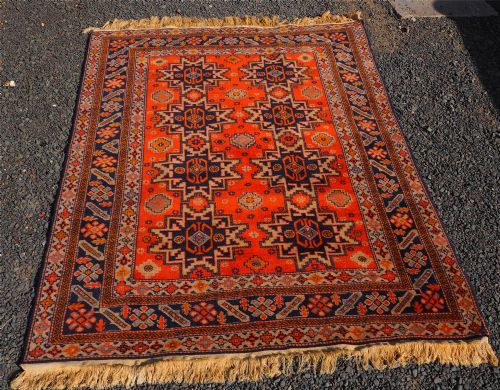
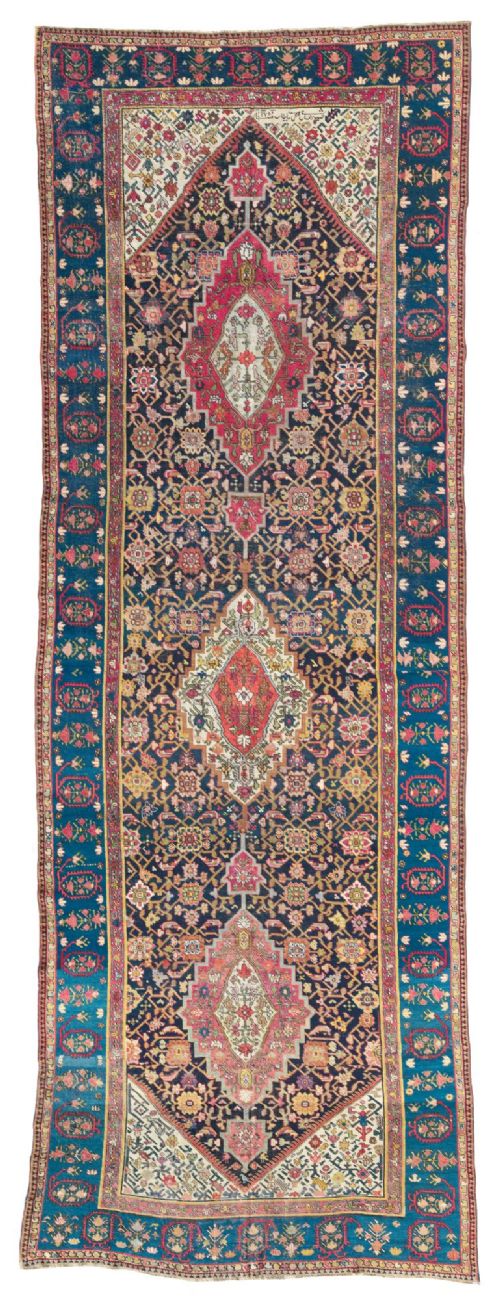
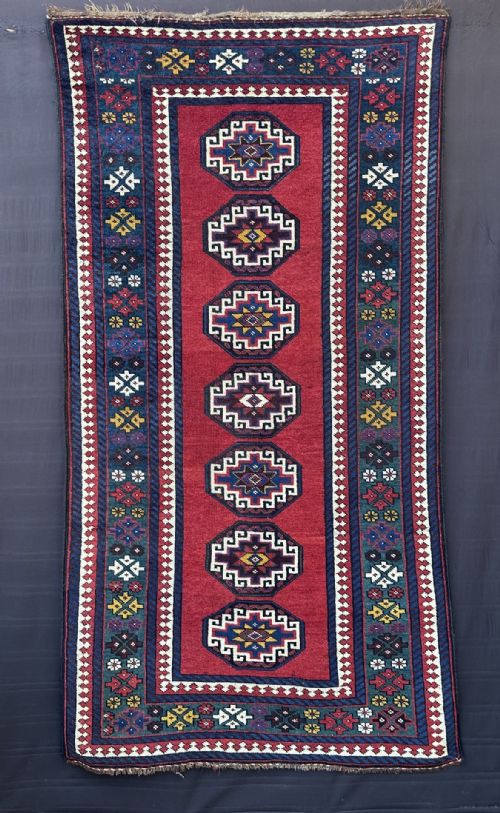
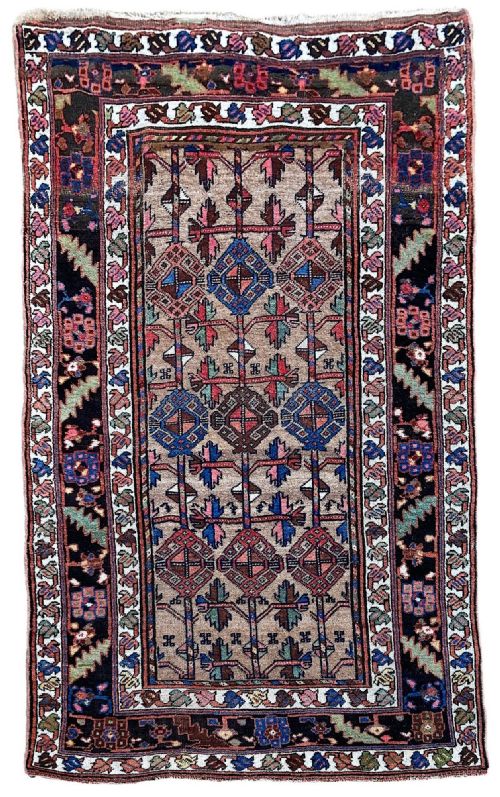
These caucasian style runner pieces are hand-woven wool carpets spanning the nineteenth and twentieth centuries, chosen for their geometric motifs and long formats.
Caucasian Style Runner
A caucasian style runner takes the linear format of a hallway carpet and pairs it with geometric designs originating from regions such as the Caucasus and north-west Persia. Buyers searching this phrase examine elongated floor coverings spanning from the late nineteenth century into the early decades of the twentieth century.
The selections encountered on this page encompass various tribal and village weaving traditions, including examples attributed to Sarab, Heriz, Karaja, and Karabagh. These pieces frequently measure significantly longer than they are wide, suiting narrow spaces and corridors.
Makers utilised traditional regional patterns, incorporating medallions, boteh motifs, and stylized animals or floral elements. The palette often reflects natural dyes yielding muted or mellow tones across wool foundations.
Factors determining quality
Quality rests upon the tightness of the knotting and the precision with which the geometric or tribal patterns are executed across the long format. Finer knots permit greater definition in motifs like medallions and boteh repeats.
The choice of materials and the depth of the wool pile dictate how the runner ages under foot. Intact borders and original selvedges contribute substantially to the structural integrity of older village and tribal weaving.
Caucasian Style Runner Retail Price Guide 2026
Typical asking prices for caucasian style runner among the pieces listed under this phrase on Sellingantiques today, from the lower quarter to the upper quarter. They describe what is for sale here now, not the wider market.
Listings feature wool, cotton, hand-spun wool, and camel hair across nineteenth and twentieth-century production dates.
The Caucasian Style Runner Glossary
- Runner
- A long, narrow carpet format designed primarily for hallways, corridors, and stairs. They are scaled to fit spaces where standard rectangular rugs are too wide.
- Boteh
- A traditional teardrop or almond-shaped motif with a curved upper end. This ancient design appears frequently in regional Persian and Caucasian weaving.
- Kelleh
- A large format carpet, typically longer than a standard rug but wider than a runner. These pieces serve spacious rooms and grand interiors.
- Selvedge
- The reinforced edge of a rug formed by wrapping the lateral warp threads. Sound selvedges protect the body of the carpet from fraying.
- Hand-knotted
- A construction method where individual strands of wool are tied by hand to the foundation warp and weft. This process distinguishes traditional textile craft from mechanical production.
Caucasian Style Runner: Frequently Asked Questions
Where should I place a runner?
These long carpets suit narrow spaces such as hallways, corridors, and entryways. Their elongated dimensions provide floor coverage in areas with high foot traffic.
Placing a runner in a passage protects underlying flooring while introducing traditional colour and pattern to transitional spaces within a home.
How do I clean an old wool rug?
Gentle surface brushing and careful vacuuming without a beater bar remove loose dust from the wool pile. Professional textile cleaning is recommended for deep washing.
Avoid soaking antique foundations and keep natural wool pile away from prolonged direct sunlight to preserve the integrity of the dyes.
What is the difference between Karaja and Heriz rugs?
Karaja pieces typically feature distinct geometric medallion layouts in smaller formats, often associated with village production in north-west Persia. Their designs rely on bold primary colours and angular borders.
Heriz carpets generally present larger dimensions and heavier structural weighting, utilising prominent central geometric medallions flanked by substantial corner spandrels.
How can I tell a village rug from a tribal rug?
Village weavings usually originate from settled communities where designs follow established local templates with greater symmetry. The execution reflects shared workshop traditions within specific geographic districts.
Tribal pieces often display more spontaneous or asymmetrical design variations produced by nomadic or semi-nomadic weavers. These works utilise memory patterns passed down through generations.