




Antique Sarab Rug
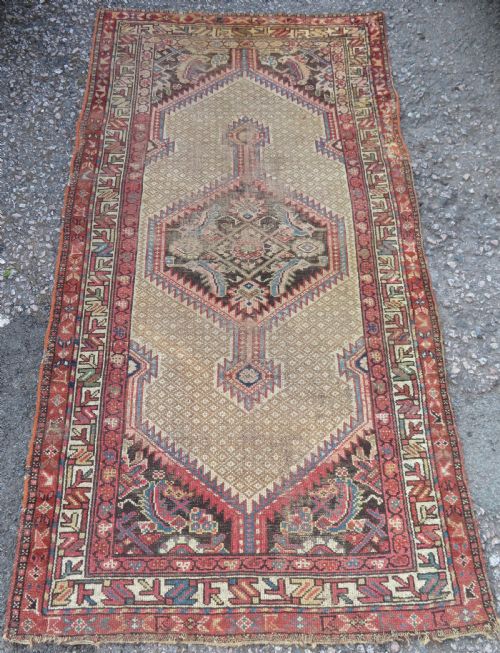
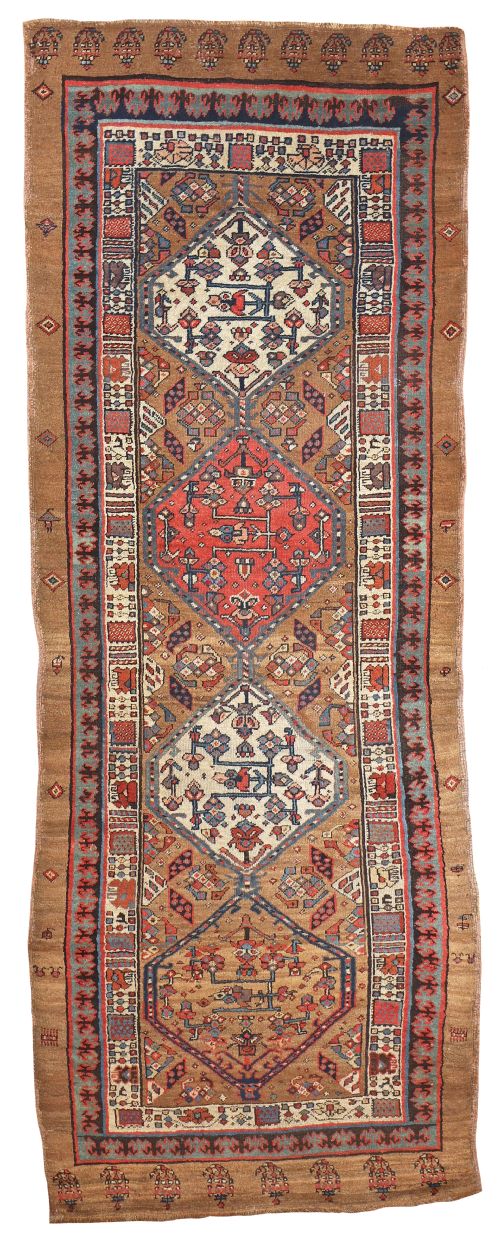
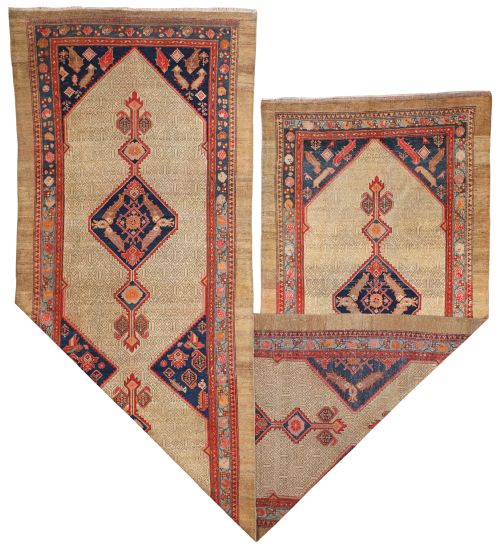
An antique sarab rug brings a measured Persian village discipline to a floor, offering long narrow formats woven for the hallways of northern Persia.
Antique Sarab Rug
When you search for an antique sarab rug, you are looking at hand-knotted wool floor coverings originating from north-west Persia, mostly encountered here as elongated runner rugs and narrow village runners suited to hallways and corridors. These pieces belong to Persian tribal and village traditions, spanning production dates from the late nineteenth century through to the early decades of the twentieth century.
The format is typically narrow and rectangular, designed to draw the eye along a passageway while presenting traditional design schemes. Surviving examples range from compact country house rugs to long hallway runners, reflecting the practical weaving output of the region.
How they were made
The construction relies on durable wool pile knotted onto a cotton foundation, a combination chosen for structural stability in high-traffic areas such as hallways. Certain pieces incorporate camel hair within the design or field, lending a natural tonal variation to the wool.
Weavers in the north-west Persian workshops utilised traditional hand-knotting techniques, producing dense, resilient surfaces intended to withstand decades of daily use.
Antique Sarab Rug Retail Price Guide 2026
Typical asking prices for sarab rug among the pieces listed under this phrase on Sellingantiques today, from the lower quarter to the upper quarter. They describe what is for sale here now, not the wider market.
Camel hair occasionally wears down faster than wool, leaving parts of the design standing on proud little islands.
What varies in quality
Quality in an antique sarab rug rests on the integrity of the wool foundation, the crispness of the traditional design execution, and the preservation of the original pile depth. Pieces that retain their full outer borders and structural edges command greater regard than those with extensive distress.
The handling of natural materials, particularly the integration of un-dyed camel hair and rich regional wools, distinguishes finer village output from standard commercial weaving.
The Antique Sarab Rug Glossary
- Runner
- A long, narrow carpet format specifically woven for hallways, corridors, and staircases. It measures significantly longer than it is wide.
- Kelleh
- A large rectangular room-size rug or long carpet format, typically narrower than a standard carpet but broader than a runner.
- Camel hair
- The soft undercoat of a camel used in the pile or ground of tribal rugs, valued for its natural golden-brown colour and durability. It often weathers away faster than sheep wool due to its natural dye properties.
- Foundation
- The underlying structural framework of a rug, consisting of warp and weft threads over which the wool pile is knotted. Cotton is commonly utilised for this purpose in Persian village weaving.
Antique Sarab Rug: Frequently Asked Questions
Where were antique sarab rugs made?
These pieces originate from the Sarab region in north-west Persia, where local village weavers and Kurdish communities produced distinctive floor coverings.
The output reflects traditional regional styles rather than urban manufactory work.
How do I use a runner rug?
Runners are traditionally placed in hallways, corridors, and long entryways where narrow floor spaces require linear coverage.
Their elongated proportions help guide movement through a home while protecting timber or stone floors.
What materials are used?
The construction typically combines a wool pile knotted onto a firm cotton foundation for structural support.
Selected pieces also incorporate natural camel hair within the weave to provide un-dyed tonal depth.
How do I date these rugs?
Dating relies on examining the specific wool quality, natural dye palettes, and structural wear patterns consistent with late nineteenth and early twentieth-century Persian weaving.
Archive records and comparative village pieces help narrow the decade of production.