




Camel Hair Rug
A camel hair rug offers natural undyed wool tones and nomadic tribal designs dating from the nineteenth and early twentieth centuries.
Camel Hair Rug
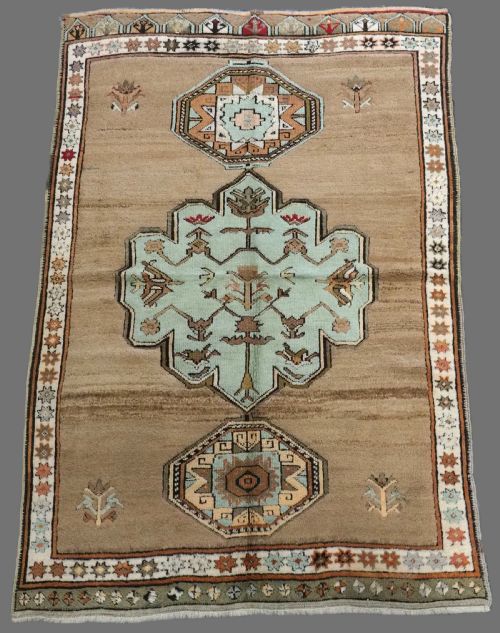
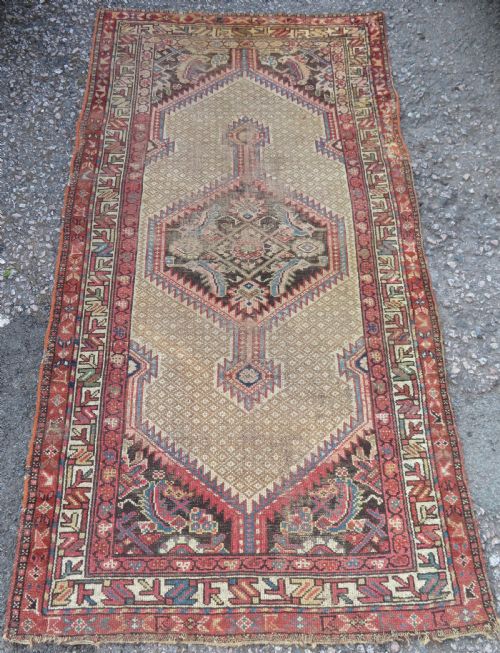
A camel hair rug typically showcases tribal and nomadic weaving traditions originating from Persian, Afghan, and Anatolian regions. The selection on this page centres on pieces featuring natural camel wool or hair grounds, spanning the late nineteenth century through to the 1930s.
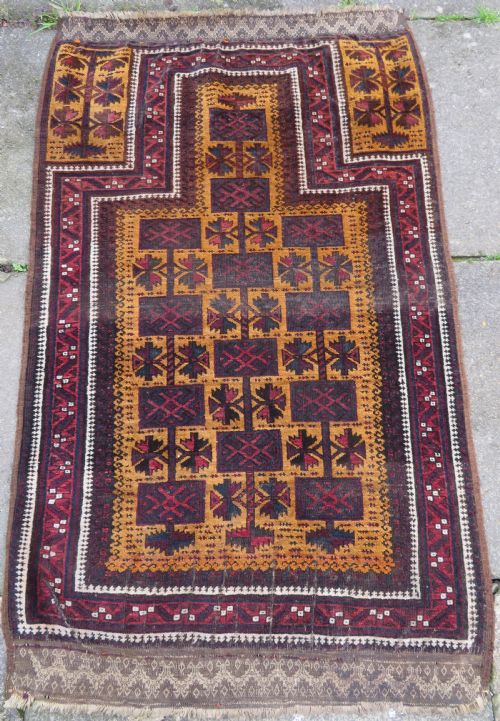
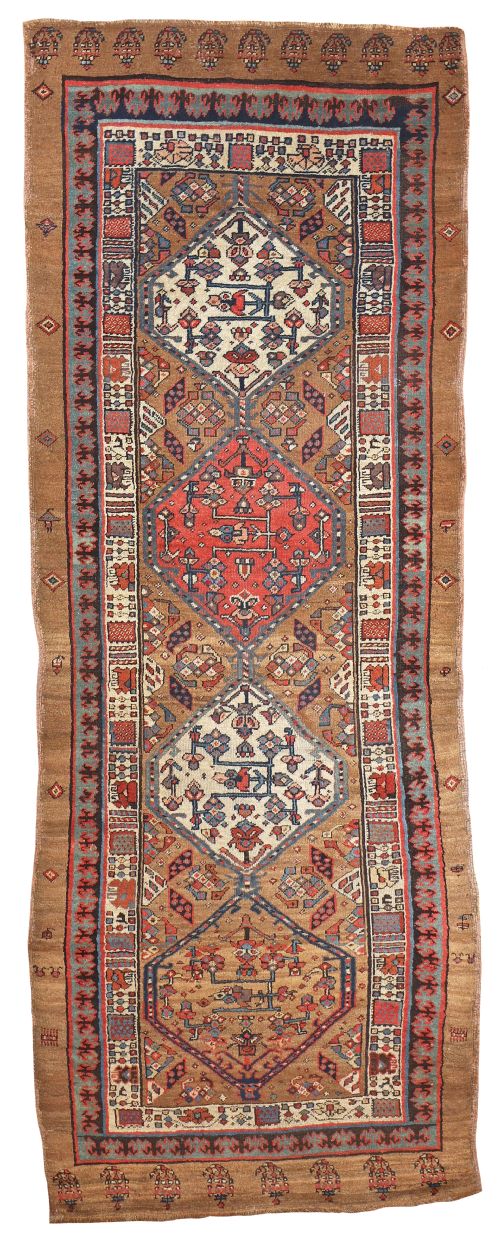
Buyers will encounter various formats including small prayer rugs, hallway runners, and embroidered kilims. Designs frequently incorporate tree of life motifs, latch hook medallions, and geometric field patterns associated with Baluch, Sarab, and Uzbek makers.
The dominant aesthetic relies on the warm, undyed tones of camel fleece combined with richer accents of wool and cotton. These textiles reflect the utilitarian artistry of pastoral groups, created for domestic floor use or tent living.
Materials and construction
Weavers utilised natural camel hair and camel wool alongside standard sheep wool for the pile and foundation grounds. Cotton also appears in certain structures, providing stability to the warp and weft threads.
Nomadic workshops employed hand-knotting and mixed flatweave techniques, including embroidered kilim construction. The distinctive colour palette relies on the natural fawn and brown shades of the animal fleece, requiring minimal artificial dyeing.
Camel Hair Rug Retail Price Guide 2026
Typical asking prices for camel hair rug among the pieces listed under this phrase on Sellingantiques today, from the lower quarter to the upper quarter. They describe what is for sale here now, not the wider market.
The listings span from the late nineteenth century through to 1930, utilising wool, camel hair, cotton, and mixed flatweave techniques.
Assessing quality in antique textiles
Quality rests upon the fineness of the knotting and the structural integrity of the wool pile across the field. Closely packed knots and secure edge bindings indicate superior durability in tribal weaving.
The visual appeal depends on the depth and variation of the natural camel ground and the crispness of geometric motifs like latch hooks and tree of life designs. Wear patterns and historical distress also influence the character of each textile.
The Camel Hair Rug Glossary
- Camel hair
- Animal fibre gathered from camels, prized for durable warmth and natural golden-brown hues. It forms the distinctive background colour of many nomadic rugs.
- Baluch tribal
- Design style associated with nomadic groups inhabiting regions across Persia and Afghanistan. These pieces frequently feature dark rich accents against a camel ground.
- Prayer rug
- Small devotional textile featuring a mihrab or niche design used for ritual daily prayer. They often display tree of life motifs.
- Kilim
- Flatweave textile produced without a pile by tightly interweaving warp and weft threads. Examples include embroidered variations from Uzbek traditions.
- Runner
- Long, narrow carpet format designed specifically for hallways and corridors. Antique Sarab examples are notable amongst this group.
Camel Hair Rug: Frequently Asked Questions
How do I clean a camel hair rug?
Gentle surface brushing and professional specialist cleaning suited for antique wool textiles help preserve the natural fibres without causing damage.
Avoid immersion washing or harsh chemical treatments that strip the natural oils from the camel fleece.
Are these rugs suitable for high traffic areas?
Sturdily constructed tribal rugs tolerate moderate foot traffic when protected with a suitable underlay to prevent slipping and friction.
Lighter runner formats suit hallways, while delicate prayer rugs benefit from placement in quieter spaces.
What causes the variation in pile colour?
Natural undyed camel wool exhibits subtle shifts in tone depending on the animal age, fleece harvest, and exposure to light over decades.
These inherent tonal variations contribute to the organic character expected in authentic nomadic weavings.
How do I date an antique Baluch rug?
Stylistic indicators such as structural rigidity, knot density, and traditional regional motifs help narrow the manufacturing period.
Pinned construction details and natural dye palettes generally point toward production in the late nineteenth or early twentieth centuries.