



Antique Boteh Runner
An antique boteh runner brings centuries of nomadic weaving skill and the enduring almond-shaped motif directly to a hallway or gallery.
Antique Boteh Runner
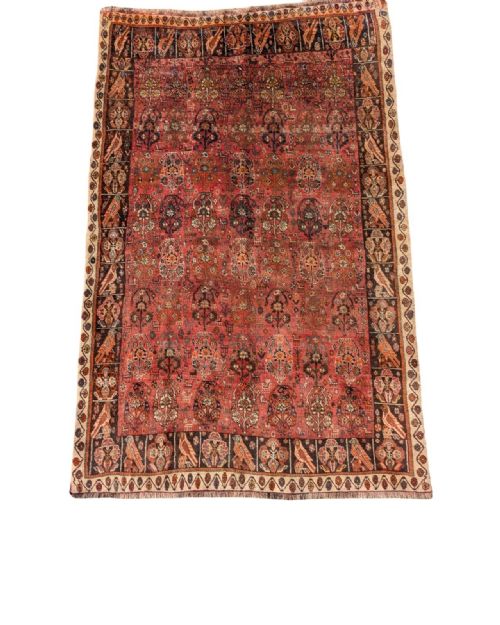
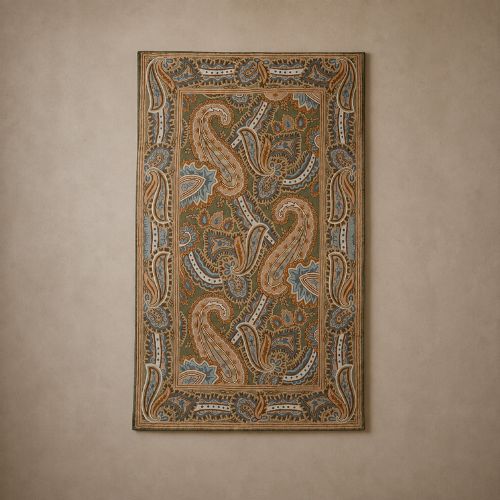
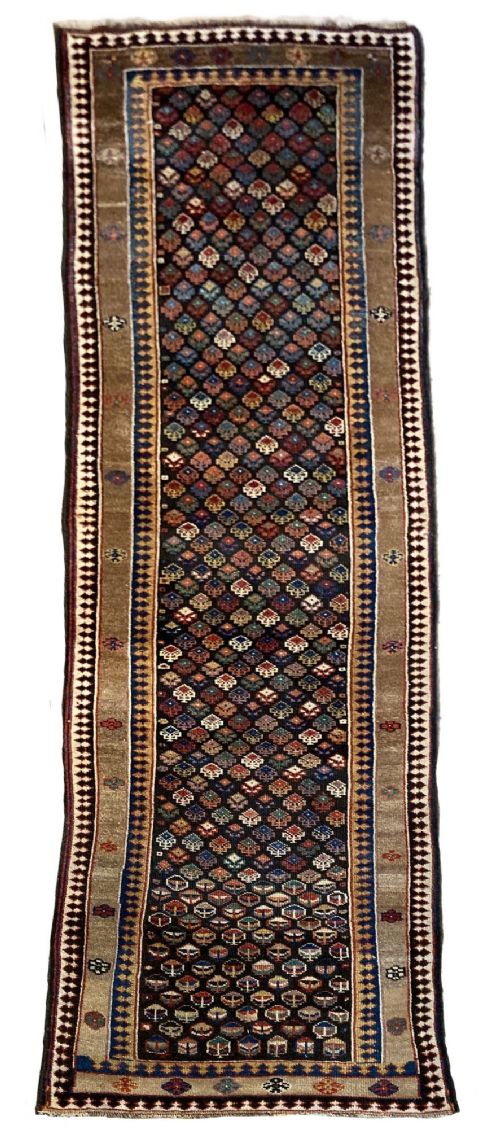
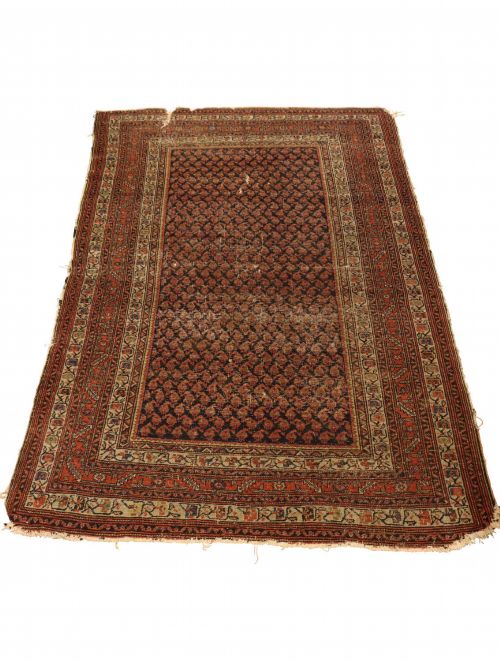
An antique boteh runner is a long, narrow textile featuring the repeated almond-shaped pine or palm motif, originating from weaving traditions across Persia and the Caucasus. These pieces include specific regional works such as Caucasian Gendje, Karabagh, and Kurdish examples alongside Persian village productions.
The format serves long corridors, stairs, and narrow rooms where a standard rectangular carpet fails to fit. Collectors find both geometric Caucasian interpretations and curved Persian village variations across the nineteenth and early twentieth centuries.
Materials and construction
Weavers constructed these long carpets using hand-spun wool for the pile, often set upon cotton or wool foundations with natural dyes providing the colour palette. Certain pieces incorporate linen, silk, velvet, or metallic thread depending on regional traditions.
Nomadic and village workshops relied on upright looms, tying dense knots by hand to ensure durability in high-traffic areas. The interplay of natural dyestuffs creates subtle tonal shifts across the surface as the light changes.
Some weavers added flaming botehs to outsmart evil spirits, ensuring every corridor comes with built-in supernatural protection.
Markers of quality
Quality rests in the precision of the knotting, the crispness of the boteh drawing, and the depth of the natural dyes used in the pile. Tighter knot counts allow for sharper geometric or curvilinear definition within the repeat patterns.
Piles with even wear and good wool retention command attention, alongside pieces maintaining rich, saturated colour palettes without chemical fading or heavy restoration.
The Antique Boteh Runner Glossary
- Boteh
- A stylised almond, pear, or pine-cone shaped motif of Persian origin representing life and eternity. It appears singly or in dense repeating rows across the field.
- Runner
- A long, narrow carpet format designed primarily for hallways, corridors, and staircases. Dimensions typically exceed a length-to-width ratio of three to one.
- Knot count
- The number of knots per square unit on the reverse of a rug, indicating the fineness of the weave and the complexity achievable in the design.
- Natural dyes
- Colourants derived from plants, insects, and minerals before the introduction of synthetic aniline dyes in the later nineteenth century. They produce harmonious, complex tones that age gracefully.
- Field
- The central background area of a rug enclosed by the borders, where the primary boteh motifs usually sit.
Antique Boteh Runner: Frequently Asked Questions
Where should I place a runner?
These narrow formats suit hallways, corridors, landings, and kitchen spaces where foot traffic requires a durable floor covering.
They also function effectively as wall hangings when floor space is limited, protecting delicate textiles while displaying the pattern fully.
How do I care for wool rugs?
Regular gentle vacuuming without a beater bar removes grit that damages the wool pile over time. Professional cleaning by a specialist in antique textiles preserves the natural lanolin and dyes.
Rotating the piece every few months ensures even wear from foot traffic and sunlight exposure.
What is a boteh?
The boteh is a historic motif resembling a curved almond, cypress shoot, or flame, deeply rooted in Persian textile art. It symbolises life, eternity, and fertility.
Different weaving regions render this shape with either sharp geometric angles or flowing curved outlines.
How can I date an old rug?
Dating relies on examining the dyestuffs, wool quality, structural materials, and regional design characteristics. Natural dyes and hand-spun wool generally point to production before the widespread adoption of synthetic materials around the end of the nineteenth century.
Structural details like the edge finish and fringe construction provide further clues to the period of manufacture.