




Bakshaish Wool Rug
A bakshaish wool rug brings earthy Northwest Persian design into a room, prized for village-woven character and geometric warmth.
Bakshaish Wool Rug
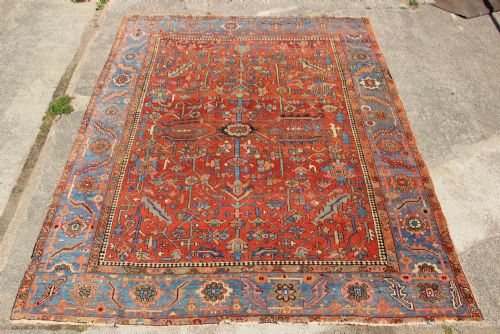
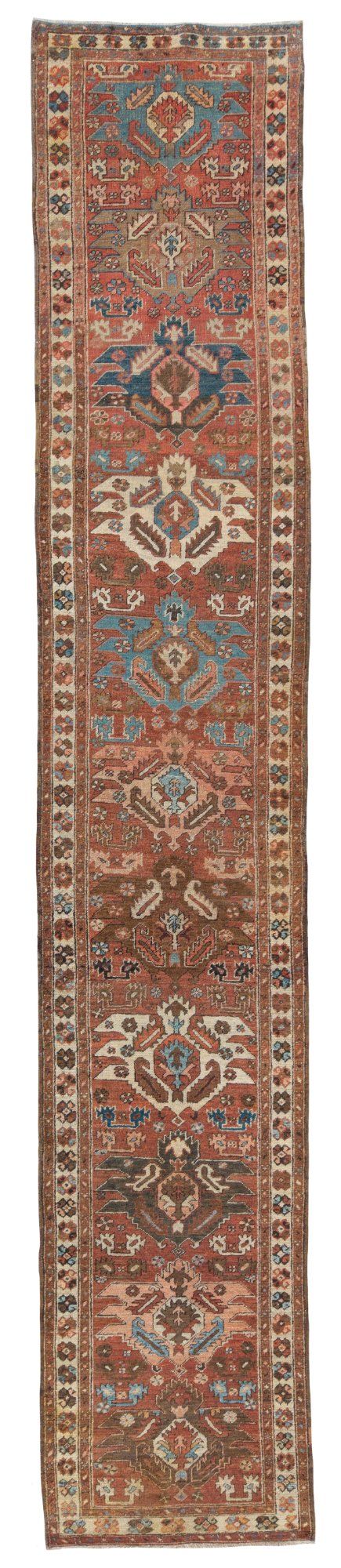
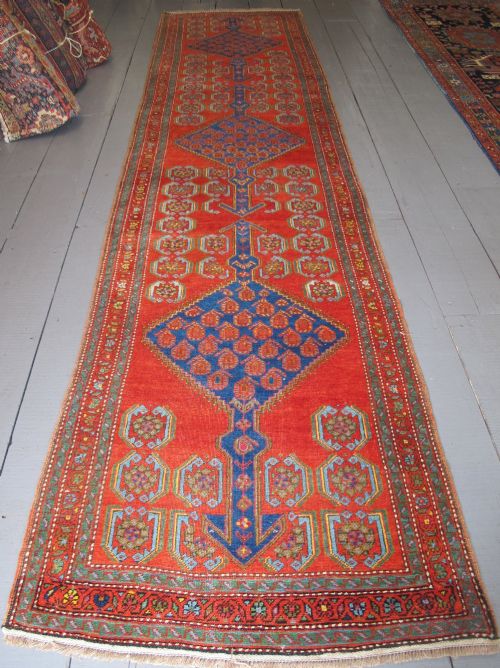
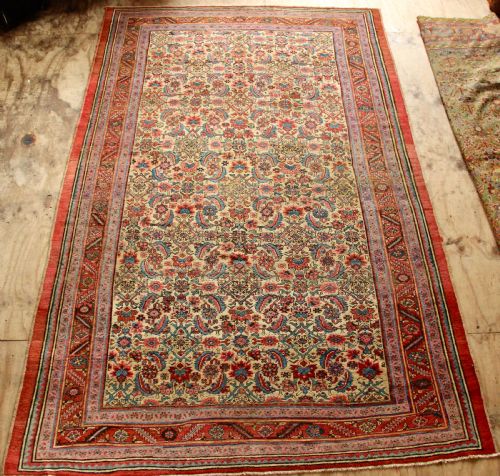
A bakshaish wool rug originates from Northwest Persia, taking the form of large carpets, long runners, and compact village rugs. These pieces span the mid-nineteenth century through the early twentieth century, showing Persian tribal and Serapi design influences.
You are most likely to meet room-sized carpets and runners dated between 1850 and 1900. They present distinct geometric medallions and decentralized motifs characteristic of village workshops in the region.
How they were made
Weavers constructed a bakshaish wool rug using handspun wool for the pile, providing durability and a soft tactile quality. Cotton frequently served as the foundation material for warps and wefts, offering structural stability to large carpets.
The construction relies on traditional knotting techniques executed in Northwest Persian village settings. Local dyestuffs and hand-carded fibres generated the rich colour palettes seen across nineteenth-century examples.
Listings feature wool and cotton across periods spanning from 1850 to 1910, encompassing room carpets and runners.
What varies in quality
Quality in a bakshaish wool rug rests on the handling of wool and dye saturation across the field. Early nineteenth-century examples often demonstrate superior handling of geometric motifs and organic dye variations.
The fineness of the knotting and the integrity of the cotton foundation distinguish regional variations. Pieces associated with Heriz or Serapi stylistic crossover display distinct technical competence in large format weaving.
The Bakshaish Wool Rug Glossary
- Bakshaish
- A style of rug originating from Northwest Persia, known for large-scale geometric designs and village aesthetics. These pieces often pre-date standard commercial production.
- Serapi
- A closely related Persian carpet style featuring bold central medallions and structured corner spandrels. It shares regional roots with Bakshaish weaving traditions.
- Warp
- The vertical threads stretched on a loom that form the foundational skeleton of the rug. Cotton serves this purpose in these Persian pieces.
- Weft
- The horizontal threads passed through warps to lock the knots in place. They contribute to the handle and flexibility of the textile.
- Runner
- A long, narrow carpet format designed for corridors or hallways. These retain the same village patterns as larger carpets.
Bakshaish Wool Rug: Frequently Asked Questions
How do I date a bakshaish wool rug?
Dating relies on structural analysis, wool quality, and stylistic evolution within Northwest Persian village weaving. Nineteenth-century examples typically show softer handle characteristics and specific botanical or geometric abstractions.
Comparing knot density and palette shifts against known period pieces helps narrow down the decade of production between 1850 and 1910.
Where were these rugs made?
These textiles were produced in the village region of Bakshaish within Northwest Persia. Local weavers operated within domestic or small workshop environments rather than large urban manufactories.
Output from this district often shared stylistic traits with neighbouring Heriz and Serapi weaving centres.
What materials are used?
The pile consists entirely of handspun wool, selected for resilience and texture. Foundations utilise cotton for both warps and wefts to maintain structural rigidity in large formats.
Natural dyes provide the characteristic earthy tones that develop patina over time.
How do I care for an antique rug?
Protect the textile by placing it in low-traffic areas or utilising a breathable rug pad underneath. Regular gentle vacuuming without a beater bar prevents dust accumulation in the wool pile.
Professional cleaning suited for antique Persian textiles ensures the cotton foundation and wool fibres remain undamaged.