


Red Flatweave Area Rug
When choosing a red flatweave area rug, you select a vibrant tribal textile woven without a pile to bring warmth and geometric pattern to a floor.
Red Flatweave Area Rug
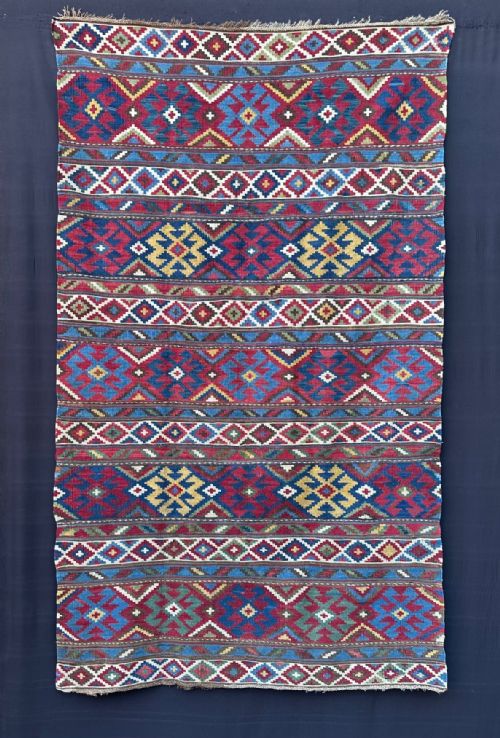
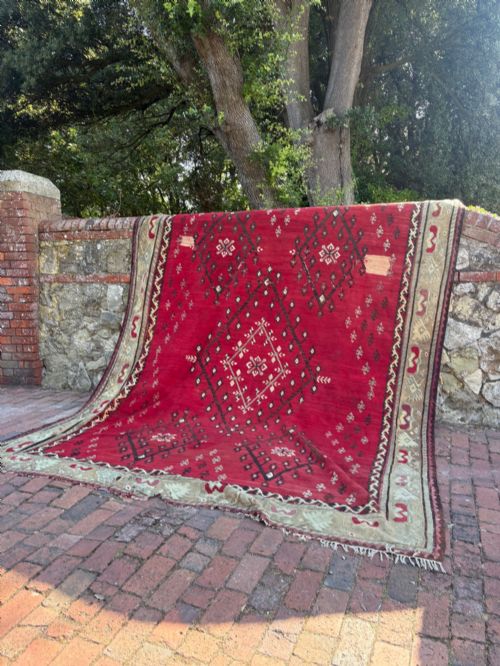
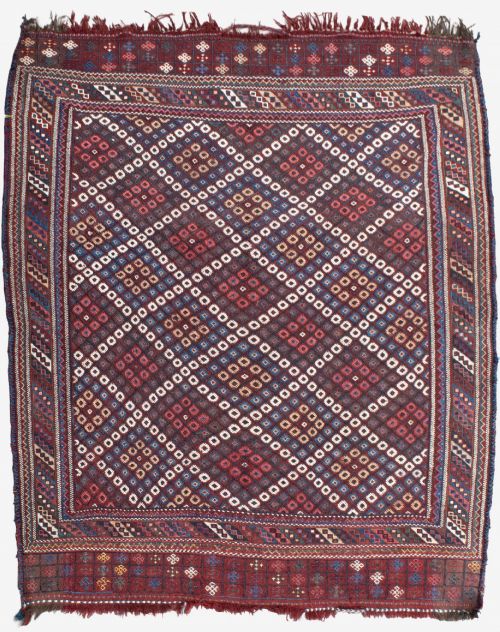
A red flatweave area rug encompasses various non-pile carpets originating from Persian, Caucasian, Anatolian, and Balkan weaving traditions. These textiles include room-sized carpets, runners, and smaller rugs produced across the nineteenth and early twentieth centuries.
The primary forms found in this selection are kilims, soumaks, and sofres, often woven in two parts and joined down the centre. Regional variations range from the bold medallions of Caucasian pieces to the floral motifs of Balkan Pirot and Sarkoy examples.
Materials and construction
These textiles rely on wool for the warp, weft, and supplementary decorative threads, occasionally utilising cotton for structural stability. The fundamental technique is slit-tapestry weaving, where coloured weft threads are looped back around the warp ends to create sharp geometric pattern changes without cutting the yarn.
Certain pieces employ soumak wrapping techniques, adding a brocaded texture across the surface by winding decorative wefts over and under the warp threads. Many larger carpets are constructed by weaving two narrow panels separately and stitching them together to achieve a wide room size.
Nomadic weavers occasionally embedded small protective amulets or intentional minor pattern flaws into their geometric designs to ward off the evil eye.
Factors of quality
Quality in these flatweaves rests upon the tightness of the weave, the crispness of the geometric motifs, and the depth of the natural dyes. A finer weave allows for intricate detail and greater structural durability under foot traffic.
The balance of the composition and the preservation of original flatweave ends and selvedges dictate desirability. Pieces demonstrating deliberate colour choices and secure historical repairs hold greater integrity than those with compromised structural foundations.
The Red Flatweave Area Rug Glossary
- Kilim
- A flatweave carpet or rug produced by tightly interweaving warp and weft strands without creating a pile. This technique results in a lightweight, reversible textile with characteristic slit openings between colour changes.
- Soumak
- A brocaded flatweave technique involving coloured weft threads wrapped around the warp to produce a textured, ribbed surface on the face and loose threads on the reverse. It generally offers greater weight and durability than standard tapestries.
- Sofre
- A flatweave cloth traditionally utilised for domestic purposes such as wrapping bread or serving meals among nomadic groups. These pieces frequently feature distinctive square or rectangular formats with specialised field designs.
- Warp
- The stationary vertical threads stretched across a loom that form the foundational skeleton of the rug. Weft threads are passed horizontally through these structural lines.
- Selvedge
- The reinforced side edges of a rug formed by wrapping the outermost warp threads to prevent fraying. Original selvedges indicate careful preservation of the textile's full width.
Red Flatweave Area Rug: Frequently Asked Questions
How do I clean a flatweave rug?
Gentle surface brushing and regular light vacuuming without a beater bar help remove embedded dirt from the tight weave. Professional textile cleaners experienced in antique wool should handle deep washing.
Water saturation and aggressive scrubbing risk distorting the wool fibres and running natural dyes. Keeping the rug in a dry environment preserves the structural integrity of the flatweave construction.
Can I use these rugs in high traffic areas?
Many flatweaves function well in hallways and living spaces because the dense wool interweaving resists daily wear. Placing a suitable rug underlay beneath the textile prevents slipping and cushions the fibres against hard flooring.
For exceptionally delicate structures or older room-sized carpets, placing them in lower traffic zones limits physical strain. Regular rotation ensures even exposure to foot traffic and sunlight over time.
What is the difference between a kilim and a soumak?
A kilim is woven using a flat tapestry technique that leaves small slit gaps where different colour blocks meet. This produces a smooth, identical pattern on both sides of the textile.
Soumak weaving involves wrapping weft yarns over warp threads in a continuous motion, creating a raised, textured surface on the front and loose threads on the back. This method typically results in a heavier and sturdier fabric.
Why are some rugs woven in two parts?
Traditional tribal looms often had limited width capabilities, restricting weavers to narrow horizontal strips. To create a large room-sized carpet, artisans wove two matching runner panels and stitched them together down the middle.
This structural method remains a standard characteristic of antique carpets from specific nomadic and village workshops. The centre seam indicates traditional manufacturing constraints rather than a later alteration.