


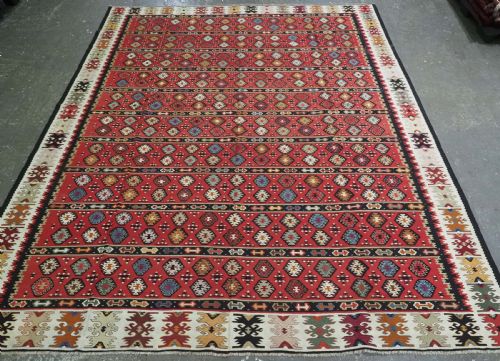


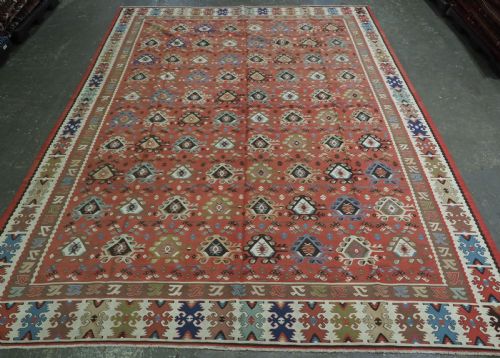


Traditional Sarkoy Kilim Rug
These flatwoven floor coverings are a traditional sarkoy kilim rug, bringing authentic Balkan folk art and warm wool textures into contemporary interiors.
Traditional Sarkoy Kilim Rug
A traditional sarkoy kilim rug is a flatwoven textile originating from the Balkan region, often associated with Pirot styles and classic motifs. When searching this phrase, collectors encounter pieces primarily dated from the eighteen sixties to nineteen thirty, reflecting enduring folk traditions.
The most common versions on this page are wool rugs and carpets displaying banded, repeat medallion, or flowering tree designs. These flatweaves serve as durable floor coverings that ground a room with historical character.
Materials and Weaving Techniques
Every traditional sarkoy kilim rug is constructed from wool, utilising a flatweave technique that omits a traditional pile. This method produces a smooth, durable textile suitable for heavy floor use.
Weavers combine bold clear colours with soft red grounds, ivory borders, and pink hues. The resulting surface presents intricate geometric and floral patterns without the raised texture of knotted carpets.
The listings span from eighteen sixty to nineteen thirty, with wool as the sole material recorded across all rugs and carpets.
Assessing Quality and Design
The distinction between tiers rests upon the complexity of the pattern and the preservation of the wool. Pieces featuring scarce lattice or flowering tree designs command attention for their pictorial ambition.
Colour retention defines the visual impact, ranging from soft warm tones to bold clear hues. The integrity of the weave across large room sizes separates standard examples from exceptional survivors.
The Traditional Sarkoy Kilim Rug Glossary
- Kilim rug
- A flatwoven textile produced without a pile, traditionally used as a floor covering or wall hanging in the Balkans and Anatolia.
- Balkan folk art
- A stylistic category encompassing regional decorative motifs and traditional weaving methods from southeastern Europe.
- Banded design
- A decorative layout organised in horizontal stripes or bands across the field of the rug.
- Repeat medallion
- A patterned arrangement featuring symmetrical central motifs repeated across the woven surface.
Traditional Sarkoy Kilim Rug: Frequently Asked Questions
What is a traditional sarkoy kilim rug?
A traditional sarkoy kilim rug is a flatwoven wool textile from the Balkan region. These pieces showcase regional folk designs including banded layouts and flowering trees.
Most examples date from the nineteenth and early twentieth centuries. They function primarily as decorative floor rugs.
How were these kilims used historically?
Historically, these flatweaves served as durable floor coverings and utilitarian textiles within homes. Their lack of a pile made them practical for heavy domestic traffic.
Today, they are utilised to add historical texture and colour to living spaces. Collectors often place them in rooms where low-profile floor coverings are preferred.
How do I care for a wool kilim?
Care for a wool flatweave involves gentle vacuuming without a rotating brush bar. Professional cleaning is recommended for antique textiles to protect the fibres.
Keeping the rug out of direct sunlight prevents the soft red and pink dyes from fading. Using a quality underlay prevents slipping and reduces wear on the wool.
How are different periods identified?
Periods are identified through wool characteristics, dye analysis, and stylistic conventions. Pieces from the eighteen sixties often display distinct regional markers compared to nineteen twenties productions.
Design structures like scarce lattice work or classic banded motifs also assist in dating the textile. Archival comparisons help place each piece within its historical era.