
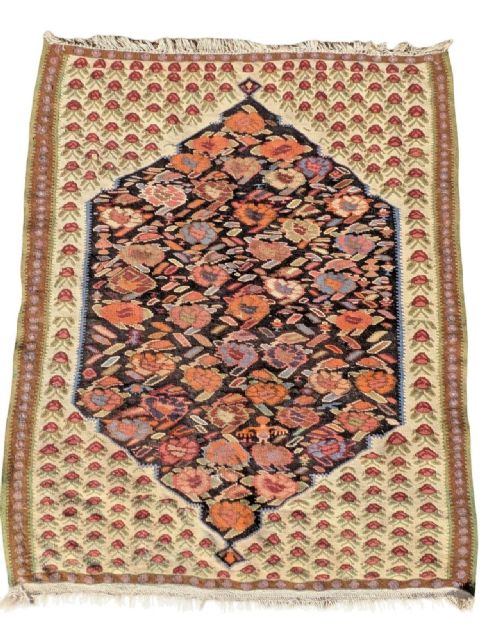
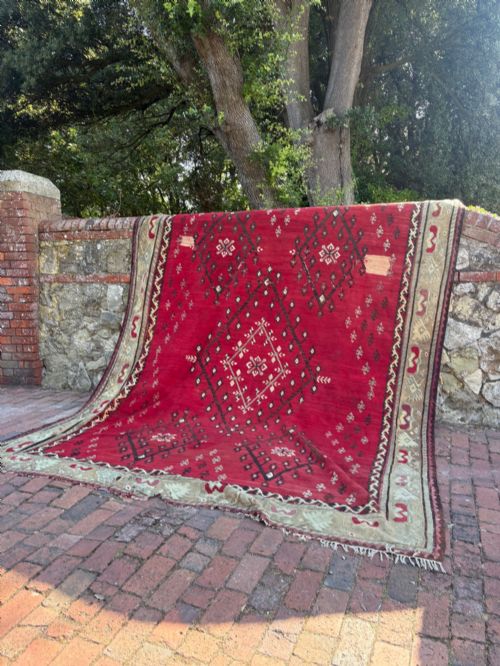
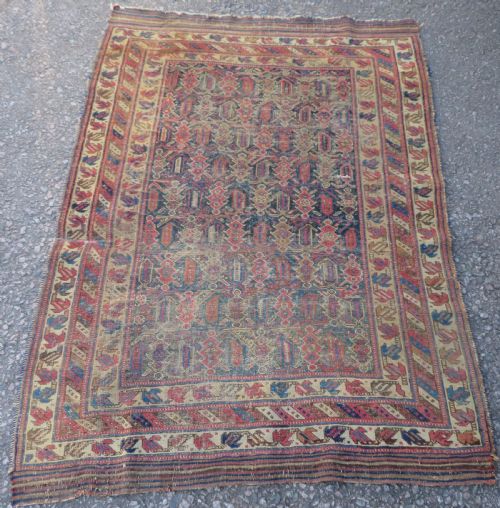
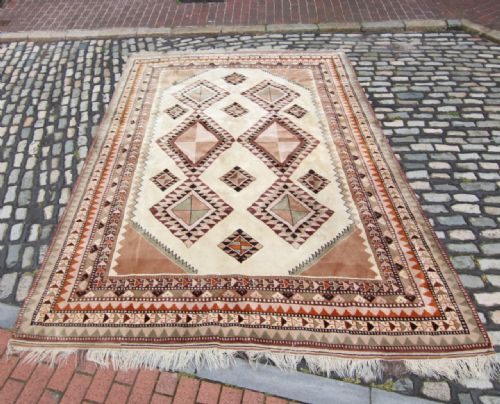
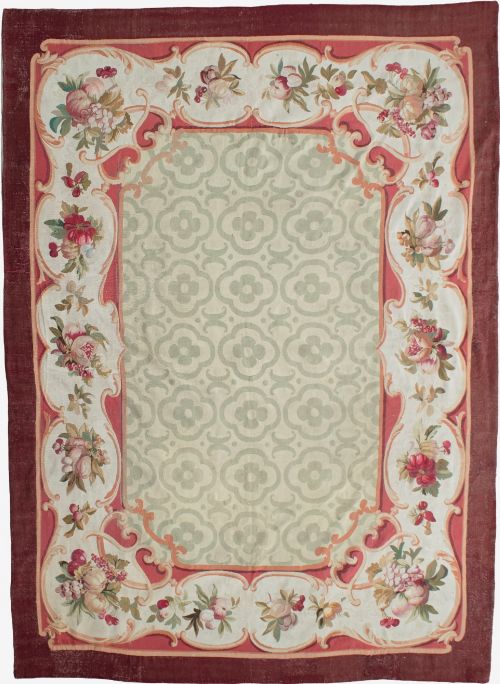

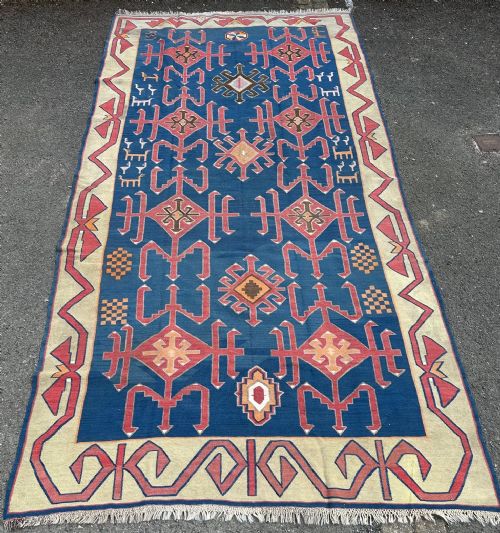


Flat Woven Wool Carpet
When you select a flat woven wool carpet, you bring home a textile created without pile by nomadic and regional weavers across Europe and Asia.
Flat Woven Wool Carpet
A flat woven wool carpet sits directly on the floor or hangs as a textile without the raised pile of traditional knotted rugs. These pieces encompass regional kilims, runners, and storage bags originating from Anatolia, the Caucasus, Central Asia, and Eastern Europe.
The selections on this page span the mid-nineteenth century through the early twentieth century, showing traditions from weavers in workshops and tribal camps alike. Buyers encounter everything from large room-size Bessarabian and Pirot carpets to compact Caucasian and Turkmen fragments.
Forms vary from utilitarian saddlebags and mafrash panels to expansive floor coverings designed for formal reception rooms. Each format reflects the specific domestic requirements and nomadic movements of the makers.
Materials and construction
These textiles rely primarily on wool, often hand-spun and paired with cotton foundations for structural stability in larger formats. Natural dyes provide the palette, yielding soft colours and rich tones that develop character over decades of exposure.
Weavers utilised slit-tapestry techniques and flatweave structures such as soumak to build geometric and banded patterns directly into the warp and weft. Many larger carpets, including certain Turkish and Afghan examples, were woven in two separate parts and joined down the centre.
Listings feature flat woven wool carpets spanning from the eighteen-fifties through the nineteen-forties, utilising natural dyes, cotton, and hand-spun wool.
Distinctions in craftsmanship
The finest examples demonstrate disciplined control over the geometric grid, where straight lines and sharp colour transitions maintain visual tension across the field. Superior wool selection gives the surface a supple handle and resilient body that survives generations of use.
Dye quality dictates how gracefully a textile ages, with natural colorants maintaining harmony as they weather. The sophistication of the regional design vocabulary, from intricate medallion layouts to balanced banded compositions, separates standard domestic output from exceptional weaving.
The Flat Woven Wool Carpet Glossary
- Kilim
- A flat-woven carpet or rug produced by tightly interweaving warp and weft strands without creating a pile. This technique yields a lightweight, reversible textile with characteristic slit openings between colour changes.
- Soumak
- A flatweave technique involving wrap-seviling threads over the warp to produce a textured, durable surface resembling embroidery on the reverse. It adds substantial weight and structural integrity to tribal rugs.
- Mafrash
- A large rectangular storage bag or chest panel used by nomadic groups for bedding and household possessions. These pieces are frequently repurposed as flat floor rugs today.
- Warp
- The vertical foundation threads stretched lengthwise on the loom before weaving begins. All subsequent weft yarns pass over and under these structural elements.
- Weft
- The horizontal threads passed across the warp to form the actual fabric and pattern of the textile. In flatweaves, these threads carry both colour and structure.
Flat Woven Wool Carpet: Frequently Asked Questions
How do I care for a flat woven wool carpet?
Regular gentle vacuuming without a rotating brush roll keeps dust from settling into the flat weave structure. Professional cleaning tailored to antique textiles preserves the natural dyes and wool fibres.
Rotating the textile periodically ensures even wear in high-traffic hallways or beneath furniture. Using a quality underlay prevents slipping and cushions the thin fabric against hard floors.
Can these carpets be placed in high traffic areas?
Flat weaves served nomadic and domestic households precisely because of their durable, resilient construction. Their dense wool structure handles foot traffic well without the crushing issues associated with high-pile rugs.
Placing them in hallways, dining spaces, or living rooms allows you to enjoy their historic artistry daily. However, extremely fragile or antique pictorial pieces benefit from placement in quieter zones.
How do I determine the origin of a tribal rug?
Specific design motifs, border arrangements, and colour palettes point directly to the weaving traditions of particular regions or tribes. Analysis of the wool type, spinning direction, and structural edge finishes offers further clues.
Comparing structural quirks with documented regional styles helps separate Anatolian work from Caucasian or Central Asian production. Local weaving groups often preserved distinct structural signatures across generations.