
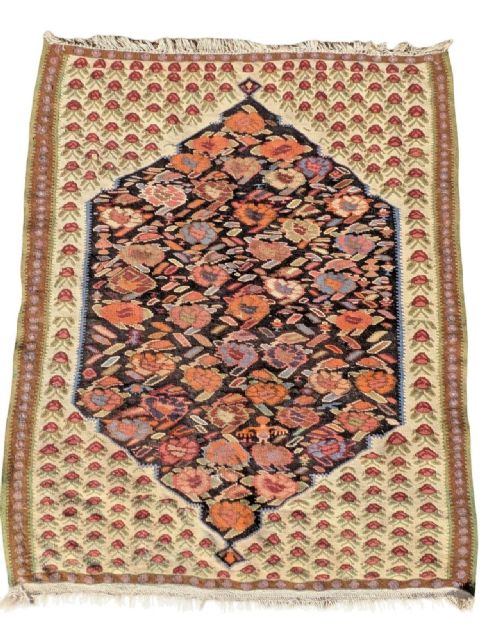
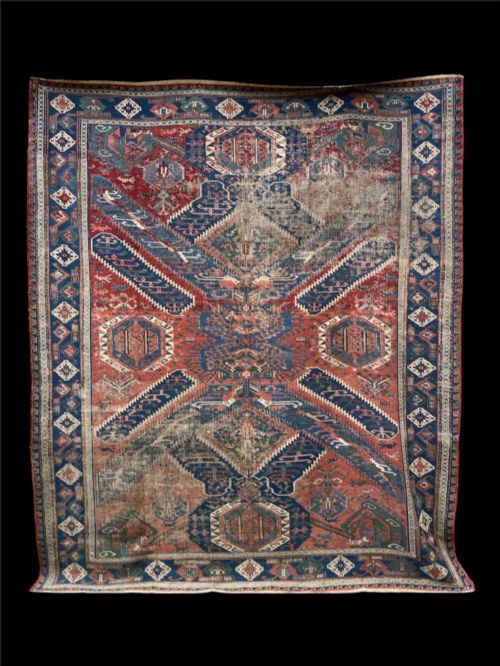


Terracotta Wool Kilim Rug
When you search for terracotta wool kilim rug, you enter a world of flatwoven tribal textiles spanning the nineteenth and early twentieth centuries.
Terracotta Wool Kilim Rug
The selections span from the mid nineteenth century through to the 1930s, capturing the distinct patterns of regional weavers. Buyers encounter banded designs, large medallions, and complex geometric repeats typical of Caucasian, Turkmen, and Balkan traditions.
Many surviving examples originate from specific tribal groups including the Qashqai, Yomut, and Shahsavan. These pieces demonstrate the functional origins of flatweaves, which served as floor coverings, tent furnishings, and storage containers before entering the decorative market.
Materials and construction
Weavers constructed these flatweaves predominantly using wool and hand-spun wool, often combined with cotton foundations for structural stability. The yarn undergoes manual spinning to produce variable thickness and texture across individual panels.
Production techniques rely on slit-tapery weaving and supplementary weft-wrapping methods such as soumak and brocading. Artisans created geometric motifs by interlocking coloured weft threads around the warp, resulting in patterns that appear equally sharp on both sides.
Several nomadic storage bags arrive complete with their original backs and tassels, ready for centuries of retirement.
Assessing quality in flatwoven textiles
Quality rests upon the tightness of the weave and the precision of the geometric motifs. Finer weaves require greater skill from the artisan and allow for more intricate graphic details within the banded or medallion structures.
The integrity of the natural dyes and the balance of the composition govern visual success. Pieces displaying harmonious soft tones or intense saturated colour retain greater aesthetic impact than those with muddy hues or clumsy proportions.
The Terracotta Wool Kilim Rug Glossary
- Kilim
- A flatwoven carpet or rug produced without a pile by tightly interweaving warp and weft strands. This technique creates a lightweight textile that functions well on floors or as a wall hanging.
- Warp
- The stationary vertical threads stretched across a loom that form the structural foundation of the textile. Weft threads are passed horizontally through these warp strands to build the pattern.
- Weft
- The horizontal threads passed back and forth through the warp to create the visible design and colour fields. In flatweaves, these threads carry the primary colour and pattern.
- Soumak
- A brocading technique where weft threads are wrapped over and under warp threads to create a textured, braided surface. This method adds durability and weight to the finished textile.
- Mafrash
- A large rectangular storage bag used by nomadic tribes for bedding and household goods during migration. These containers are frequently disassembled today to yield panels for cushions and smaller rugs.
Terracotta Wool Kilim Rug: Frequently Asked Questions
How do I care for an antique kilim?
Vacuum these flatweaves gently with a smooth attachment without using a rotating brush head. Professional cleaning by a specialist in antique textiles remains essential to protect the wool fibres.
Keep the textile away from direct sunlight to prevent fading of natural dyes. Rotating the item periodically ensures even wear across high-traffic areas.
Can I use a kilim on the floor?
These flatweaves served traditional functions on floors and ground sheets within nomadic tents. Placing a quality underlay beneath the textile prevents slipping and reduces friction against hard surfaces.
Heavy foot traffic may accelerate wear on nineteenth-century wool, so lighter residential spaces suit them best. Smaller fragments and storage bags function well as decorative cushions or wall panels.
What is the difference between a kilim and a carpet?
Kilims are woven flat without any raised pile, relying on the interlocked weft threads to form the pattern. Traditional carpets feature knotted pile yarn that stands upright from the foundation.
This structural difference makes flatweaves thinner, lighter, and reversible. They fold easily for storage and transport, reflecting their nomadic origins.
How are regional styles identified?
Specific geometric motifs, colour palettes, and weaving structures point toward distinct tribal groups and geographic origins. Caucasian pieces often display sharp, bold polygons, while Persian tribal weavings use softer terracotta tones and intricate medallions.
Examining the edge finishes and wool preparation helps localise the workshop or nomadic confederation. Expert attribution relies on comparing these structural traits against documented historical examples.