





Oriental Flat Weave Rug
An oriental flat weave rug brings vibrant tribal geometry and rich texture to an interior through centuries of nomadic weaving traditions.
Oriental Flat Weave Rug
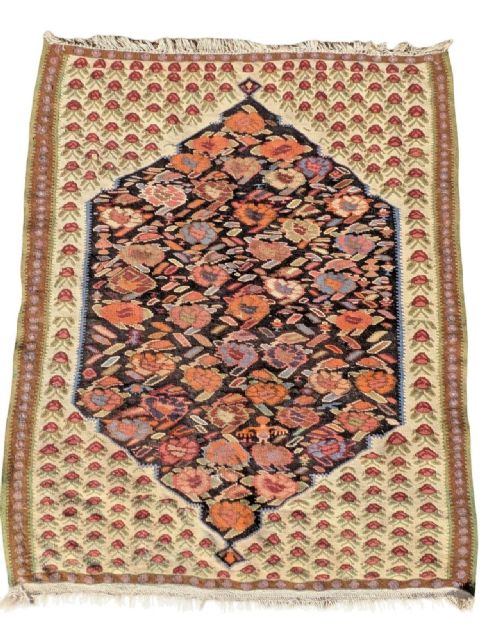
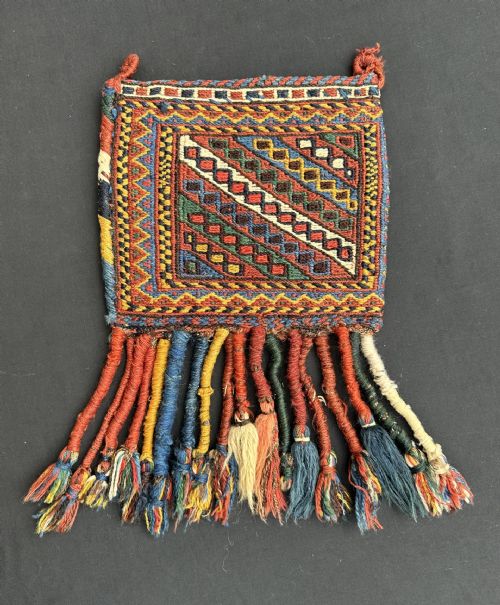
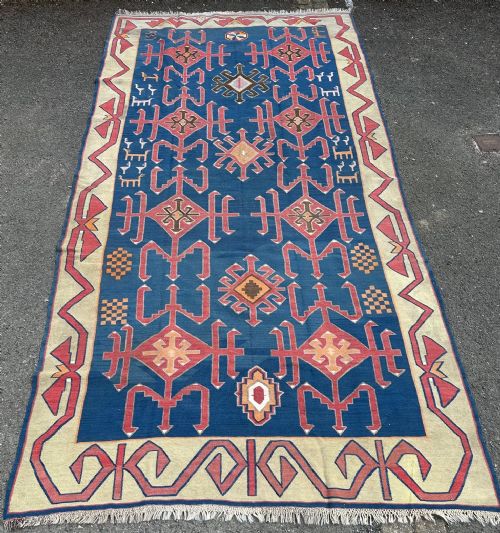
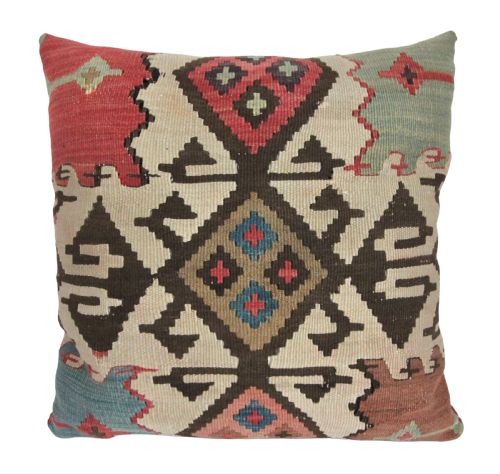
An oriental flat weave rug encompasses an array of nomadic and traditional textiles created without a knotted pile, resulting in a thin, tapestry-like fabric. Buyers seeking an oriental flat weave rug encounter various regional forms, including large room-sized carpets, runners, prayer rugs, and smaller utility items such as cushions and storage pouches.
The selection ranges widely across geographical origins, featuring pieces made by tribes and village weavers from the Caucasus, Anatolia, Persia, and regions associated with Pirot and Sharkoy. These textiles display distinct ethnic designs, from banded patterns and repeat medallions to bold eye-dazzler motifs.
How they were made
These textiles rely on wool and cotton foundations, utilising hand-spun wool for the main woven body to achieve durability and tactile depth. Weavers employed natural dyes to colour the yarn, producing subtle variations in tone across the surface.
Techniques span standard flat-weave tapestry methods alongside soumak wrapping and sumac structures, which involve wrapping supplementary threads around the warp and weft to create raised textural patterns.
Materials recorded across the inventory include hand-spun wool, cotton foundations, and natural dye palettes.
What varies in quality
Quality in these textiles depends on the tightness of the weave and the precision of the geometric layout, which together reflect the weaver's skill. Finer examples display intricate detail and complex structures, particularly in pieces requiring advanced soumak technique.
The choice and preservation of natural dyes heavily influence the visual success of a piece, with harmonious palettes and well-aged colour distribution distinguishing finer regional works from standard village production.
Afshar Nomads·Shahsavan Nomads·Yomut Turkmen·Pirot Sarkoy
The Oriental Flat Weave Rug Glossary
- Kilim
- A flat-woven carpet or rug produced by tightly interweaving warp and weft strands to form a smooth surface without a pile.
- Soumak
- A decorative flat-weaving technique involving coloured threads wrapped over and around the warp strands to create a textured, durable surface.
- Warp
- The stationary vertical threads stretched onto a loom that form the structural foundation of the textile.
- Weft
- The horizontal threads passed back and forth through the warp to create the pattern and complete the weave.
- Khorjin
- A traditional tribal saddlebag woven for nomadic storage, often found today separated into individual bag faces.
Oriental Flat Weave Rug: Frequently Asked Questions
How do I clean an antique flat weave rug?
These delicate textiles require gentle treatment, primarily surface dusting and professional textile cleaning rather than immersion washing. Natural fibres and dyes react poorly to harsh agitation or chemical detergents.
Regular careful vacuuming using a low-suction attachment without a rotating brush helps prevent dust accumulation in the tight weave. Keeping the rug out of direct, intense sunlight preserves the natural dyes over time.
Can I use these rugs on the floor?
Flat weaves were originally designed for heavy domestic and nomadic use, functioning as floor coverings, blankets, and storage covers. Placing a quality underlay beneath the textile prevents slipping and reduces friction against hard flooring.
High-traffic hallways benefit from durable runner formats, while lighter cushions and bag faces suit decorative seating use. Rotating the rug periodically ensures even wear across high-traffic areas.
How do I identify regional tribal designs?
Regional attribution relies on specific colour palettes, structural techniques, and geometric motifs characteristic of particular nomadic groups. Caucasian pieces often display crisp, sharp geometry, whereas Persian and Anatolian village works incorporate softer medallion layouts and floral influences.
Examining the selvedge edges and the composition of the wool provides further clues to the specific origin. Expert dealer descriptions help link visual traits to traditions like those of the Shahsavan or Caucasus weavers.
What is the difference between a kilim and a soumak?
A kilim is created using a flat tapestry weave where the pattern is formed by interweaving coloured weft threads tightly across the warp. This produces a smooth, identical pattern on both sides of the fabric.
Soumak weaving incorporates an additional wrapping technique where decorative threads loop around the warp structures. This method leaves floating threads on the reverse and adds distinct raised texture to the face of the textile.