



Vintage Woven Kilim Carpet
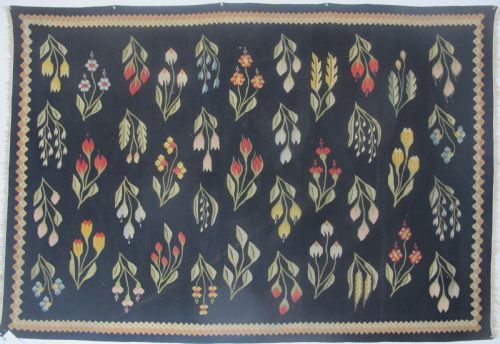
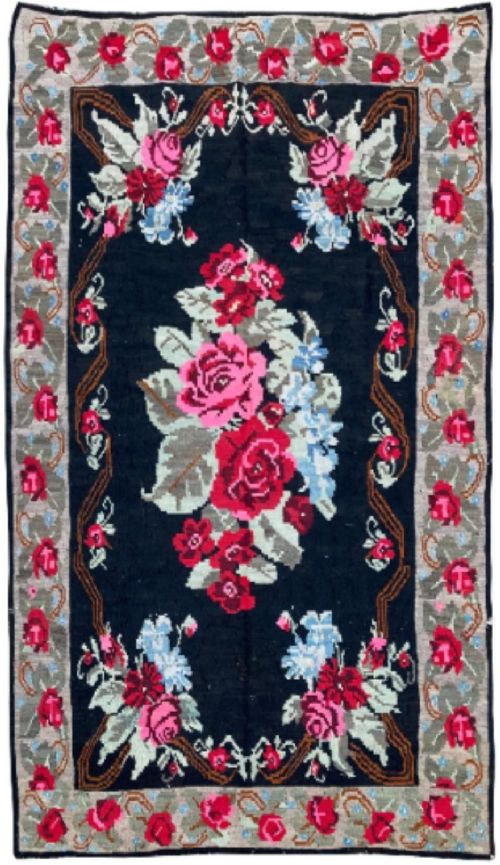
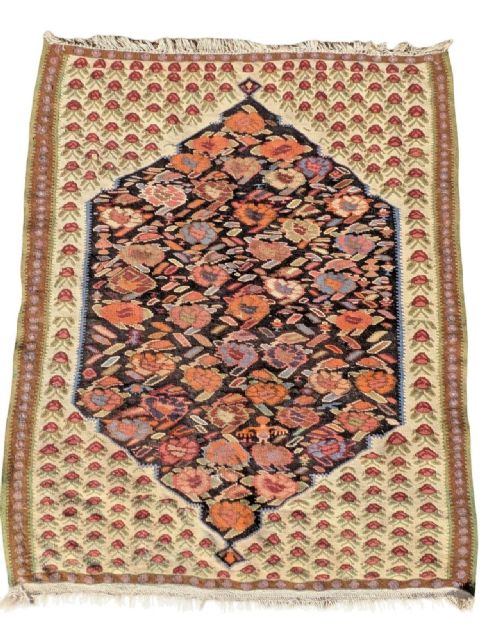
A vintage woven kilim carpet brings flatweave geometry and regional storytelling into a room through flat, pileless wool construction.
Vintage Woven Kilim Carpet
A vintage woven kilim carpet represents a tradition of flat-woven textiles originating from regions spanning Anatolia, the Caucasus, Persia, and Central Asia. When searching this phrase, a buyer encounters utilitarian floor coverings, wall hangings, and panels produced by tribal and nomadic groups primarily between the late nineteenth century and the mid-twentieth century.
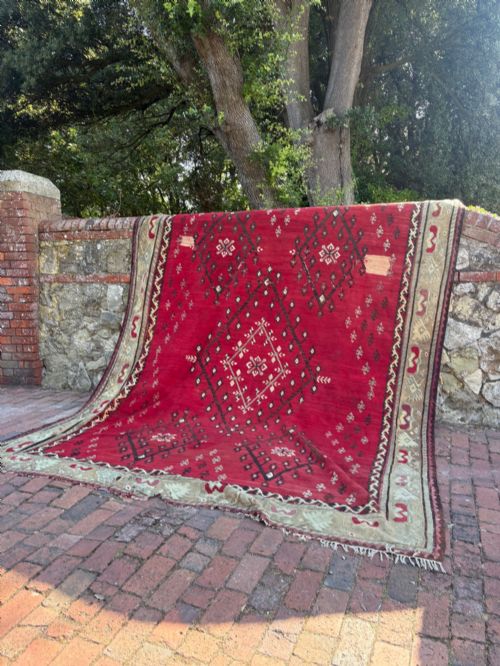
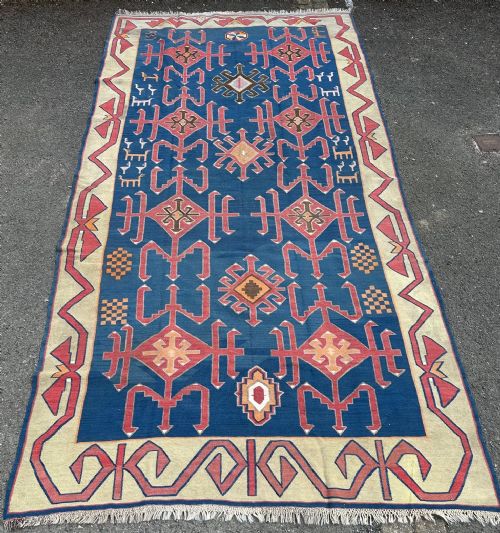
The most common examples on this page take the form of room-size carpets, runners, and smaller rugs featuring geometric medallions, banded designs, and tribal motifs. Pieces from Turkish regions such as Malatya, Konya, and Bergama appear alongside Caucasian pieces from Shirvan and Karabagh, plus Uzbek and Afghan tribal works.
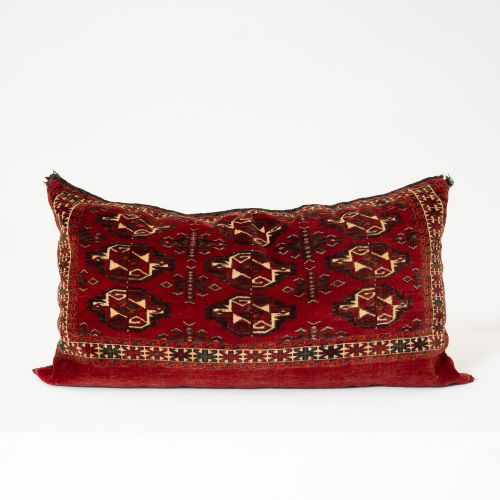
Beyond standard floor rugs, the category extends to functional nomadic items including cushions, tent bands, and sofreh eating cloths. These textiles reflect the specific domestic and nomadic requirements of their makers, utilising traditional slit-tapestry weave techniques that eliminate a knotted pile entirely.
Materials and construction methods
The construction relies on wool and cotton foundations, utilising interlocking weft techniques to build sharp geometric patterns without a pile. Natural dyes impart the soft, faded red, and varied colour palettes seen across nineteenth and twentieth-century examples.
Many larger carpets and panels are constructed in multiple narrow strips or two distinct parts joined together, reflecting the practical limitations of nomadic horizontal looms. Secondary materials such as wood and brass appear occasionally in associated furniture mountings or hanging hardware.
Some nineteenth-century tent bands retain their original nomadic dust, whispering of camel journeys across high mountain passes.
Quality differences in flatweave textiles
Quality in these flatweaves rests upon the tightness of the weave and the precision of the geometric lines. Finer, denser interlacings create crisper pattern edges and greater structural durability for floor use.
The sophistication of the dye palette and the integrity of the natural colour variations also distinguish finer pieces. Structural interventions, such as timeworn repairs, reflect the working history of textiles that served functional domestic roles before entering the market.
The Vintage Woven Kilim Carpet Glossary
- Kilim
- A flat-woven carpet or rug produced without a pile by tightly interweaving warp and weft strands. This technique creates a lightweight textile with identical patterns visible on both sides.
- Slit-tapestry
- A weaving method used in kilims where the weft threads return at the boundary of a colour area, leaving a small vertical slit between adjacent colours. These gaps define the sharp geometric outlines characteristic of tribal carpets.
- Sofreh
- A nomadic textile traditionally used as a spread for eating bread or preparing meals. These pieces often feature specific banded weftwork designs.
- Chuval
- A large storage bag made by Turkmen tribes, often featuring gul motifs and structured for utilitarian use inside a tent. Surviving fragments frequently appear as cushions or decorative panels.
- Soumak
- A brocade-like flatweave technique where supplementary weft threads wrap around the warp yarns, adding texture and structural heft to the reverse side.
Vintage Woven Kilim Carpet: Frequently Asked Questions
Are these carpets suitable for heavy floor traffic?
Durability depends on the tightness of the weave and the structural condition of the wool foundation. Many room-size tribal carpets handled daily foot traffic well in their original nomadic settings.
Using a quality underlay prevents slipping and cushions the thin flatweave against hard subfloors. Placing them in moderate-traffic areas extends the working lifespan of antique textiles.
How are regional styles identified?
Design vocabulary, colour combinations, and specific weaving structures point toward particular tribal origins. Anatolian pieces often display bold geometric panels, while Caucasian works frequently utilise sharper borders and banded motifs.
Uzbek and Afghan examples typically incorporate narrow strip construction and distinctive red or earthy palettes. Comparing edge finishes and warp preparation helps confirm regional provenance.
Why do some carpets have visible repairs?
These textiles served active domestic or nomadic roles for generations before reaching collections. Timeworn repairs and re-woven sections document the working history and preservation of the piece by its original owners.
Visible mending using traditional wool yarns adds historical depth rather than diminishing authenticity. Buyers often appreciate these traces of past utility as part of the textile's narrative.