


Red Ersari Turkmen Carpet
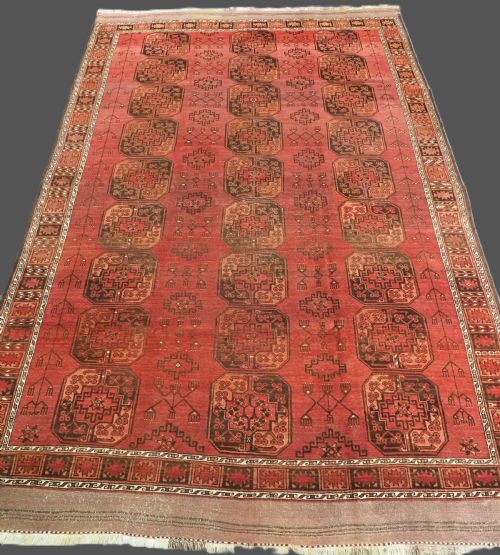
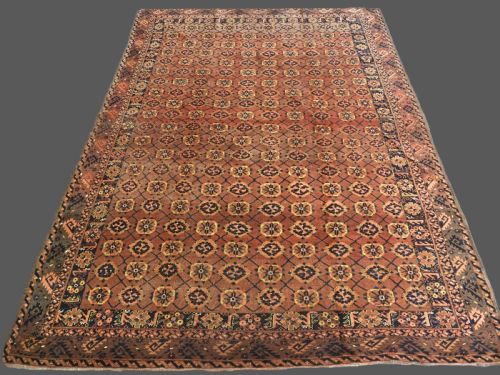
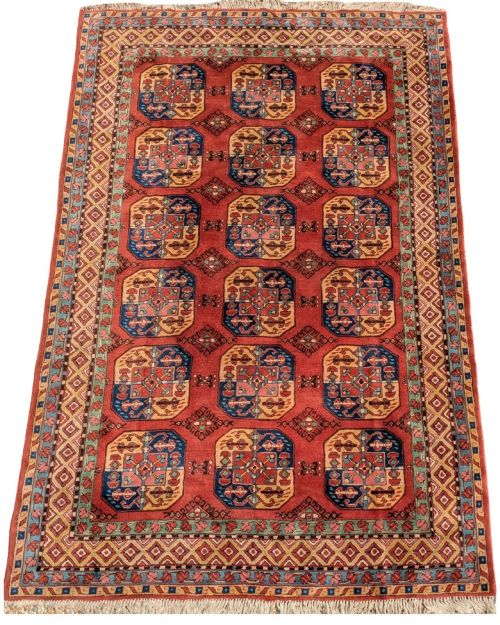
These pieces are a red ersari turkmen carpet, prized for their rich tribal patterns and depth of character.
Red Ersari Turkmen Carpet
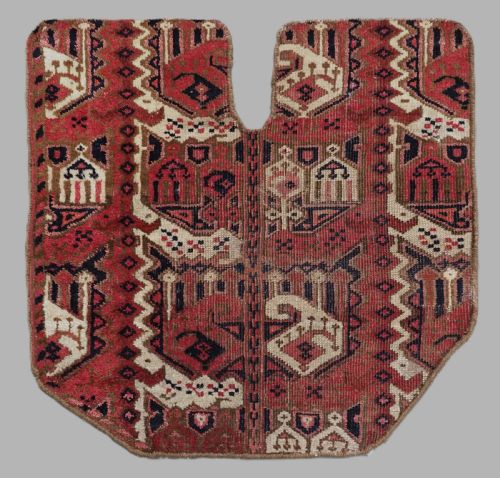
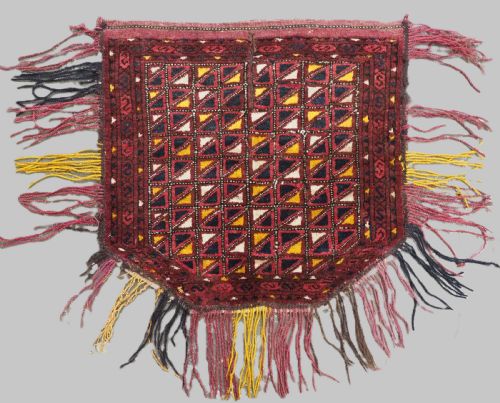
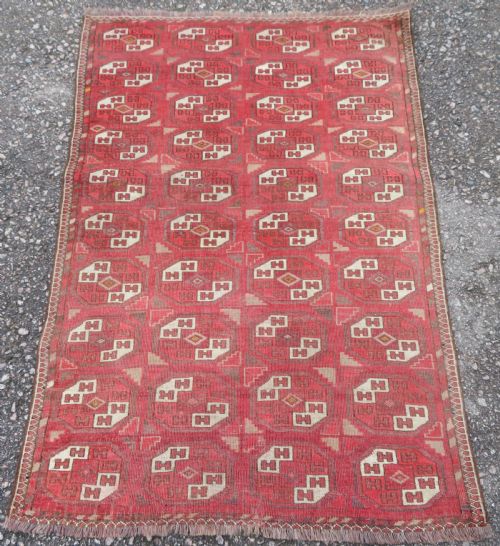
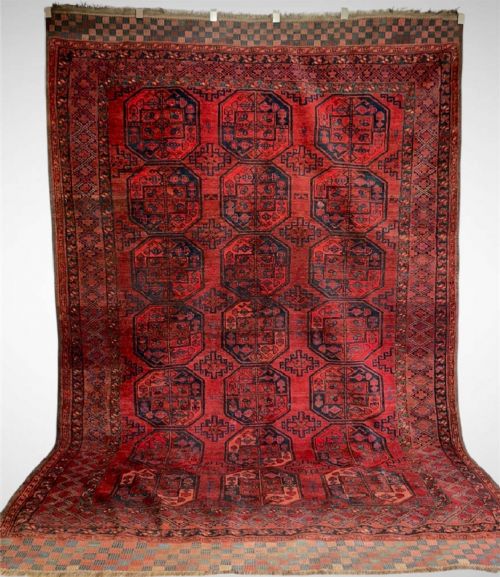
Buyers seeking a red ersari turkmen carpet encounter hand-knotted tribal textiles originating from Central Asia, often associated with Northern Afghanistan and traditional nomadic weaving traditions. The selection spans utilitarian formats ranging from large country house main carpets down to smaller domestic saddle covers, tent door rugs, and wall hangings known as torbas.
The visual vocabulary typically relies on deep red, plum, or madder grounds populated by traditional tribal guls, turreted motifs, or ikat-inspired designs. Most examples encountered date from the middle of the nineteenth century through the early decades of the twentieth century, reflecting established regional weaving practices before modern commercial production took over.
Main carpets provide substantial floor coverage for larger rooms, while smaller bag faces and tent trappings offer concentrated bursts of tribal artistry and intricate secondary patterning. Each textile carries the distinct design grammar of sub-tribes and village weavers working within the broader Turkmen tradition.
Materials and construction methods
The foundation and pile rely on natural wool, frequently hand-spun to produce varied texture and irregular absorption of colour across the surface. Certain specialised pieces incorporate goat hair or horsehair into the structural weave to increase durability along the margins and selvedges.
Dyers utilised natural organic dyes to achieve the characteristic warm red and plum tones that define the group, yielding subtle abrash and tonal shifts as the light changes. Weavers tied dense knots onto woollen warps and wefts, creating a heavy-duty fabric designed to withstand nomadic camp life or heavy domestic use.
The recorded listings demonstrate production dates spanning from the mid-nineteenth century through the 1920s, utilising wool, natural dyes, and occasional goat hair.
Evaluating the standard of weaving
Quality rests upon the handled suppleness of the wool, the precision of the knotting, and the depth achieved by natural dye stuffs. Superior examples display high handle flexibility alongside crisp execution of complex secondary motifs and guls.
The integrity of the original borders, selvedges, and any accompanying tassels influences the overall preservation level. Pieces retaining their full structural perimeters without extensive re-weaving command stronger interest from serious textile collectors.
The Red Ersari Turkmen Carpet Glossary
- Gul
- A primary octagonal medallion or repeated tribal motif used across Central Asian rugs. These forms often identify the specific sub-tribe or clan responsible for the weaving.
- Torba
- A small wall-hanging bag or storage sack produced by nomadic weavers for domestic use inside a yurt. They frequently feature elaborate face designs distinct from floor carpets.
- Beshir
- A regional design attribution linked to weavers situated along the Amu Darya basin. These pieces often incorporate larger floral elements, lattice patterns, or ikat influences.
- Abrash
- A natural variation in colour shading caused by shifts in dye batches or hand-spun wool lots. This unevenness is a hallmark of traditional vegetable dyeing.
- Chuval
- A large tent storage bag face woven in nomadic households. Collectors prize these for their compressed, dense layout of primary guls.
Red Ersari Turkmen Carpet: Frequently Asked Questions
How were these carpets originally used?
Nomadic and village households utilised these textiles for floor covering, bedding storage, and animal trappings inside traditional dwellings. Larger formats anchored the main living spaces, while smaller bags stored household goods.
Specialised pieces such as kapunuks hung around tent doorways, and saddle covers accompanied riders on journeys across Central Asia.
How can I tell different tribal designs apart?
Distinctions rely on the shape and arrangement of the primary guls, the structure of the border guards, and the secondary motifs. Ersari and Beshir groups often display softer or more expansive floral geometries compared to other Turkmen tribes.
Sub-tribal variations, such as Kizil Ayak or Taghan pieces, introduce specific medallion structures like the tauk nuska or turreted guls.
How do I care for an antique tribal carpet?
Protect the textile by placing it in low-traffic areas away from direct, prolonged sunlight to prevent natural dye fading. Vacuum gently with standard suction attachments without using rotating brush bars.
Professional textile conservators should handle any deep cleaning or structural repairs to preserve the integrity of the original wool and foundation.
What indicates an older nineteenth-century origin?
Earlier examples generally exhibit deeper, more saturated madder red tones derived entirely from organic dye sources combined with finely spun wool. The handle tends to be supple and pliable due to the organic nature of the materials.
Structural details such as goat hair foundations and irregular hand-spun warps point toward production periods before synthetic aniline dyes became widespread.