
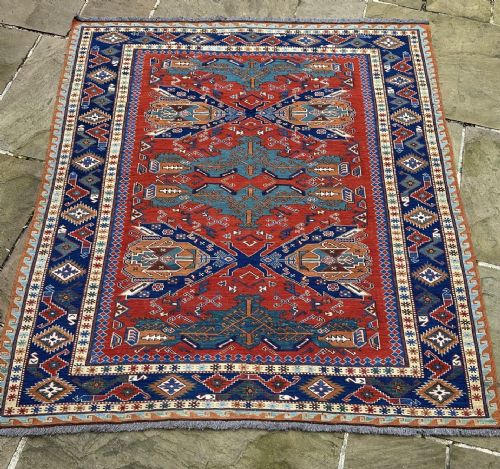
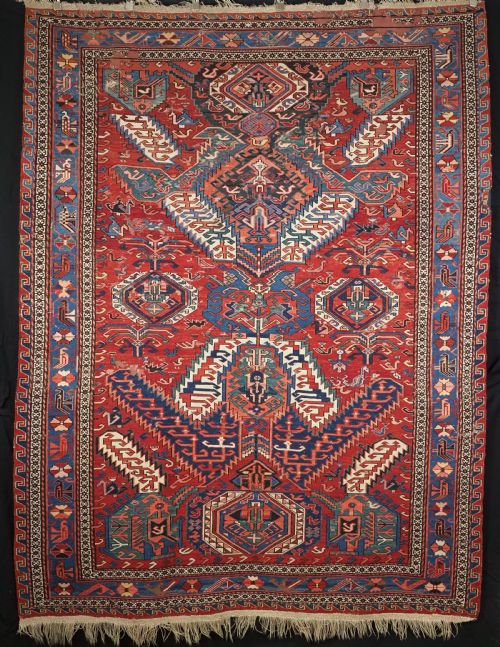

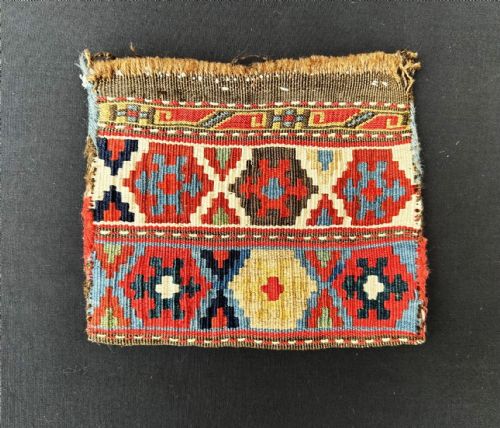

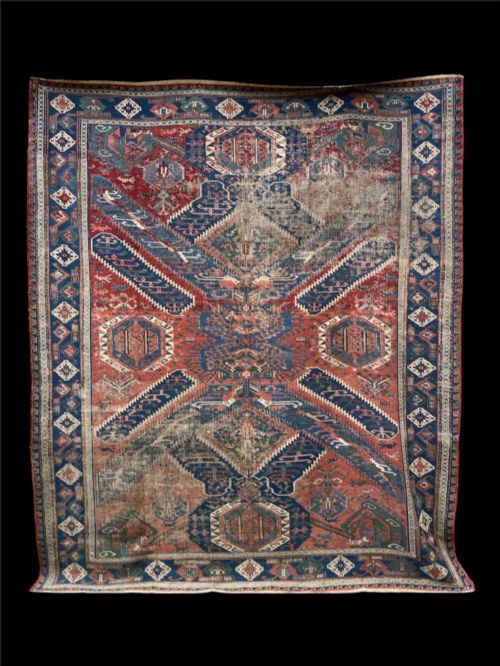
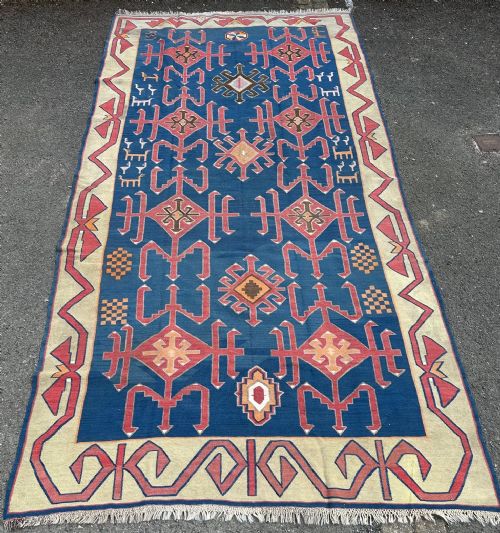


Red Caucasian Flatweave Rug
When you unfold a red caucasian flatweave rug, you meet a dense language of tribal geometry woven across the nineteenth century.
Red Caucasian Flatweave Rug
A red caucasian flatweave rug brings together nomadic textile traditions from regions such as Shirvan, Daghestan, and Azerbaijan. These textiles appear as kilims, soumaks, and utilitarian storage forms including mafrash panels and horse covers.
Makers ranged from Shahsavan nomads to Avar and Jaf Kurd weavers who utilised wool and natural dyes to build medallions, animal motifs, and geometric borders. The format relies on tapestry-weave or brocaded structures rather than knotted piles.
Buyers encounter pieces spanning from the mid-nineteenth century up to the early twentieth century. Each rug records the visual vocabulary of specific Caucasian and Kurdish groups working with hand-spun materials.
Materials and construction methods
Weavers relied principally on hand-spun wool and cotton foundations, occasionally incorporating silk for specific highlights. Vegetable and natural dyes provided the rich palette of reds, yellows, and blues seen across these flatweaves.
The construction employs warp-faced or weft-faced flatweaving techniques, alongside soumak wrapping methods where weft threads wrap around warp threads to create textured patterns. This structural approach produces a durable textile without a pile.
Nomadic workshops constructed these rugs on portable horizontal looms set up in camps or villages. The resulting tension and material availability dictated the precision of the geometric layout.
Object forms documented here range from large carpets and runners to small saddle bags and storage panels.
Factors of quality and execution
Quality rests upon the tightness of the weave and the complexity of the technical execution. Finer wraps and neatly integrated soumak work demonstrate greater control by the weaver.
The depth and consistency of the natural dyes distinguish superior examples. Subtly variegated wools signal skilled dyeing processes that age gracefully over time.
Structural integrity, such as complete borders and intact original selvedges, separates preserved nomadic items from heavily restored fragments.
The Red Caucasian Flatweave Rug Glossary
- Kilim
- A flat-woven textile produced without a pile by tightly interweaving warp and weft strands. This technique creates a lightweight rug with flat surfaces on both sides.
- Soumak
- A brocading technique where supplementary weft threads wrap around warp yarns in a sequence that produces a braided face and floats on the reverse. It adds durability and raised texture to the design.
- Mafrash
- A rectangular storage bag or chest panel used by nomadic groups for bedding and household goods. These pieces are frequently repurposed into flatweave rugs or displayed individually.
- Khorjin
- A traditional paired saddle bag designed for transport on animals. They feature decorative faces combined with plain weave backs.
- Warp
- The stationary vertical threads stretched across a loom that form the foundational grid of the textile. Weft threads pass horizontally through them to build the pattern.
Red Caucasian Flatweave Rug: Frequently Asked Questions
What is a flatweave rug?
A flatweave rug is constructed without knotted pile, using interlaced warp and weft threads to form a thin, durable textile. Artisans build the design directly into the weave structure.
These pieces include kilims and soumaks produced by nomadic and tribal groups across the Caucasus and neighbouring regions.
How were these rugs used originally?
Nomadic and village communities utilised these textiles as floor coverings, tent decorations, and storage containers for bedding and clothing. Items like mafrash bags served practical functions during seasonal migrations.
Over time, many functional containers were separated into individual panels or preserved as decorative hanging art.
How do I care for an antique flatweave?
Protect the textile by placing a breathable underlay beneath it to prevent slipping and reduce friction against hard floors. Vacuum gently using low suction without a rotating brush.
Keep the rug away from direct sunlight to protect natural dyes, and consult a specialist textile conservator for cleaning.
How can I tell regions apart?
Regional styles appear through distinct colour combinations, border motifs, and structural choices such as Soumak wrapping or slit-tapestry weaving. Shirvan and Daghestan pieces often display crisp geometric medallions.
Shahsavan and Kurdish weavers introduced specific bird, dragon, and banded patterns that identify their geographic origins.