




Antique Soumak Carpet
An antique soumak carpet brings flat-woven tribal geometry and rich natural tones into a room.
Antique Soumak Carpet
When you search for an antique soumak carpet, you are looking at flat-woven textiles produced by nomadic and tribal groups across the Caucasus, Persia, and Central Asia. These pieces range from full room-size carpets down to smaller bag faces, cushions, and long kilims, dated across the nineteenth and early twentieth centuries.
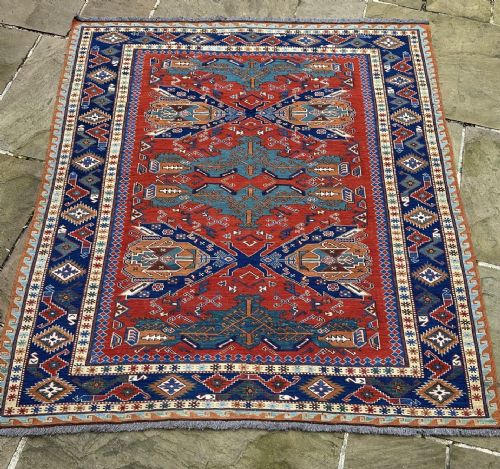
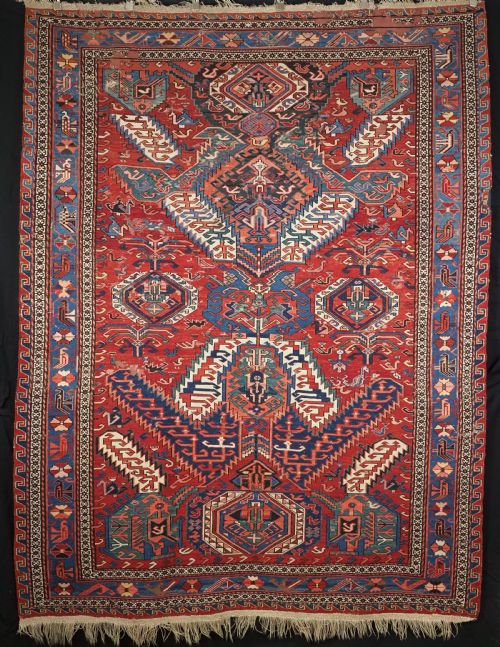
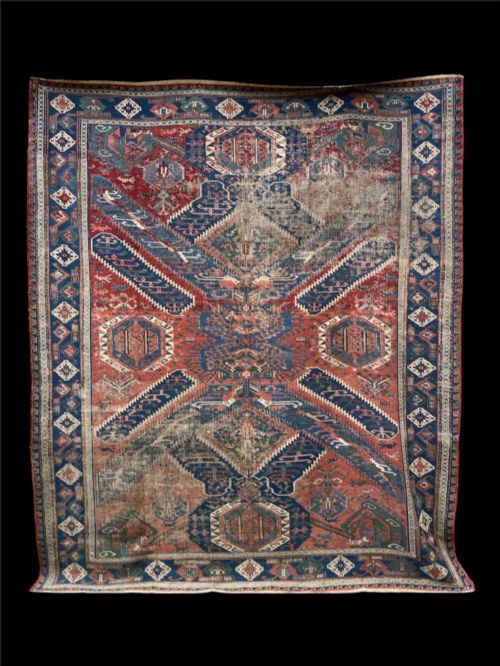
The version you are most likely to meet on this page is a Caucasian or Shahsevan piece featuring geometric medallions, animal motifs, or dragon designs executed in wool. Workshops and nomadic weavers in regions such as Daghestan, Kuba, and Azerbaijan produced these distinctive flatweaves using characteristic wrapping techniques that leave floating threads on the reverse.
Beyond the main carpets, the selection includes related tribal textiles such as half-saddlebags and palas kilims created by Yomut Turkmen, Afshar, and Kurdish makers. These smaller formats display the same structural techniques and regional iconography found in the larger floor coverings.
How they were made
Weavers constructed these flatweaves primarily from hand-spun wool and cotton foundations, employing the soumak technique where coloured weft threads wrap over and under warp threads in a continuous brocading motion. This method creates a sturdy, durable face without the cut pile of conventional knotted carpets.
The makers relied extensively on vegetable and natural dyes to achieve deep palettes, producing tones that soften gracefully over decades. Wool yarn took these natural colourants evenly, resulting in the rich grounds and contrasting borders characteristic of nineteenth-century tribal weaving.
Look closely for scattered bird and dragon motifs woven by nomads who encoded their tribal mythology directly into the bedroom floors of tents.
What varies in quality
Quality in these flatweaves rests on the crispness of the drawing and the complexity of the tribal motifs, such as properly articulated dragon or bird forms. Tighter wrapping and finer gauge yarn create a sharper geometric definition across the field and medallions.
The integrity of the structural weave and the preservation of original kilim ends also dictate the standing of a piece. Examples that retain their long starting and finishing borders demonstrate superior survival from their nomadic working life.
The Antique Soumak Carpet Glossary
- Soumak
- A flat-weave technique involving wrapped wefts that create a ribbed surface texture on the front and loose floating threads on the back. This method provides greater structural heft than standard flatweaves.
- Medallion
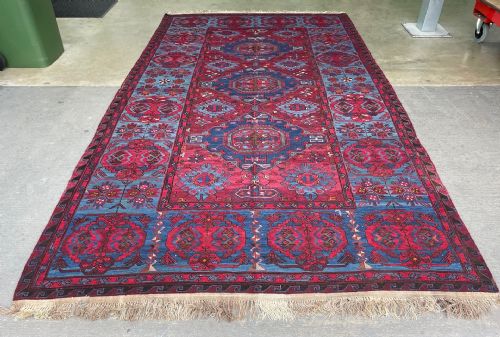
- A central ornamental motif, often repeated in series of three down the field of the carpet. These geometric shapes organise the tribal composition.
- Palas
- A term used for specific flat-woven tribal rugs or kilims, often associated with Turkmen weaving. They display crisp horizontal striping or geometric patterns.
- Bag face
- The decorative front panel of a nomadic storage bag, preserved and collected as a small textile format. These pieces concentrate intricate regional designs into a compact scale.
Antique Soumak Carpet: Frequently Asked Questions
How do I clean an antique soumak carpet?
Vacuum gently using a suction-only attachment without a rotating brush bar to protect the flat-woven surface.
Professionals experienced in antique flatweaves should handle any wet cleaning to prevent dye bleed in natural colourants.
Where were soumak carpets made?
Weavers produced these textiles across the Caucasus, particularly in Daghestan, Kuba, Shemakha, and Shirvan regions.
Other notable examples originated further south with Shahsevan, Afshar, Kurdish, and Yomut Turkmen nomadic groups.
Are soumak carpets durable for floors?
The wrapping technique creates a dense, sturdy structure that handles foot traffic well in residential settings.
Using an appropriate underlay prevents slipping and cushions the flat-woven fabric against premature wear.
What is the difference between kilim and soumak?
A standard kilim is woven with simple interlocking wefts that leave slits between colour changes and look identical on both sides.
Soumak involves wrapping wefts over warps on the face, leaving floating threads on the reverse and offering a heavier handle.