


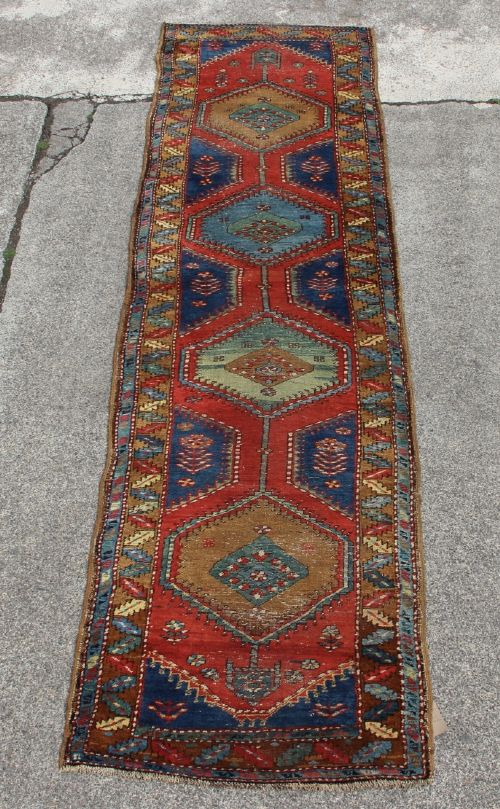


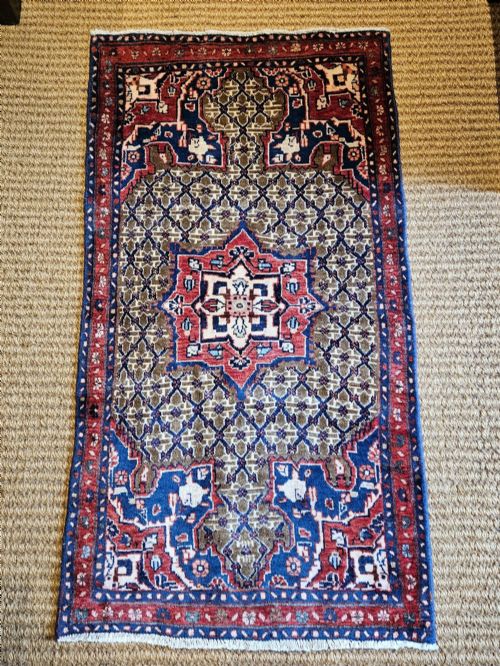
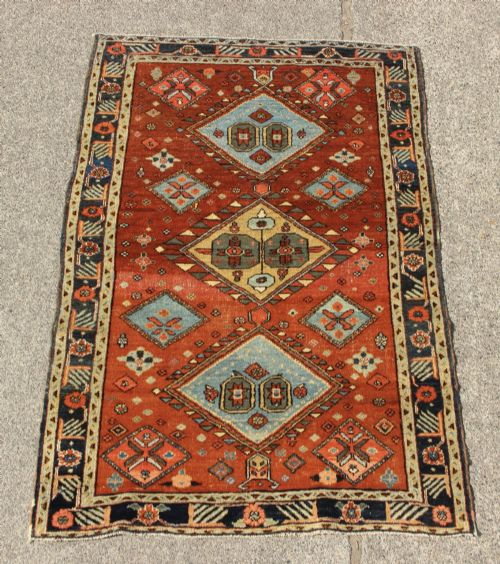
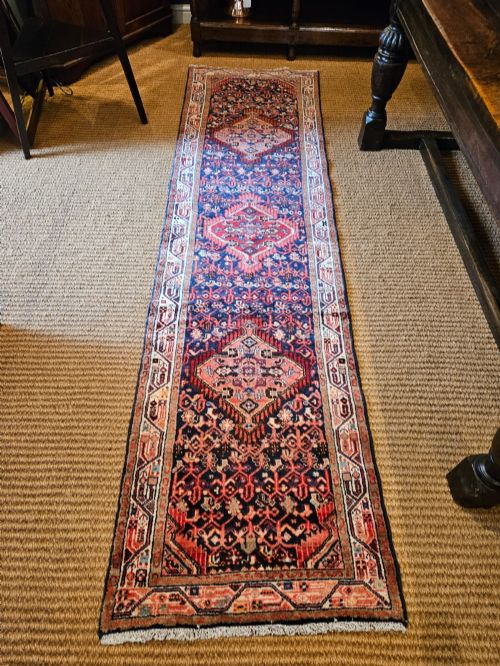
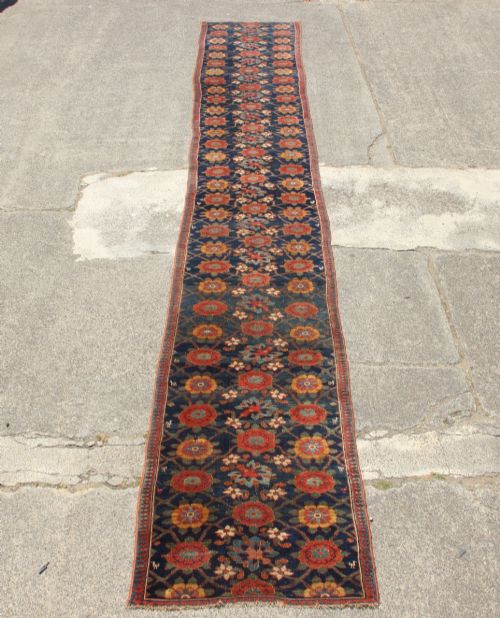
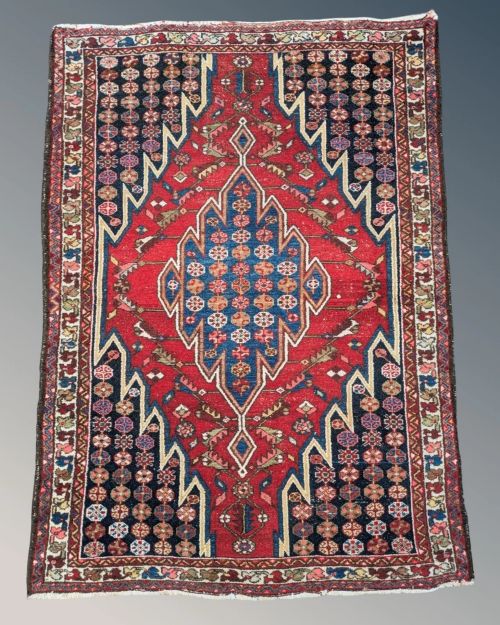
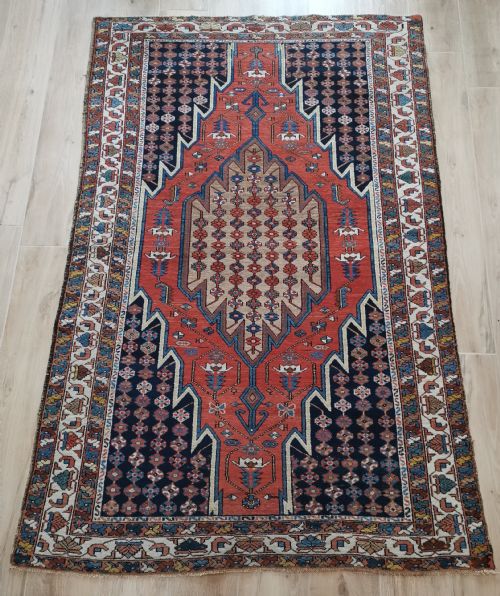
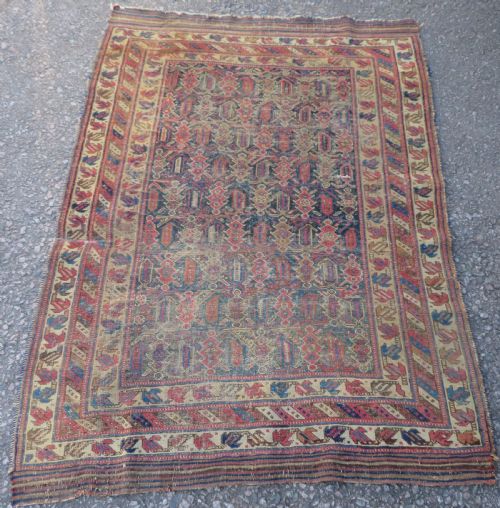
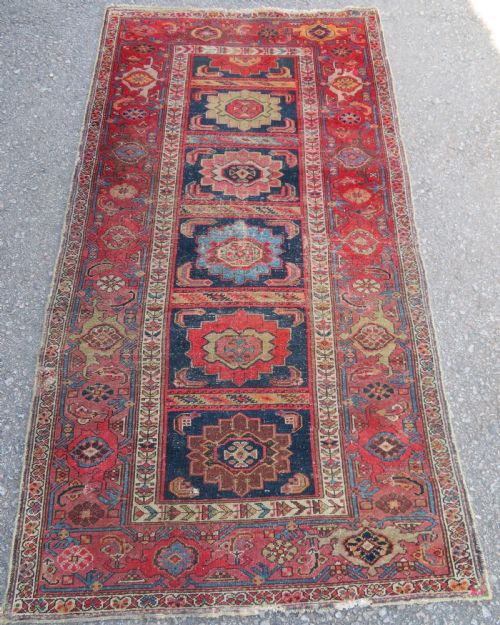
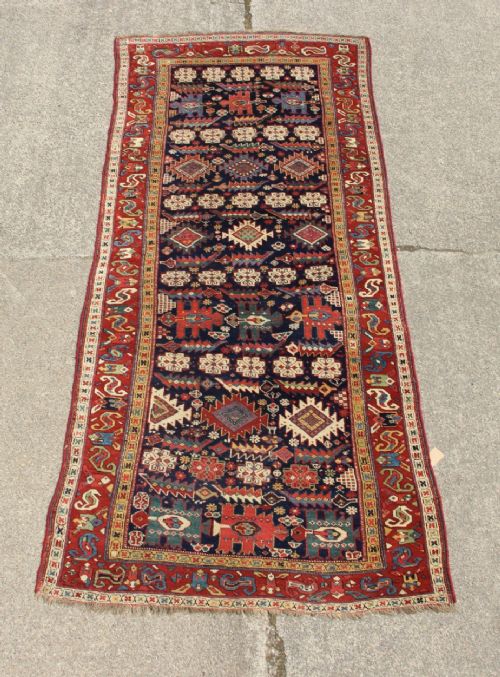
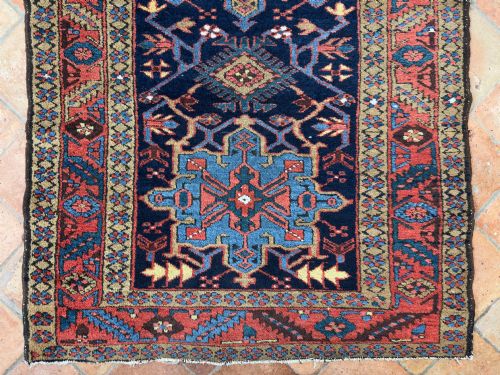
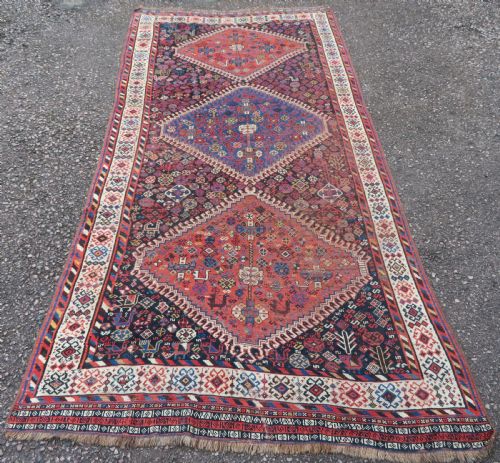
Red Blue Persian Runner
A red blue persian runner brings depth and ground to a long hallway, woven by hand with enduring wool and traditional dyes.
Red Blue Persian Runner
A red blue persian runner is a narrow, elongated textile designed for corridors, hallways, and long spaces, drawing the eye along floorboards with structured geometric or floral patterns. When searching for this phrase, buyers encounter examples originating from village and tribal workshops across Persia and neighbouring regions, dating from the nineteenth century into the early twentieth century.
The pieces listed here span distinct regional styles such as Heriz, Hamadan, Kurdish, and Bakshaish, alongside specific formats like long runners and gallery carpets. Village weavers produced these floor coverings on upright looms using local materials, resulting in robust runners suited to heavy foot traffic.
Most selections on this page demonstrate traditional Persian and tribal aesthetics, combining rich madder reds and deep indigos with contrasting ivory or camel accents. These runners serve both functional pathway coverings and decorative centrepieces for period and contemporary interiors alike.
How They Were Made
Makers constructed these runners using hand-spun wool for the pile, knotted densely onto robust cotton or wool foundation warps and wefts. This method yielded a dense, flexible fabric capable of enduring decades of domestic use.
Dyeing relied on natural materials extracted from plants and minerals, producing saturated hues of red and blue that mellow softly with age. Hand-knotting ensured each geometric medallion, tribal motif, and vine scroll remained integrated into the structural weave.
Some runners show wonderfully crooked geometric lines, proving the human hand guided every single knot.
What Varies In Quality
Quality rests upon the fineness of the knotting and the clarity of the design work, which dictate how sharply the motifs stand out against the background field. Tighter knots on sturdy foundations produce a firmer handle and sharper graphic definition in the pattern.
The richness and stability of the natural dyes also set examples apart, as skilled dye work yields depth and nuance across the red and blue fields. Preservation of the original outer borders and selvages contributes significantly to the integrity of the piece.
The Red Blue Persian Runner Glossary
- Runner
- A long, narrow carpet format specifically proportioned for corridors, hallways, and stairs. These pieces guide movement through domestic spaces.
- Madder
- A natural red dye derived from the root of the Rubia plant, widely utilised in traditional weaving for deep, durable reds. It provides the dominant warm tone in many regional carpets.
- Indigo
- A natural blue dye extracted from plants of the Indigofera genus, providing deep tones ranging from navy to pale slate. It forms the primary contrasting field colour against red accents.
- Selvage
- The reinforced outer edge of a rug formed by wrapping the lateral warp threads, protecting the textile from fraying. Original selvages indicate an intact and unaltered structure.
Red Blue Persian Runner: Frequently Asked Questions
Where should I place a long runner?
These narrow carpets suit hallways, corridors, and galley kitchens where foot traffic benefits from a protective and softening floor covering. They also function effectively along one side of a bedroom or in narrow entryways.
Ensure you measure the clear floor space between skirting boards or furniture to leave an even border of exposed timber or stone on either side.
How do I care for an antique wool runner?
Regular gentle vacuuming without a rotating brush bar removes grit and dust from deep within the wool pile. Professional cleaning by a specialist in antique textiles preserves the natural lanolin and dye stability.
Place a breathable underlay beneath the textile to prevent slipping on hard floors and to reduce friction between the backing and the floorboards.
How can I tell different tribal designs apart?
Regional weaving groups employed distinct palettes, knotting structures, and signature motifs passed down through generations. For instance, Heriz carpets often feature bold geometric central medallions, while Hamadan pieces display varied all-over geometric patterns.
Examining the structural characteristics of the foundation and the specific shades of red and blue helps attribute the piece to a particular weaving tradition.
Are natural dyes easy to identify?
Natural dyes display subtle tonal variations known as abrage, where the colour shifts gently across the wool due to batch variations in the dye vat. These hues mature gracefully over decades, developing a soft patina that synthetic dyes rarely match.
Examining individual pile tufts from the reverse side helps reveal how the colour penetrates the wool fibres uniformly.