
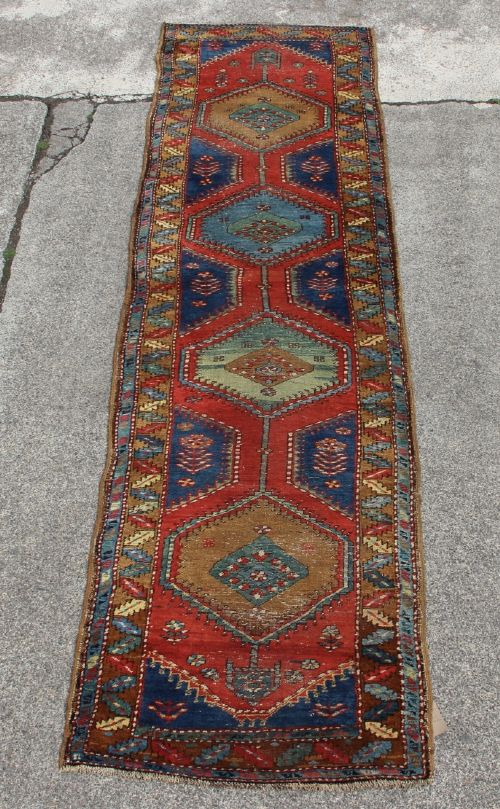
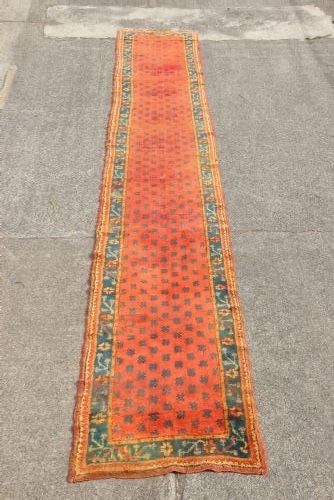
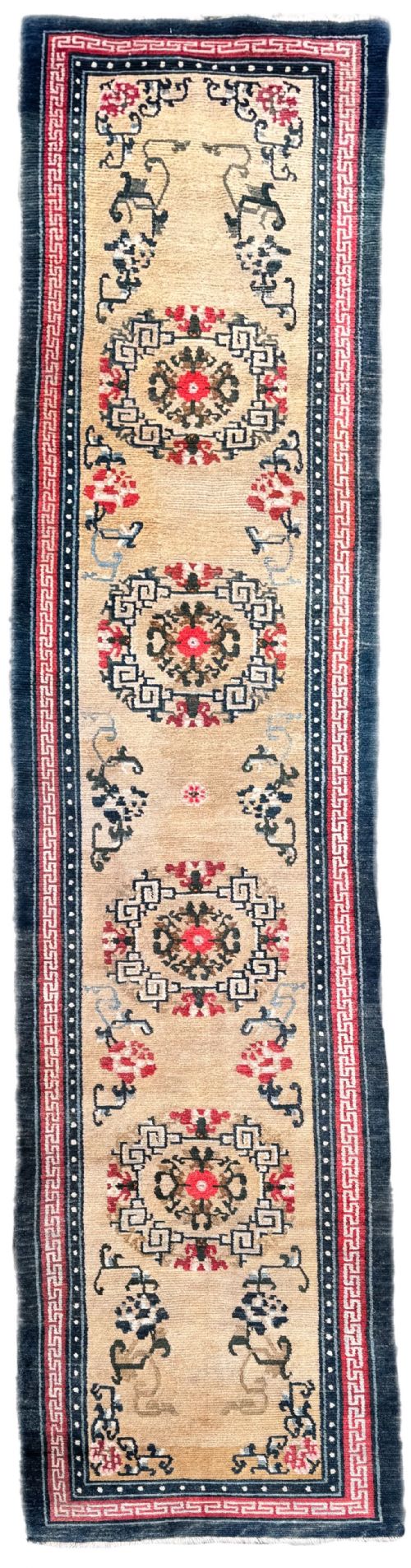
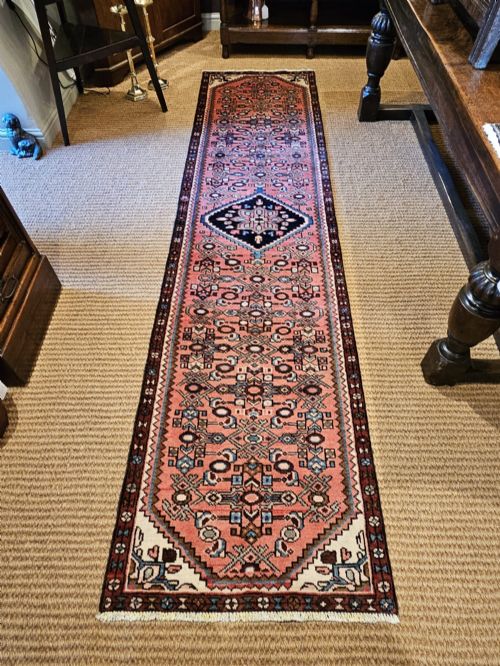
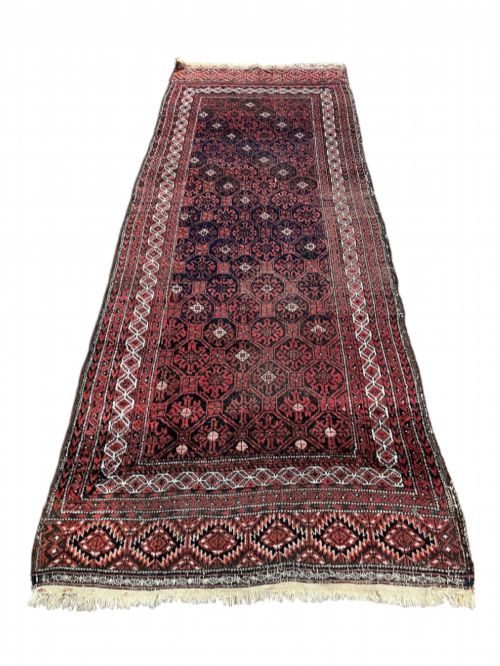
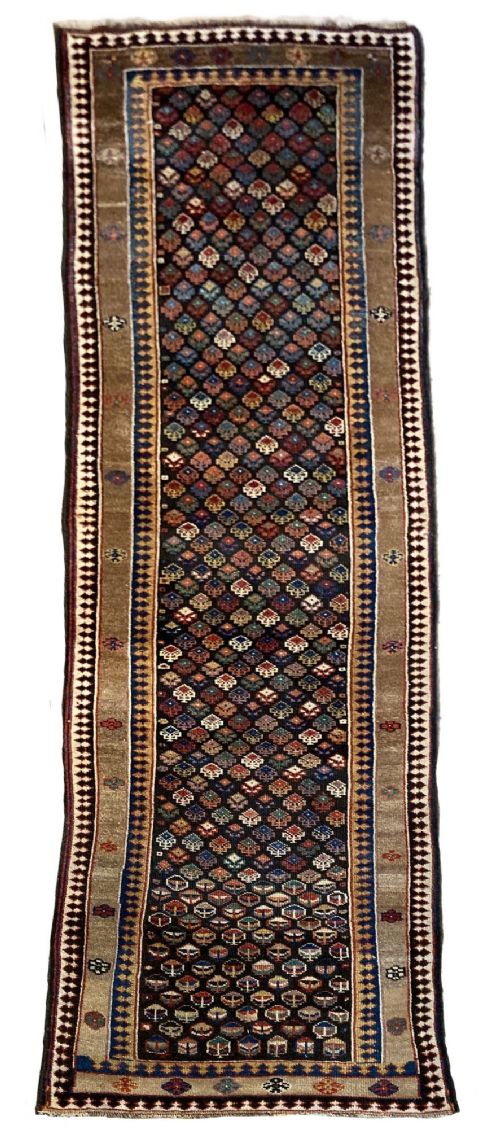


Hand Knotted Narrow Runner
A hand knotted narrow runner brings linear warmth and texture to hallways, landing spaces, and corridors.
Hand Knotted Narrow Runner
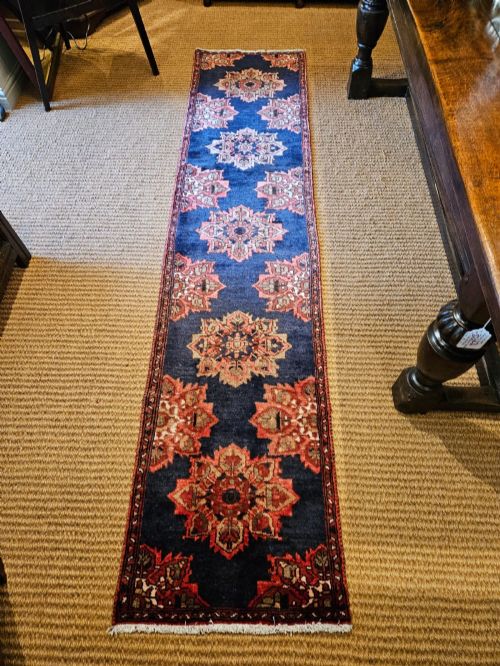
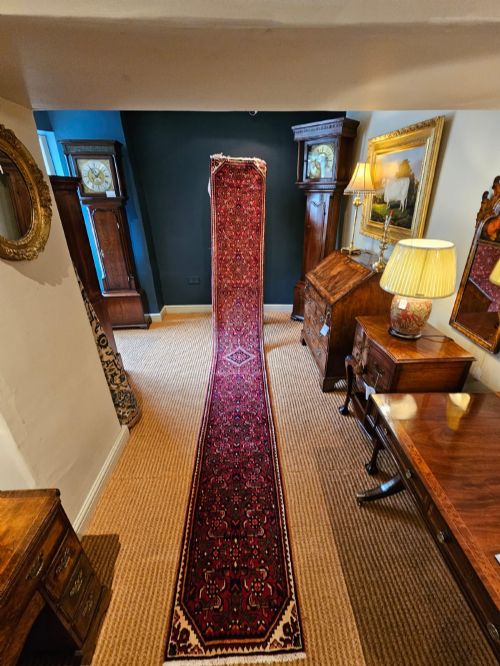
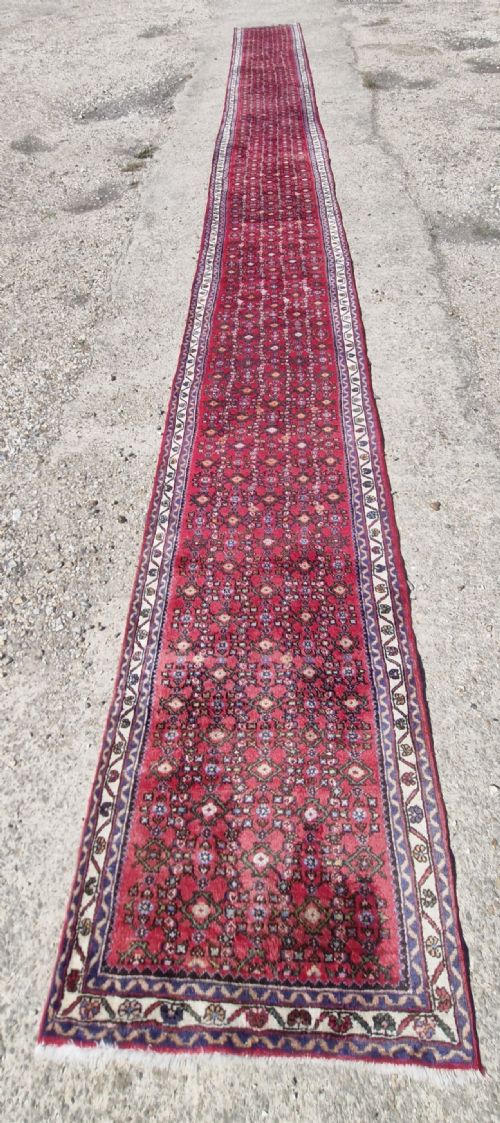
A hand knotted narrow runner is a floor covering designed specifically for extended corridors, hallways, and narrow landings. These pieces span production periods from the late nineteenth century through the early decades of the twentieth century, originating primarily from Persian, Turkish, Kurdish, and Caucasian weaving traditions. Examples range from compact lengths to grand spans exceeding thirty feet, all maintaining an elongated proportional format.
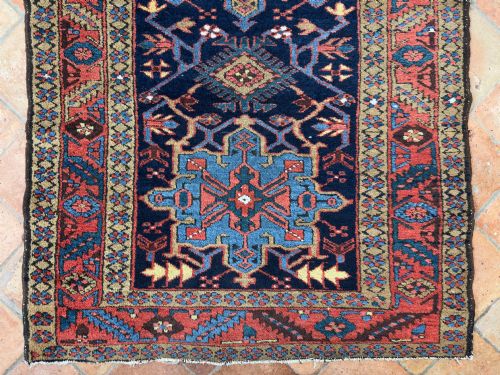
The inventory on this page centres heavily on Persian regional workshops and tribal groups, including Heriz, Hamadan, Kurdish, and Sarouk village weavers. You will also encounter Turkish Oushak, Caucasian Shirvan, and Tibetan examples. These textiles utilise traditional geometric, medallion, and all-over field motifs tailored to linear dimensions.
Forms are categorized variously as hallway runners, rug runners, and long carpets, yet share the defining characteristic of narrow widths set against extended lengths. The palette leans towards traditional deep reds, blues, and earthy tones shaped by regional natural and early synthetic dyes.
Materials and construction methods
The foundation of a hand knotted narrow runner rests on sturdy hand-spun cotton or wool warps and wefts, providing the structural grid for the textile. Wool serves as the primary material for the dense pile, chosen for its resilience under foot traffic in busy hallways. Camel hair also appears in specific regional pieces, adding natural undyed tonal variation to the design.
Weavers tied individual knots by hand around the foundation threads, securing each row with supplementary weft shots before packing the pile tight with a heavy comb. This meticulous knotting technique creates a dense, flexible fabric that lies flat on corridors and stairs without buckling. Edge finishes typically involve overcast selvedges wrapped tightly in wool to protect the structural integrity of the outer borders.
Geographic origins represented in the inventory include Persian, Turkish, Caucasian, Kurdish, Tibetan, and Moroccan weaving regions.
Assessing quality in floor runners
Quality in a hand knotted narrow runner is determined by the density of the knotting and the precision of the foundation weave. A finer knot count permits greater intricacy in geometric and floral motifs, allowing the linear pattern to maintain crisp definition along the narrow format. The handling of the wool also distinguishes finer examples, where lanolin retention imparts a supple touch and a subtle sheen to the pile.
Proportional consistency along the entire length separates exceptional weaving from standard production. Superior runners maintain a uniform width from end to end without the wandering margins or pinched borders that can occur on long narrow looms. The choice of materials, such as lustrous glossy wool or soft camel hair, further elevates the textural depth of the finished piece.
Heriz·Hamadan·Sarouk·Oushak·Bidjar
The Hand Knotted Narrow Runner Glossary
- Warp
- The vertical foundation threads stretched tightly on the loom before weaving begins. All knots are tied around these stationary parallel strands.
- Weft
- The horizontal threads passed back and forth through the warp threads to bind the knots in place. They cross under and over alternating warps.
- Selvedge
- The finished bound edges running along the long sides of the rug. This protective wrapping prevents the side cords from fraying.
- Pile
- The vertical tufts of wool or hair that form the soft upper surface of the rug. Clipped to an even height after knotting, it absorbs wear.
- Medallion
- A large central ornamental design motif placed in the field of the rug. It forms the visual focal point around which secondary patterns revolve.
Hand Knotted Narrow Runner: Frequently Asked Questions
Where should I place a long runner?
These narrow textiles suit high-traffic transitional zones such as hallways, corridors, and gallery landings. Their elongated proportions guide the eye down architectural paths while protecting wooden floorboards.
They also function effectively along the sides of large bedrooms or within galley kitchens where linear floor coverage adds warmth and underfoot comfort.
How do I measure for a narrow hallway?
Measure the clear floor space between skirting boards or walls, leaving an equal border of exposed wood or stone on either side. Account for door clearance at both ends so the pile does not obstruct the swing path.
Take length measurements down the centre of the corridor rather than the edges to ensure the piece sits squarely without curling up against walls.
Are these runners suitable for stairs?
Many sturdy wool runners with flexible foundations adapt well to straight staircases when secured properly with appropriate underlay and stair rods. The dense weave handles the pivot of footfall on steps.
Check the total length and flexibility of the specific textile before planning a staircase installation, as very rigid or heavily restored pieces perform better on flat floors.
How do I care for an antique wool runner?
Regular gentle vacuuming without a rotating power brush prevents grit from settling into the deep wool pile. Rotate the piece periodically to distribute foot traffic evenly across the length.
Address spills immediately by blotting with a clean cloth rather than rubbing, and consult a specialist textile conservator for periodic professional washing.