


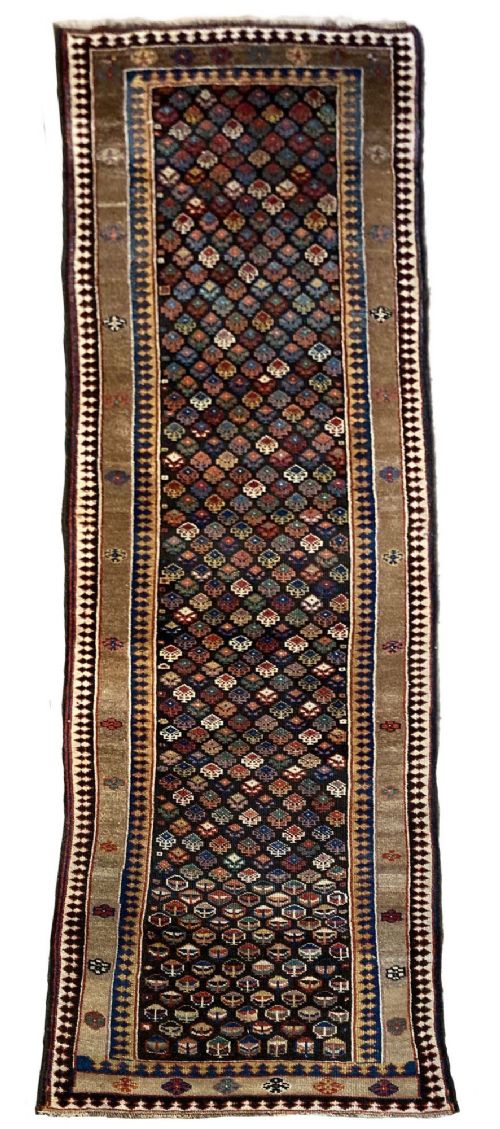


Blue Hall Carpet
A blue antique hall carpet is a narrow, long-proportioned floor covering woven by tribal and regional makers to fit corridors.
Blue Hall Carpet
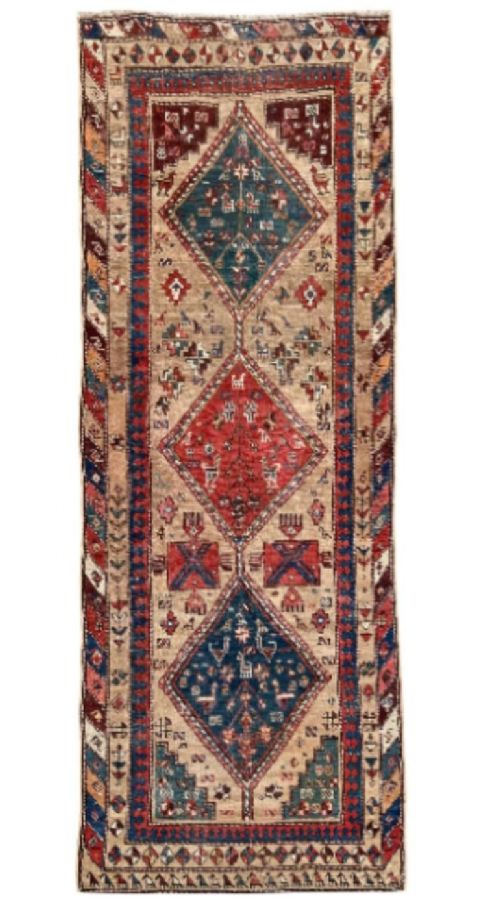
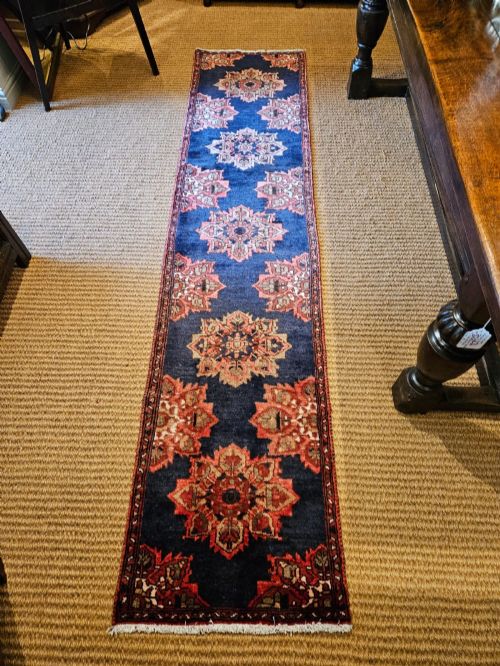
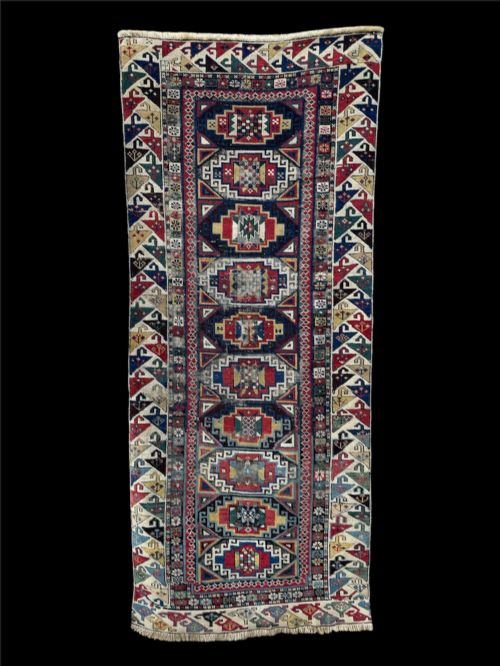
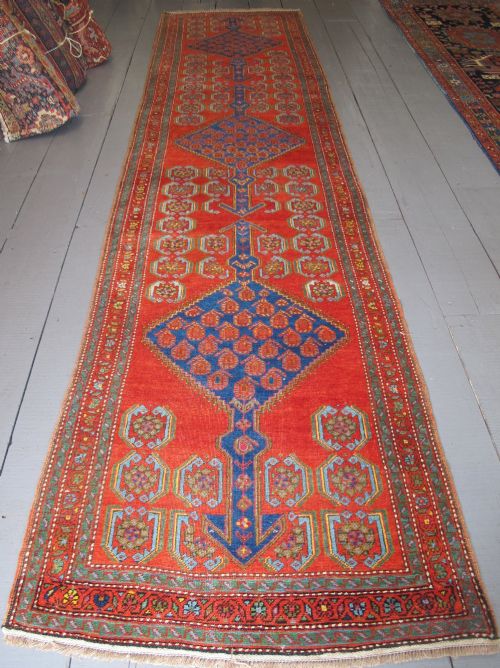
A blue antique hall carpet takes the form of a long runner designed for narrow spaces, corridors, and hallways. The pieces seen here span the nineteenth century up to the nineteen-twenties, originating from Persian, Caucasian, and Anatolian weaving traditions.
Makers shaped these floor coverings in distinct regional styles, including Heriz, Kurdish, Hamadan, and Caucasian regional designs. They serve primarily as functional floor rugs built in elongated dimensions to suit domestic walkways.
How they were made
Weavers utilised wool and hand-spun wool for the pile, knotted onto cotton foundations to create durable surfaces for heavy foot traffic. These materials provided the structural strength required for long, narrow formats.
Makers applied natural dyes to colour the wool, producing deep navy and indigo tones alongside patterned motifs. This dyeing process yielded rich hues that aged characteristically over decades of use.
Blue Hall Carpet Retail Price Guide 2026
Typical asking prices for blue hall carpet among the pieces listed under this phrase on Sellingantiques today, from the lower quarter to the upper quarter. They describe what is for sale here now, not the wider market.
The pieces shown here span periods from eighteen-eighty to nineteen-twenty, featuring wool materials and natural dyes in runner forms.
What varies in quality
Quality rests in the precision of the weave and the depth achieved through natural dyes. Tightly knotted piles maintain their structure better under foot than looser constructions.
The clarity of tribal motifs and regional patterns distinguishes finer examples. Balanced proportions across long dimensions also mark superior weaving skill.
The Blue Hall Carpet Glossary
- Runner
- A long, narrow carpet designed specifically for hallways, corridors, and stairs. These pieces measure significantly longer than they are wide.
- Natural dye
- Colour extracted from plant, insect, or mineral sources rather than synthetic chemicals. These substances create nuanced shades that soften gradually over time.
- Pile
- The upright yarn surface of a carpet formed by knotted wool loops. This layer receives direct foot traffic and defines the texture.
- Foundation
- The underlying grid of warp and weft threads that supports the knotted pile. Cotton is commonly utilised for this structural base.
- Boteh
- A stylised almond or paisley motif representing a floral shoot or cypress tree. This ancient design appears frequently across Persian and Caucasian weaving.
Blue Hall Carpet: Frequently Asked Questions
Where should I place a long runner?
These pieces suit narrow hallways, corridors, and long entryways where floor protection is needed.
Their elongated dimensions fit spaces too confined for standard rectangular rugs.
How do I care for wool carpets?
Vacuum gently without a rotating brush to protect the hand-spun wool pile and delicate foundation.
Professional cleaning preserves the natural dyes and structural integrity of older textiles.
What regions produced these runners?
Weavers across Persia, the Caucasus, and Anatolia produced these elongated floor coverings in distinct tribal styles.
Specific regional centres such as Heriz, Hamadan, and Shirvan developed recognisable design traditions.
How do I identify a tribal design?
Tribal designs often feature geometric motifs, stylised flora, and repeating symbols created from memory by local makers.
These patterns differ from formal court carpets through their expressive and less symmetrical arrangements.