
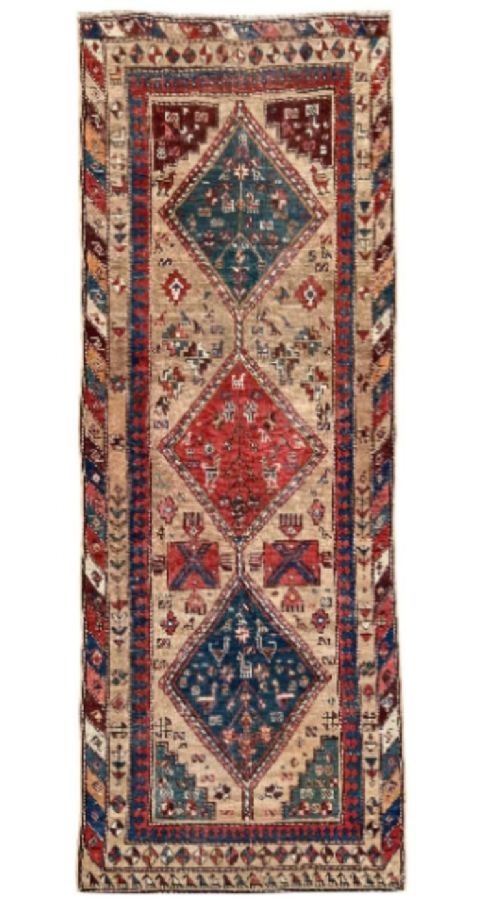
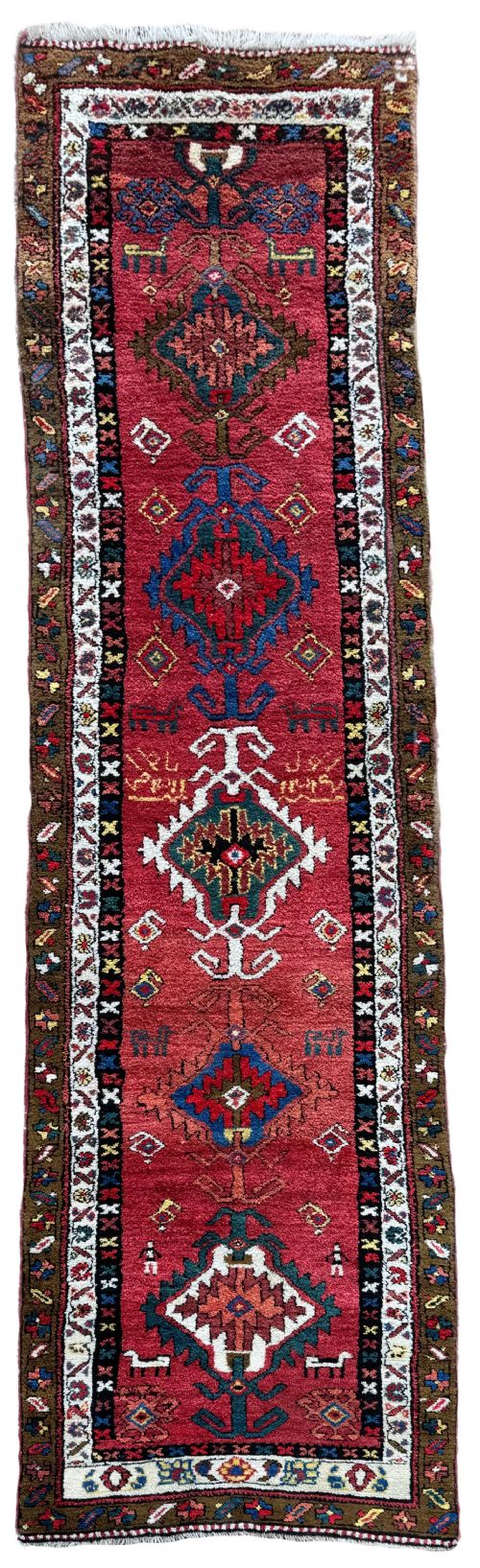
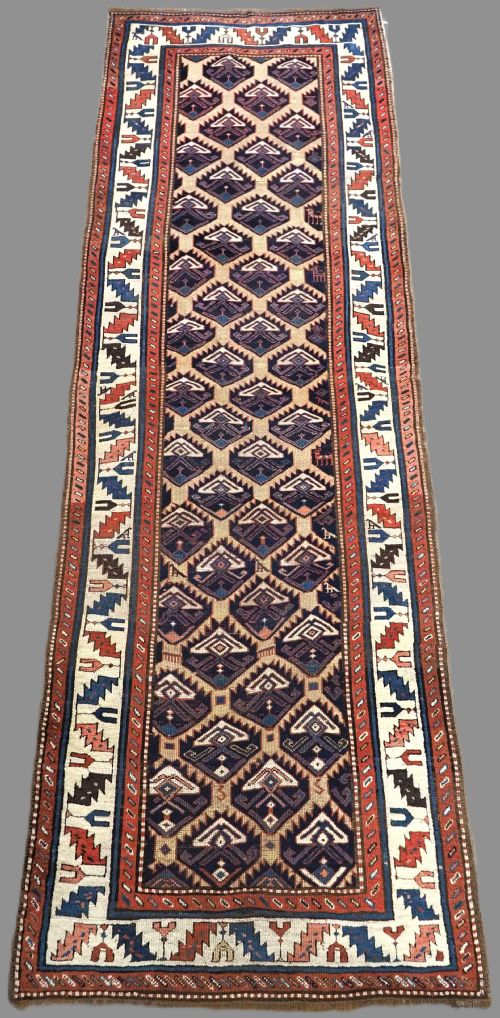
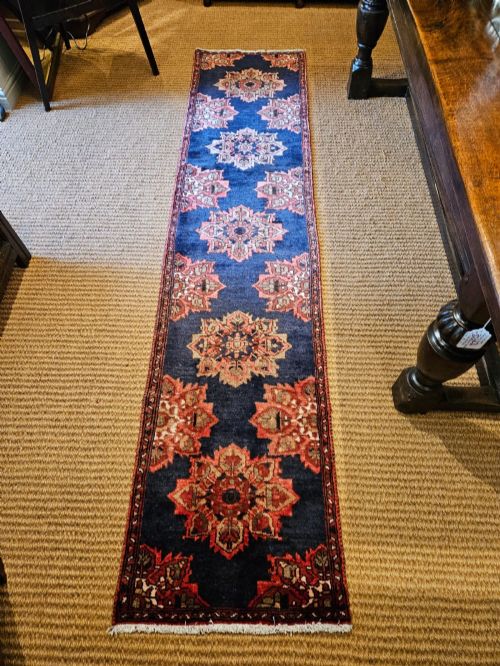


Geometric Wool Hall Runner
A geometric wool hall runner brings enduring structure and tactile warmth to a narrow space through time-tested tribal and regional designs.
Geometric Wool Hall Runner
A geometric wool hall runner is a long, narrow textile designed specifically for corridors, hallways, and transitional spaces within a home. These pieces bring together disciplined linear patterns and practical proportions suited to high-traffic areas.
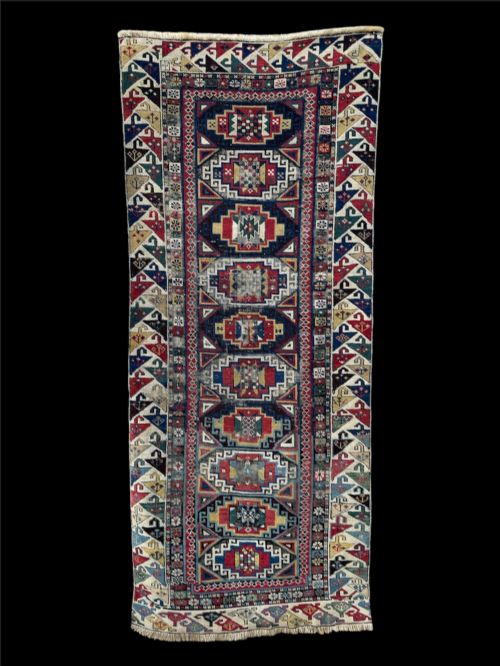
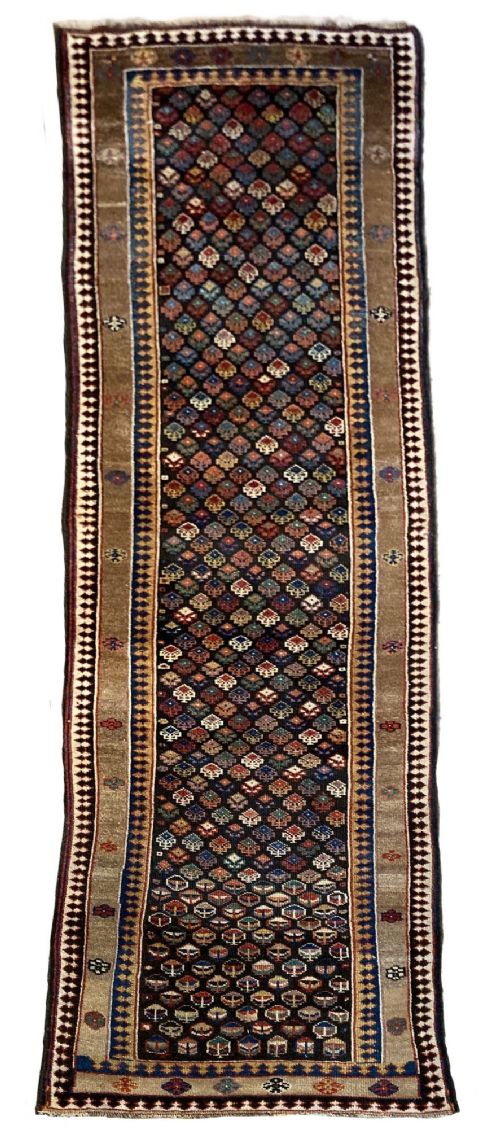
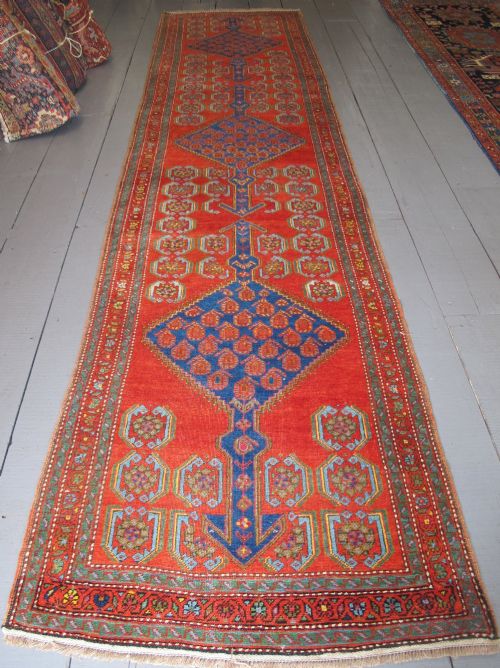
The selections available here span from the nineteenth century into the early decades of the twentieth century, originating primarily from weaving centres across Persia, the Caucasus, and Anatolia. Regional workshops and tribal groups produced these elongated formats to bridge rooms while adding warmth underfoot.
Most examples rely on wool as the primary pile material, often paired with sturdy cotton foundations or wool-on-wool construction. Buyers will encounter various tribal motifs, ranging from medallions and lattice formations to boteh and repeating geometric symbols.
Materials and construction
Weavers constructed these runners using hand-spun wool for the pile, which was knotted onto a stable foundation of wool or cotton warp and weft threads. This traditional technique produced a dense, resilient surface capable of withstanding decades of foot traffic.
Natural dyes derived from plants, minerals, and insects provided the rich palette seen across these textiles. Over time, these organic colourants have mellowed gracefully, creating subtle tonal variations across the wool fibres.
Certain regions incorporated specialty fibres such as camel hair into the pile or borders to introduce un-dyed, durable brown tones. The hand-tied knots and sturdy edge bindings reflect the practical demands placed on domestic floor coverings of the period.
Materials recorded across these items include hand-spun wool, cotton foundations, natural dyes, and occasional camel hair.
Factors of quality
Quality in a geometric wool hall runner is determined by the precision of the knotting, the integrity of the structural foundation, and the balance of the composition. Denser knotting allows for sharper delineation of linear motifs and clearer geometric boundaries.
The character of the natural dyes plays a significant role in the visual depth of the textile. Skilful dyeing results in rich, complex hues that interact harmoniously across the field and borders, whereas lesser examples may lack tonal nuance.
Proportion and execution distinguish finer regional weaving from standard utility pieces. A well-balanced format with confident, intentional drawing demonstrates the weaver's mastery of traditional tribal geometry.
The Geometric Wool Hall Runner Glossary
- Warp
- The stationary vertical threads stretched lengthwise on the loom that form the foundation of the rug. The exposed fringe at either end of a runner consists of these extended warp threads.
- Weft
- The horizontal threads passed back and forth through the warp threads to secure the knots in place. Together, warp and weft create the structural grid of the textile.
- Boteh
- An almond-shaped or paisley motif with a curved upper end, frequently seen in Persian and Caucasian weaving. This ancient symbol represents a floral spray or cypress tree.
- Medallion
- A symmetrical central ornament placed in the middle of the rug field. Weavers often anchored geometric designs around these prominent focal points.
- Pile
- The dense, cut surface of wool loops that stands upright from the foundation. The pile provides the physical texture and protects the structural threads beneath.
Geometric Wool Hall Runner: Frequently Asked Questions
Where should I place a long runner?
These narrow textiles are naturally suited for hallways, corridors, and narrow entryways where linear floor space requires softening. They also function effectively in galley kitchens or alongside large pieces of furniture.
Because these formats were woven to guide movement through a home, they direct the eye along transitional paths while protecting underlying wooden or tiled floors.
How do I clean an antique wool runner?
Routine maintenance requires gentle vacuuming without the rotating beater bar to protect the delicate wool pile and edge bindings. Professional specialist cleaning is recommended for deeper maintenance.
Avoiding excessive moisture and direct, harsh sunlight preserves the integrity of the natural dyes and hand-spun wool fibres over time.
What is the difference between Persian and Caucasian runners?
Persian runners generally feature curved or more expansive geometric layouts, often incorporating structured medallions and intricate floral abstractions. Common origins within Persia include Heriz, Kurdish, and Hamadan regions.
Caucasian runners tend to display bolder, highly abstracted rectilinear forms, sharp angles, and saturated palettes typical of weaving traditions from Gendje, Shirvan, and Kazak areas.
How do I date an older wool runner?
Dating relies on assessing the combination of materials, natural dye palettes, structural characteristics, and stylistic conventions. Earlier nineteenth-century examples often display specific regional quirks and softer, oxidized colour shifts.
Comparing structural details such as selvedge finishes and wool preparation helps place a piece within its general period of origin.