
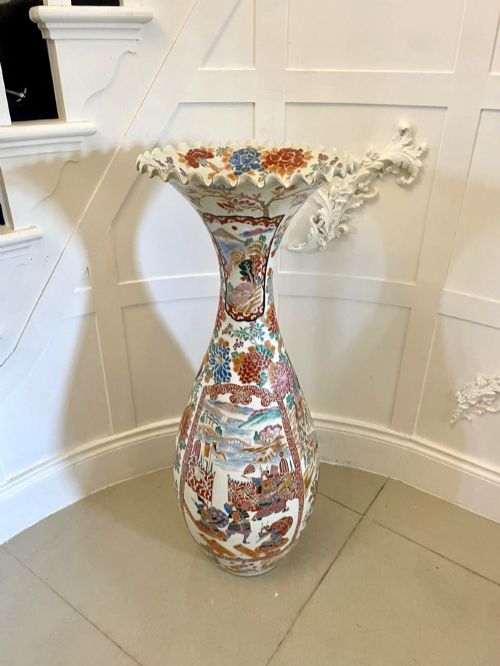
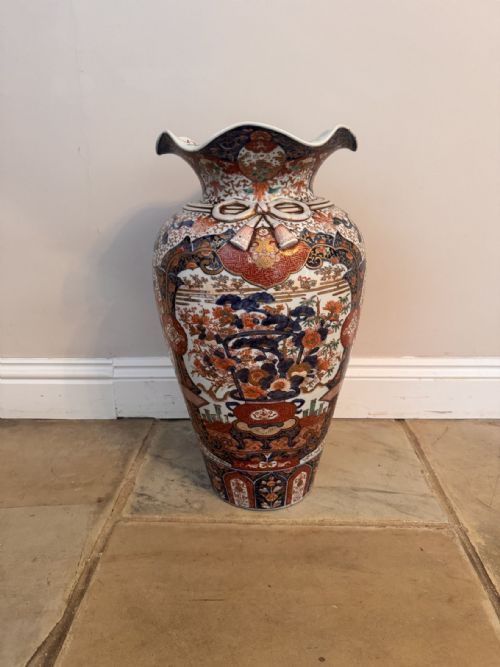
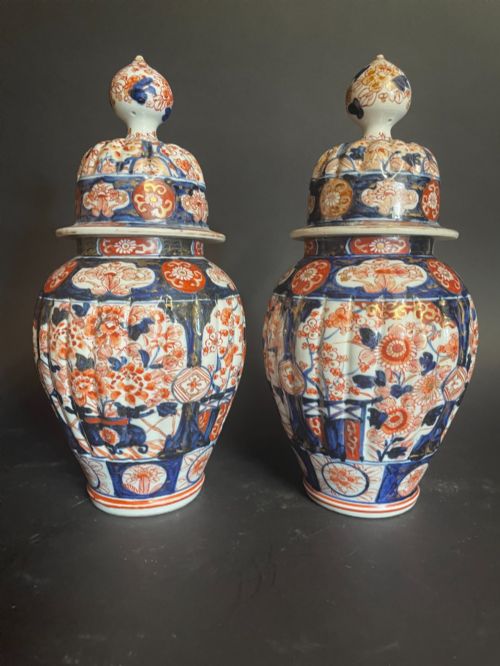
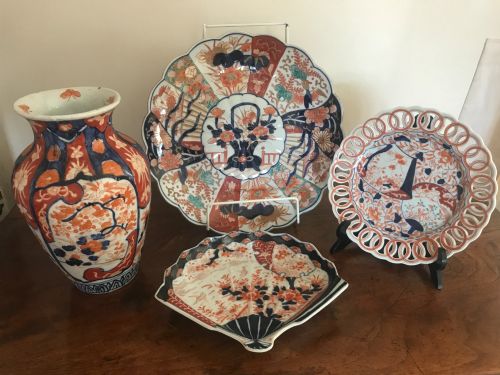
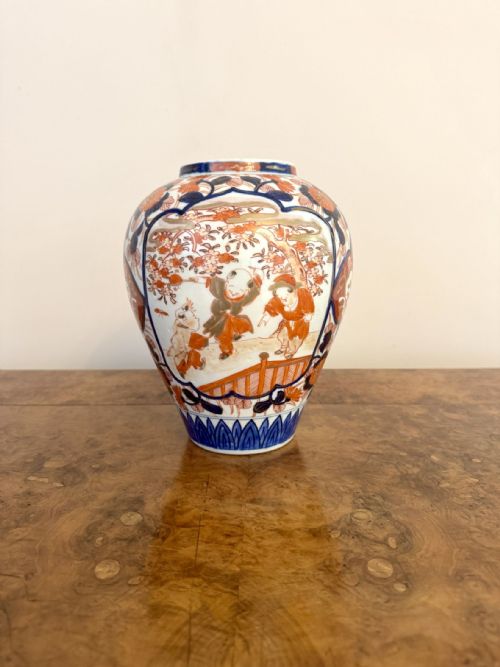
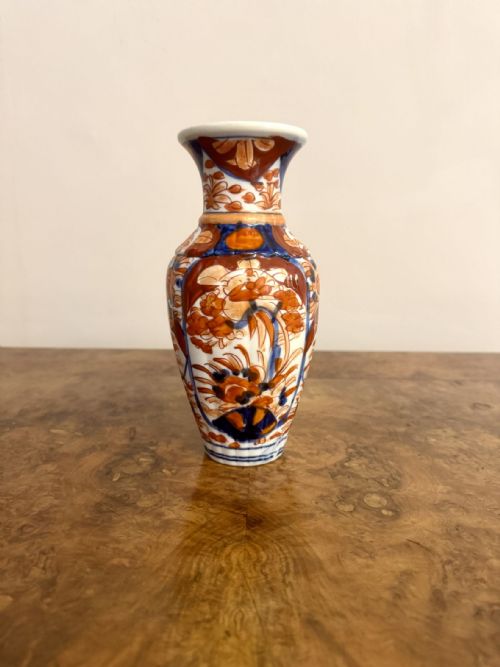
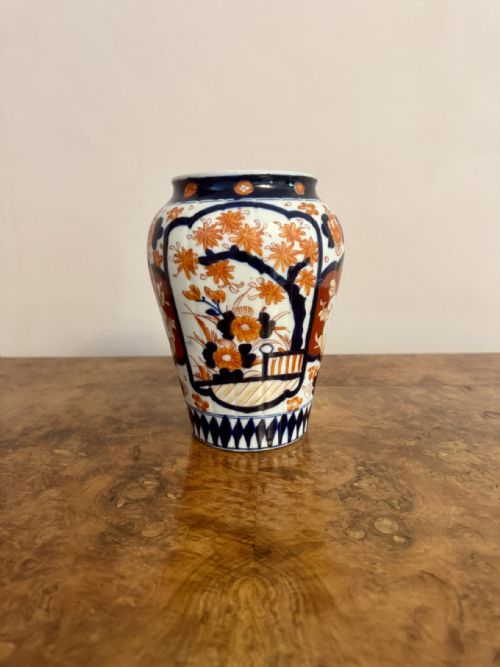
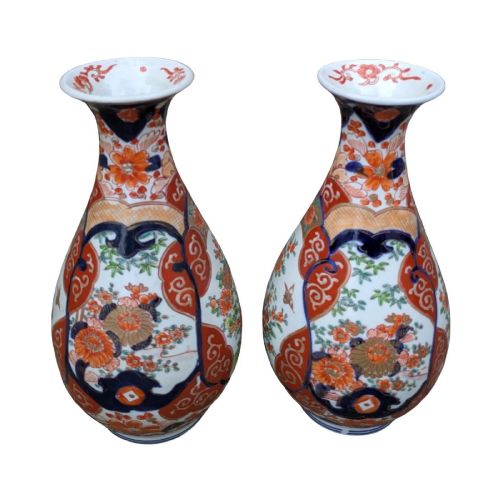
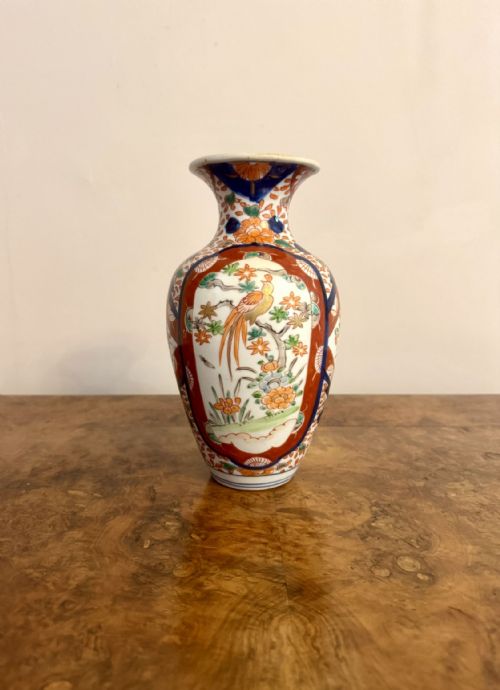


Red Blue Imari Vase
A red blue imari vase brings together distinct ceramic traditions through the striking interplay of cobalt, iron red, and gilt highlights.
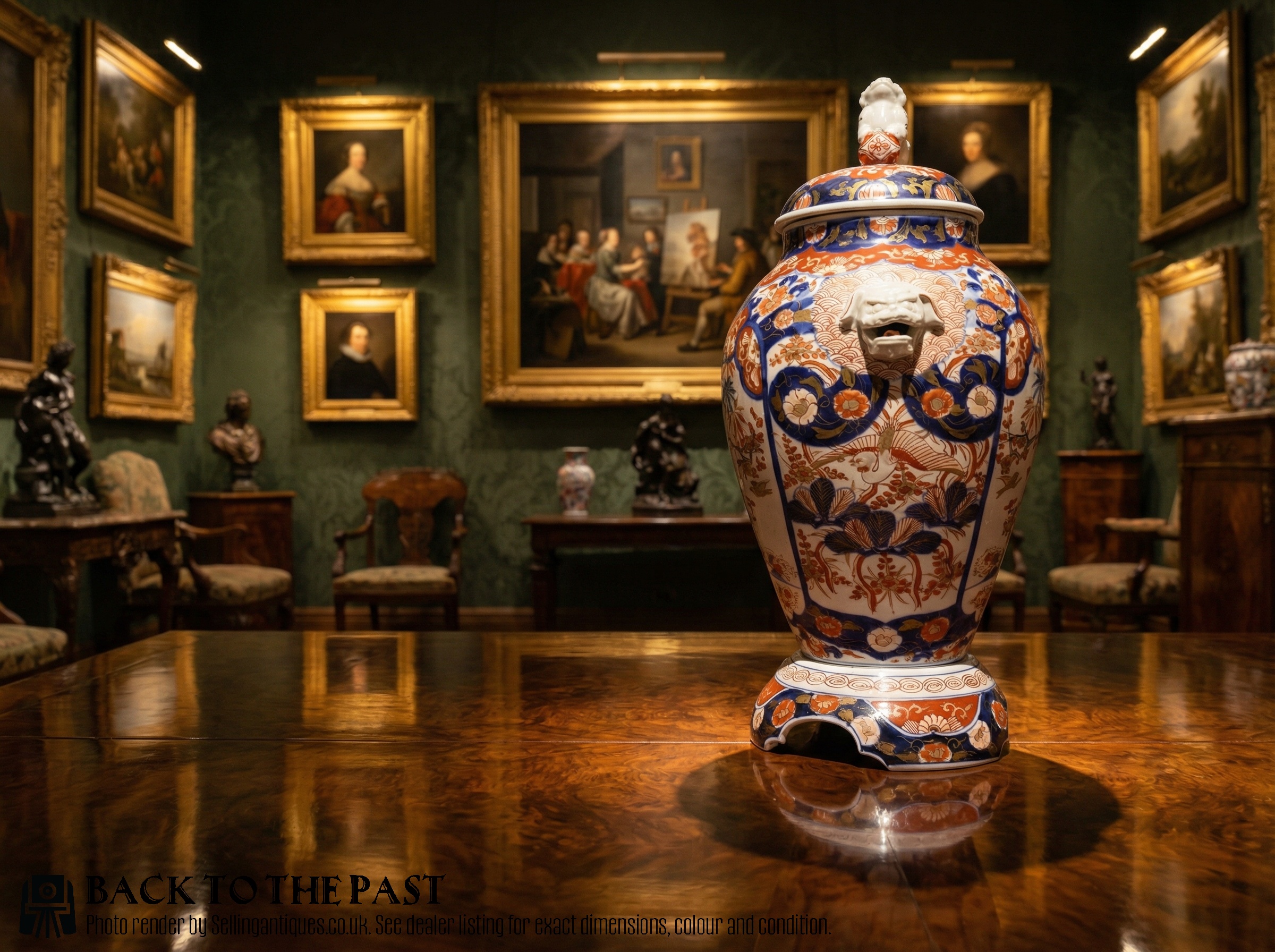
Red Blue Imari Vase
A red blue imari vase embodies centuries of ceramic exchange, predominantly originating from Japanese kilns in Arita alongside European interpretations. When searching for a red blue imari vase, buyers encounter forms ranging from large floor-standing vessels and double gourds to covered ginger jars and slender-necked shapes. The selection spans the Edo and Meiji periods through to Victorian and Edwardian British and European productions.
Vessels on this page include single display pieces, paired sets, and matched garnitures designed for mantelpieces or tables. The palette remains instantly recognisable across centuries, uniting deep underglaze cobalt with iron-red overglaze enamel and added gilding. These ceramics serve as focal points in period interiors, carrying the weight of traditional pattern work.
Materials and production methods
Makers shaped these vessels from fine porcelain or ironstone, throwing or moulding the clay before applying underglaze blue pigments. Artisans then fired the pieces at high temperatures to set the cobalt design beneath a clear glossy glaze. Following this initial glaze firing, workshops added iron-gold enamel details and gold leaf or gilding by hand.
A subsequent lower-temperature firing fused the overglaze enamels and gold leaf to the surface. Some examples incorporate brass mounts or fabric elements added later in their history. The combination of underglaze cobalt and overglaze enamel creates a layered visual depth characteristic of genuine Imari ware.
Some nineteenth-century ginger jars still wear their lids with pride, surviving centuries of household dusting.
Markers of quality and execution
Quality in a red blue imari vase rests upon the crispness of the underglaze cobalt and the precision of the hand-painted enamel work. Superior examples exhibit vibrant iron red and intact gilding with minimal rubbing across raised surfaces and panels. The weight and potting thickness of the porcelain body also distinguish finer output from standard commercial production.
The complexity of the decorative scheme, such as intricate floral panels and geometric borders, separates standard vessels from exceptional collector pieces. Well-preserved covers on jars and garnitures retain their original proportions and decorative harmony. The clarity of the glaze free from excessive firing blemishes marks the upper tier of these ceramics.
Stevenson and Hancock·Masons Ironstone·Samson
The Red Blue Imari Vase Glossary
- Meiji Period
- The era in Japanese history spanning from 1868 to 1912, noted for significant export ceramic production. Pieces from this time often display confident painting and varied forms.
- Garniture
- A set of matching vases or jars designed to be displayed together on a mantelpiece or sideboard. They usually consist of three or five graduated pieces.
- Gilding
- The application of gold leaf or gold powder to ceramic surfaces for decorative emphasis. It catches the light and highlights specific motifs within the design.
Red Blue Imari Vase: Frequently Asked Questions
How do I date a red blue imari vase?
Dating relies on stylistic markers, potting characteristics, and historical periods associated with the piece. Edo period examples show distinct early palettes, while Meiji and Victorian pieces reflect later export demands.
Examine the base, glaze texture, and hand-painting style to differentiate between eighteenth-century originals and later nineteenth or twentieth-century revivals.
Were these vases made outside Japan?
European factories produced substantial quantities of Imari-style ceramics during the nineteenth and early twentieth centuries. British and continental makers adopted the distinctive red, blue, and gold palette.
Marks on the underside of the porcelain often identify European makers like Masons or Samson alongside unmarked Japanese exports.
How should I display a lidded jar?
Lidded jars and ginger jars function well as standalone display items on tables or within cabinet shelving. Pairs and garnitures look best arranged symmetrically on mantelpieces or sideboards.
Ensure the vessel sits on a stable, flat surface away from heavy foot traffic to protect the overglaze enamel and gilding.