





Rearing Horse Sculpture
These rearing horse sculpture pieces capture dynamic equine energy in bronze, leather, wood, and brass across several historical periods.

Rearing Horse Sculpture
A rearing horse sculpture captures the dramatic moment of a horse rising on its hind legs, a subject explored by sculptors across the seventeenth, nineteenth, and twentieth centuries. When you search for a rearing horse sculpture, you encounter figures rendered in bronze, patinated bronze, wood, brass, glass, and leather.
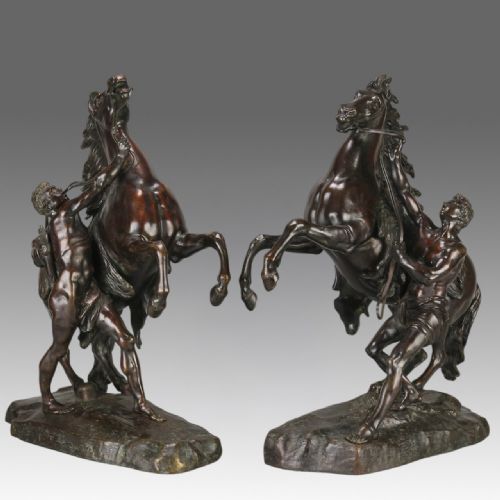
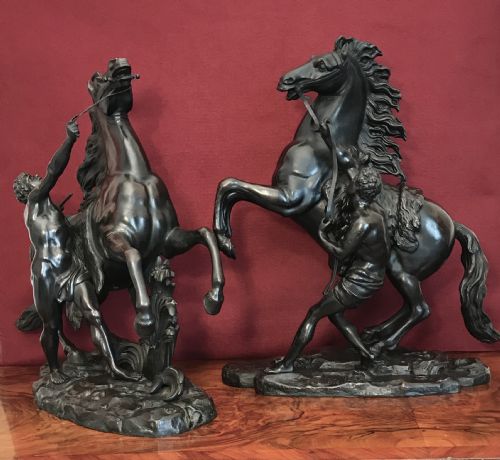
The most common examples on this page are nineteenth-century bronze castings, particularly interpretations of the famous Marly Horses after Coustou. These pieces often appear as pairs or individual figures alongside rarer Arts and Crafts leather models and seventeenth-century works.

Materials and construction
Metal sculptures rely on traditional casting techniques, utilising bronze, brass, and patinated bronze to achieve durable and expressive equine forms. Many nineteenth-century and Victorian pieces draw inspiration from classical models, employing careful finishing to highlight muscle definition and movement.
Alternative materials offer a different texture and weight, notably seen in the Arts and Crafts leather models from the late nineteenth and early twentieth centuries. These pieces involve skilled moulding and stitching over internal structures to shape the equine form.
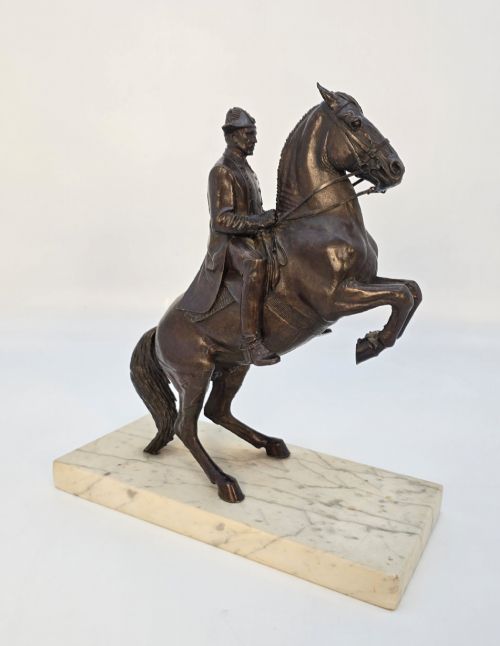
Some horses rear with a groom holding the reins, while others charge ahead with a rider from the Spanish School.
Assessing quality and execution
Quality in these sculptures rests upon the precision of the casting and the fidelity of the anatomical detail shown in the musculature and expression. Finer examples display crisp chasing and nuanced patination that bring depth to the metal surface.
The sophistication of the lineage, such as direct association with the Marly Horses tradition or recognised makers like Charles Crozatier, elevates certain pieces above standard decorative castings. Materials also dictate distinction, separating solid bronze and worked leather from simpler mixed metals.
The Rearing Horse Sculpture Glossary
- Bronze
- A copper and tin alloy prized for its strength and ability to hold fine detail in sculptural casting. It forms the primary material for the majority of these equestrian figures.
- Patinated bronze
- Bronze treated with chemicals or heat to produce a specific surface colour and finish. This technique enhances the visual depth and shadow of the sculpture.
- Marly Horses
- Monumental marble sculptures commissioned by Louis XV, famously depicted in numerous nineteenth-century bronze reductions. They portray handlers restraining rearing horses.
- Arts and Crafts
- A design movement emphasising handcraftsmanship and traditional materials. This style appears in the leather equine models dated to the late nineteenth and early twentieth centuries.
Rearing Horse Sculpture: Frequently Asked Questions
What periods do these sculptures cover?
The pieces span from the seventeenth century through the Victorian era and into the mid-twentieth century. This range encompasses seventeenth-century works, late nineteenth-century Victorian castings, and Arts and Crafts examples from the early twentieth century.
Each period brings distinct materials and stylistic interpretations to the rearing horse subject, from classical bronze castings to leather models.
What are Marly Horses?
Marly Horses refer to the famous sculptural group depicting horses and their handlers, originally created by Guillaume Coustou for the Chateau de Marly. Many nineteenth-century artists produced scaled bronze reductions after these iconic monuments.
These pieces frequently appear as single figures or balanced pairs on this page, reflecting the enduring popularity of Coustou's design.
How were leather horse models made?
Leather horse models from the Arts and Crafts period were constructed by shaping and stitching leather over internal armatures. This technique created lightweight yet robust sculptural figures with distinct surface textures.
Such pieces offer an alternative to metal castings while maintaining a strong sense of form and movement.
Are these sculptures found in pairs?
Yes, several listings feature matched pairs of bronze figures, particularly those modelled after the Marly Horses. These symmetrical compositions were designed for decorative display on mantelpieces or pedestals.
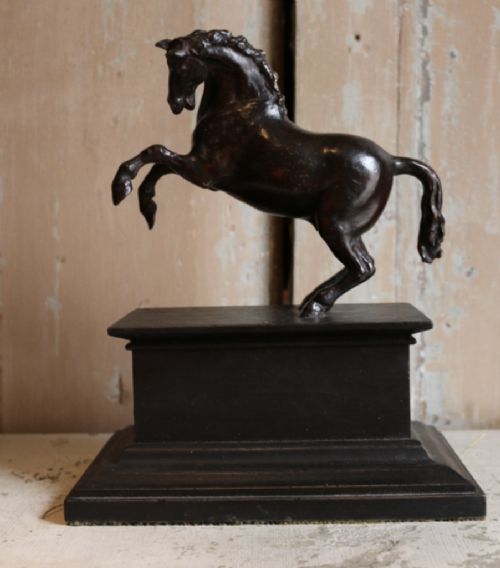
Single statues also appear alongside these pairs, ranging from equestrian studies to standalone animal figures.